



Gilmour Space Technologies has unsuccessfully attempted the first launch of an Australian made rocket into orbit from Australian soil.
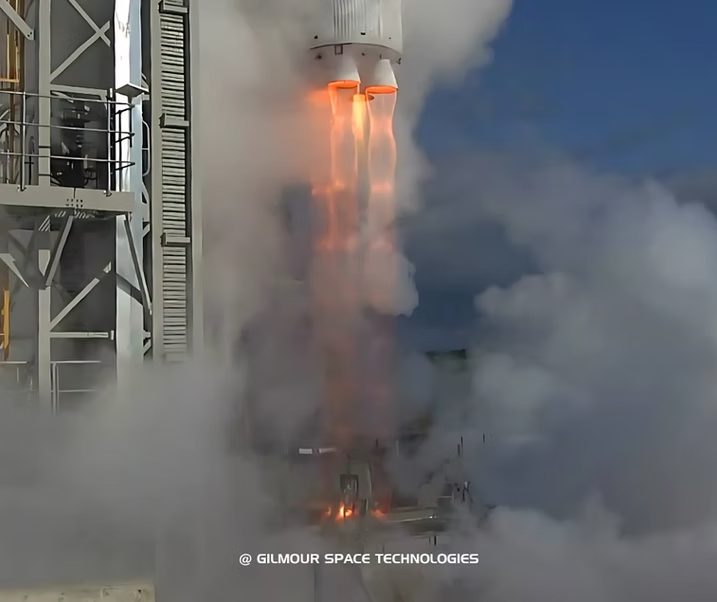
The Eris Test Flight 1 took place at Gilmour’s Bowen Orbital Spaceport at Abbot Point in North Queensland yesterday (30 July) morning.
The rocket lifted off the launchpad briefly, before coming down within the safety area. There were no injuries to any person and no adverse environmental impacts.
Gilmour is now regrouping to reassess the first attempt to inform any future efforts.
Head of the Australian Space Agency Enrico Palermo says it is rare for first launches to reach orbit. That is part of the innovation cycle and why tests are undertaken, Palermo adds.
Yesterday’s launch attempt comes after the Australian Government recently invested $5 million into the ongoing development of the Eris rocket’s engine through the Industry Growth Program.
Gilmour Space Technologies made history in March 2024 when the Australian Government granted it the first orbital Launch Facility Licence for its Bowen Orbital Spaceport.
The company was granted the first Australian Launch Permit for Eris Test Flight 1 in November.
Standing 23m tall, Eris is a three-stage orbital rocket that can transport small satellites and other payloads of up to 300kg to space.
Gilmour is aiming to become a leading launch provider for commercial and government customers from around the globe.
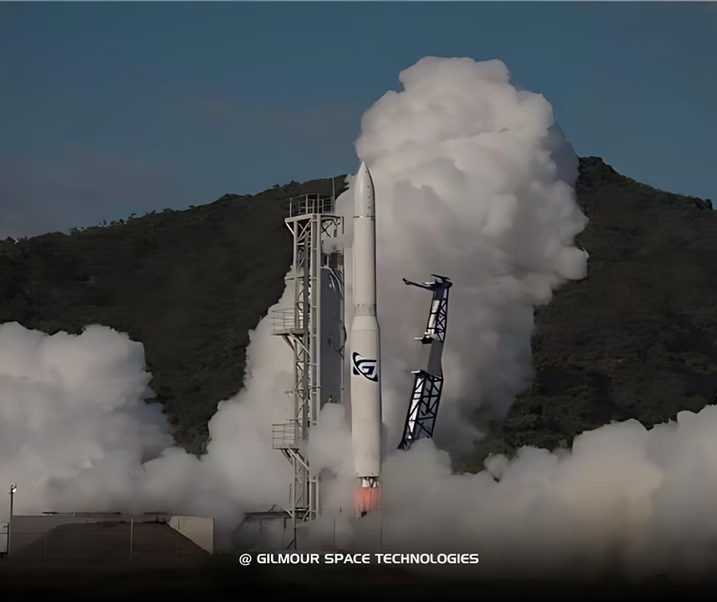
The TestFlight 1 campaign was the first integrated attempt of an orbital-class rocket designed and built entirely in Australia. It also marked the first use of the newly licensed Bowen Orbital Spaceport — Australia’s first commercial orbital launch site, built by Gilmour Space to support future missions.
Eris was developed almost entirely in-house — including propulsion, structures, avionics, software, and the spaceport itself — on a fraction of the budget available to most global launch companies.
“Space is hard,” says Adam Gilmour, CEO of Gilmour Space Technologies.
“SpaceX, Rocket Lab and others needed multiple test flights to reach orbit. We’ve learned a tremendous amount that will go directly into improving our next vehicle, which is already in production.
“Getting off the pad and into flight is a huge step forward for any new rocket program. This was the first real test of our rocket systems, our propulsion technology, and our spaceport — and it proved that much of what we’ve built works.”
Mining plays an important role in space exploration.
Some of the primary metals and minerals used to build rockets include aluminium alloys, which are commonly used in the structural framework of rockets; titanium allows, used for its strength and ability to endure extreme temperatures; and niobium and tantalum, which are essential for creating heat-resistant superalloys for rocket engines.
Minister for Industry and Innovation and Minister for Science Tim Ayres says Gilmour is embracing a Future Made in Australia – “knitting together the best of our advanced manufacturing capability, with our science and critical technologies know-how”.
Write to Adam Orlando at Mining.com.au
Images: Gilmour Space Technologies


