



When fire tore through Windsor Castle in 1992, flames engulfed centuries of history and destroyed or severely damaged 115 rooms, nine of which were State Apartments.
In the aftermath, a five-year journey took place to rebuild and restore, exceeding £36 million ($72.43 million).
During this time, there was one precious metal that played a quiet but essential role in returning Windsor Castle to its former glory; gold.
For the gold market, the restoration of Windsor Castle offers a reminder that demand for the precious metal extends beyond central bank buying, investments or jewellery consumption.
Instead, it highlights the yellow metal’s value as a material of durability and beauty, as well as its place in preserving cultural heritage.
A metal built to last
Gold’s relevance to heritage restoration is rooted in its physical properties. The metal is chemically inert, resistant to corrosion and oxidation, making it the most malleable metal.
The characteristics of gold have made it a material of choice for architectural decoration for centuries – making it essential to the Windsor Castle restoration.
Gold can be stretched and beaten into thin sheets without breaking. A single gram of gold can be made into a gold leaf sheet by being melted, cast into a bar, and then repeatedly rolled into a very ribbon.
The ribbon is then cut into squares, placed between layers of protective material such as paper, and then hammered to stretch into an even thinner sheet.
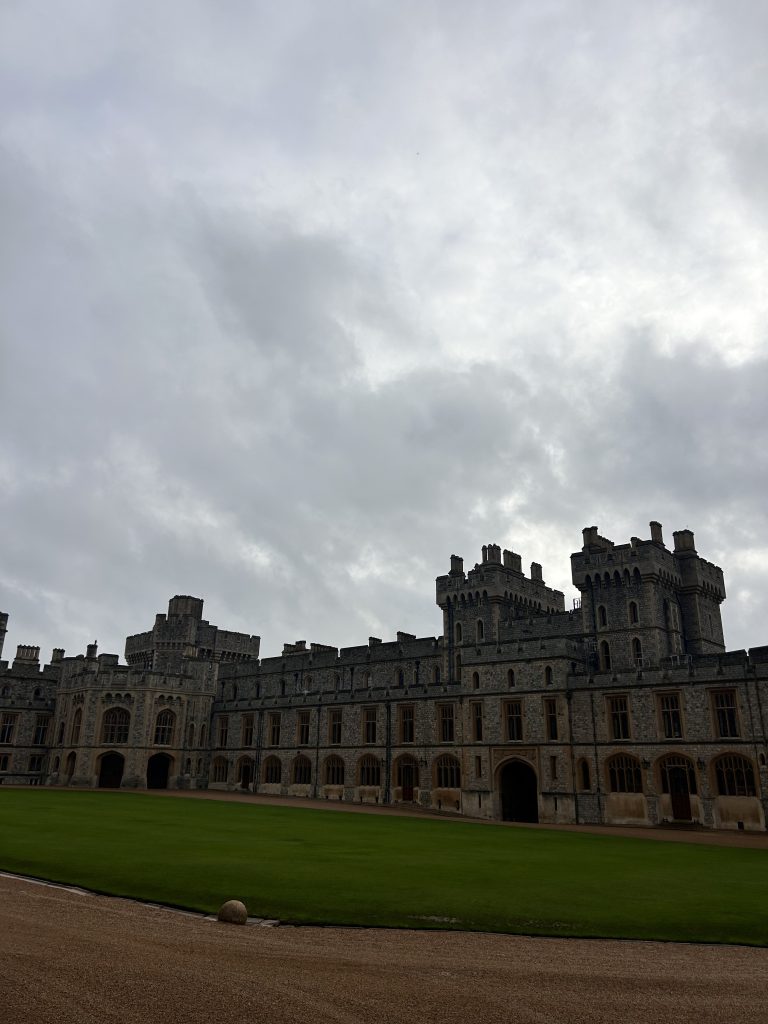
Central to the castle’s restoration was the re-gilding of ceilings, cornices, frames, and decorative panels that had been lost or badly damaged in the fire.
Gilding – an old-age technique – is believed to have originated in Turkey more than 8,000 years ago. The technique was commonly used by ancient Egyptians and eventually the early European settlers.
According to the Wargrave Local History Society, more than 500,000 pieces of gold leaf – ranging between 23 to 24 carat – were used to restore the damaged areas and replicate historical designs of the Windsor Castle.
The complex restoration of the French boiserie panels were made of clay over the wood, then covered in gold lead and burnished, which is considered an expensive process.
While the royal household did not disclose precise figures, the scale of Windsor Castle’s interiors required thousands of gold leaf sheets. As ageing historical buildings across the world undertake restoration, demand for high-purity gold leaf remains necessary and consistent.
Gold beyond bullion
From a market perspective, Windsor Castle highlights a lesser-discussed dimension of gold demand. Unlike base or industrial metals, gold’s end use is less about quantity and more about quality.
According to the World Gold Council, the global gold demand hit a record of 1,313 tonnes in Q3 2025, growing 3% year-on-year. To date, demand is 1% higher at 3,717 tonnes – equating to US$384 billion in value – representing a 41% increase year-on-year.
The rise in gold’s demand is driven by jewellery, investment, and central bank purchases, as well as technology and industrial uses. Architectural gilding and cultural restoration fall into the latter category.
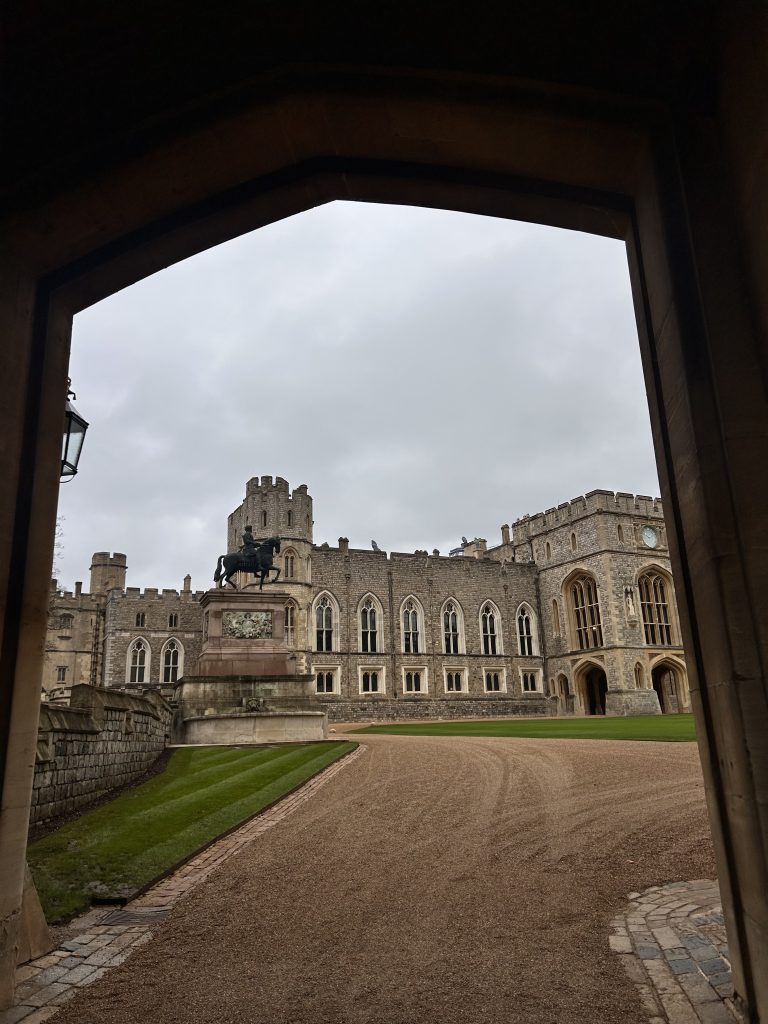
Projects such as the Windsor Castle restoration, are typically funded by institutions, governments, or long-term trusts. As a result, this makes demand relatively insulated from short-term price volatility.
Despite Windsor Castle’s reliance on gold to restore the damaged buildings, there is minimal gold in the UK. According to Gold Traders, nearly all gold prospecting is recreational or small-scale.
The British Geological Survey reports that UK gold production is minimal – accounting for around 10 kilograms of gold annually, mostly from hobbyists and limited commercial activity.
As of 2024, the Bank of England held 310 tonnes of gold for the UK, as reported by Trading Economics. This is vastly different from Australia which holds nearly 80,000 tonnes in gold reserves.
In the UK, gold can be found in areas with historical mining activity such as the Scottish Highlands, the Dolgellau Gold Belt in Wales, and parts of southwest England.
In the UK, gold buyer and seller Gold Bank reveals that it has witnessed more than a 50% increase in the amount of gold purchased by customers over the last 12 months between July 2024 to June 2025.
More than 30 years after the fire, Windsor Castle bears little evidence of the destruction it once suffered. Its gilded interiors reflect light and are restored with material that is both ancient and modern.
In small- but high-value volumes, gold remains critical to architectural restoration and cultural preservation – an end use that reinforces its long-term relevance.
Write to Aaliyah Rogan at Mining.com.au
Images: Windsor Castle & Mining.com.au


