


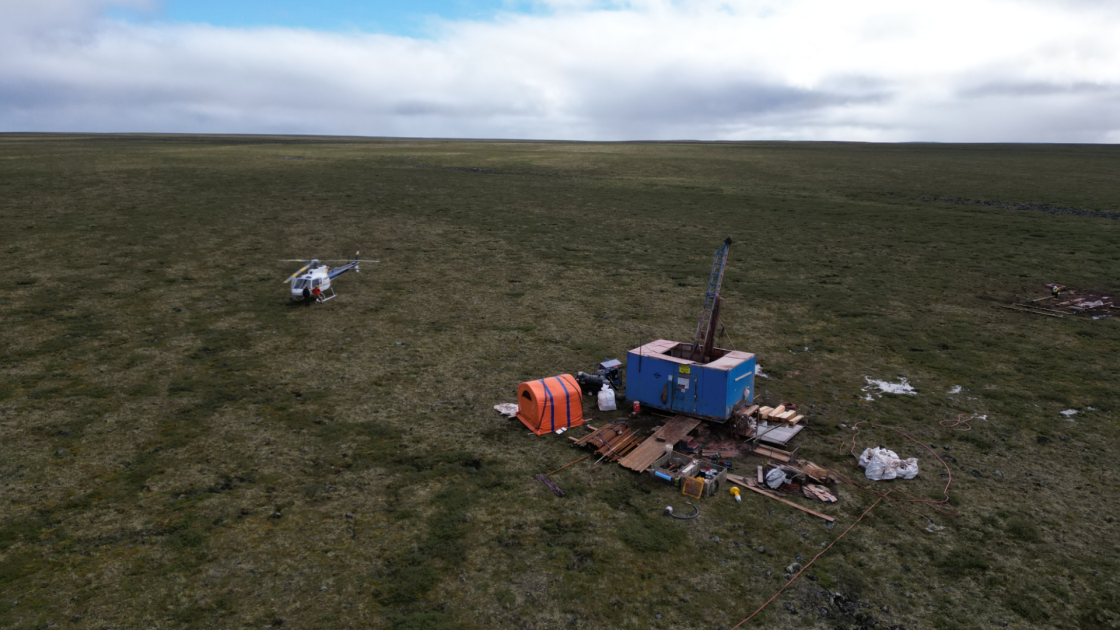
Geiger Energy (TSX-V:BEEP) has intersected five zones of near-surface uranium mineralisation at its Fox Zone discovery in Nunavut, Canada, with the strongest radioactivity beginning just 41m from surface.
Hole FOX26-003 returned ‘intermittent elevated’ to ‘high-grade’ radioactivity across an 89.8m interval from 41m to 130.8m, with a peak of 15,022 counts per second (cps) and pending assays. Results from the zones are as follows:
- 6.7m averaging 1,639 cps from 41m to 47.7m
- 5.3m averaging 3,417 cps from 56.6m to 61.9m
- 7.9m averaging 516 cps from 70.5m to 78.4m
- 21.8m averaging 1,187 cps from 84.5m to 106.3m
- 18.0m averaging 2,099 cps from 112.8m to 130.8m
Mineralisation begins substantially shallower than the discovery hole, indicating the system is strengthening toward surface.
CEO Rebecca Hunter says it is the ‘strongest’ hole drilled at Fox to date.
“FOX26-003 is the strongest hole we have drilled at Fox, with high-grade radioactivity beginning just 41m from surface, in only the third hole ever drilled into this 1.3km target,” Hunter notes.
“Every hole at Fox has hit mineralisation or the alteration that surrounds it, and we have tested only a fraction of the target.”
Every hole drilled at Fox has intersected uranium mineralisation and extensive alteration across the 1.3km target, remaining open and largely untested.
Mineralisation is structurally controlled and hosted in altered feldspar porphyry to granite intercalated with psammopelitic gneiss.
Uranium occurs primarily as black pitchblende, disseminated along fractures and breccias and into adjacent wall rock, with local pale-yellow secondary minerals.
Fox lies directly on the Andrew Lake Fault, the structural corridor associated with Orano’s Kiggavik-area deposits. The deposits host an approximate 127-million-pound historical mineral resource. The corridor extends about 17km across Geiger’s Aberdeen Project.
The company made grassroots discoveries at two points along the fault this season: Fox and Apollo, 10km to the southwest. Both were generated from Geiger’s interpretation of gravity, magnetic, and structural data and were untested prior to 2026.
“Two grassroots discoveries in one season, 10km apart, on the same structure that hosts Orano’s Kiggavik deposits — we are no longer testing isolated targets,” Hunter adds.
Geiger Energy controls about 338,000 hectares in Saskatchewan’s Athabasca Basin and 95,000 hectares in Nunavut’s Thelon Basin.
Its flagship Aberdeen Project hosts the Tatiggaq and Qavvik discoveries, together with more than 50 high-priority targets.
Write to JC Villarba at Mining.com.au
Images: Geiger Energy


