



In a world fixated on battery metals and critical minerals, one industrial material continues to fly under the radar while quietly underpinning high-precision manufacturing, global shipbuilding, defence infrastructure, and heavy engineering.
That material is garnet – a niche commodity attracting growing global attention for its reliability, its specialised applications, and the increasingly strategic nature of its supply.
Unlike most industrial minerals, garnet exists in a world without a spot price, without widely published datasets, and without the market transparency that defines traded commodities.
Instead, it operates through long-term sales contracts, deeply entrenched distributor networks, and quality-driven purchasing decisions shaped by end-user performance requirements. That makes garnet a fascinating study in how industrial mineral markets function – and why supply, demand, and quality are now becoming critical watchpoints for global industry.

Market built on contracts, not spot prices
Garnet is unusual. Rather than trading through exchanges or floating daily spot prices, it is typically sold through long-term sales contracts, with pricing remaining consistent across the life of the agreement. Because published market data is not readily available, distributors – not public markets – become the primary source of pricing insight.
It’s a model that rewards established brands and punishes unknown entrants. A well-known product like GMA Garnet reportedly sells for around $850-plus per tonne in Sydney, a figure that includes both the manufacturer’s and distributor’s margin. Lesser-known brands, particularly from regions where quality may be lower, often command reduced prices.
According to data from the United States Geological Service (USGS), producers from low-cost regions such as India and China can compete aggressively on price. But industry stakeholders emphasise that low cost is only half the equation – quality must meet the demanding specifications of end-users, or it simply won’t be used.

Two markets, one mineral
The global almandine garnet industry can broadly be split into two major resource types – alluvial garnet from Australia and India, and hard rock garnet sourced primarily from China, with smaller contributions from North America.
Historically, the highest quality alluvial almandine garnet comes from Port Gregory in Western Australia. The region hosts Heavy Minerals’ large deposits, and home to the two major operating mines – GMA Garnet and Australian Garnet – which collectively form the backbone of Australia’s position in the global supply chain.
Yet even within the alluvial category, the market is shifting. Much of the world’s high-quality alluvial garnet skews heavily toward finer particle sizes – ideal for the ultra-high-pressure waterjet cutting industry, where precision matters more than brute force.
According to industry analysis, there is now an oversupply of finer alluvial garnet, contrasted with an undersupply of coarse alluvial almandine garnet, a product increasingly sought after for large-scale abrasive blasting applications.
In other words: the market isn’t short of garnet – it’s short of the ‘right type’.
Where garnet goes
Industrial almandine garnet serves two dominant industries worldwide. First is abrasive waterjet cutting. This high-precision process – prevalent across North America, Europe, and advanced manufacturing hubs – relies almost exclusively on garnet. The finer the particle size, the cleaner and sharper the cut.
While exact global installation numbers for abrasive waterjet machines are not readily available, the growth trajectory of the technology indicates a significant global footprint. Virtually every advanced engineering sector uses waterjet cutting for metals, stone, composites, and aerospace components.
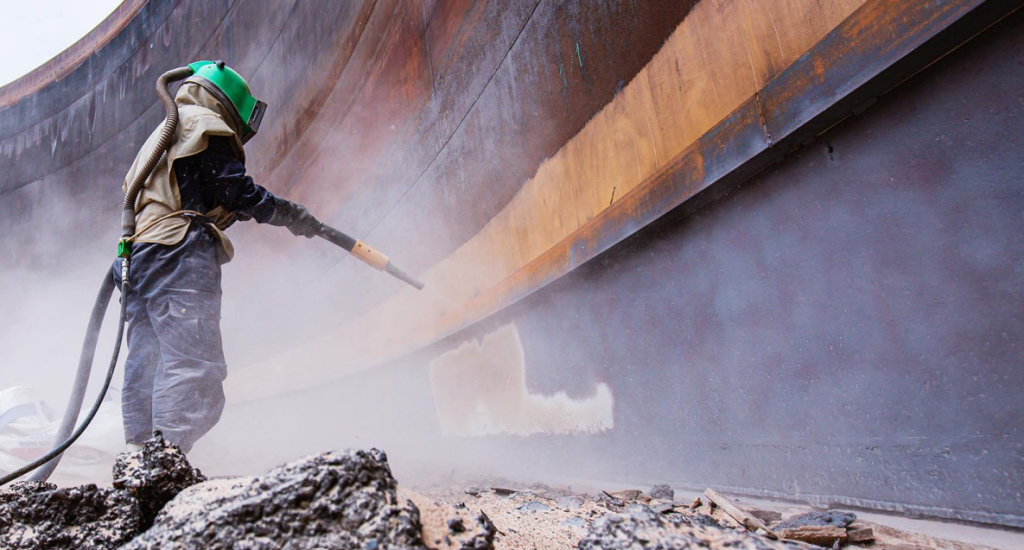
Next is abrasive blasting. If waterjet cutting is garnet’s precision craft, abrasive blasting is its heavy-duty workhorse.
Abrasive blasting is a major global activity across industries such as construction, defence, oil and gas, shipbuilding, fabrication, and steel structure maintenance.
The main hubs for this work include North America, the Middle East, and Asia – regions home to large shipyards, heavy engineering fabrication yards, and oil and gas megaprojects.
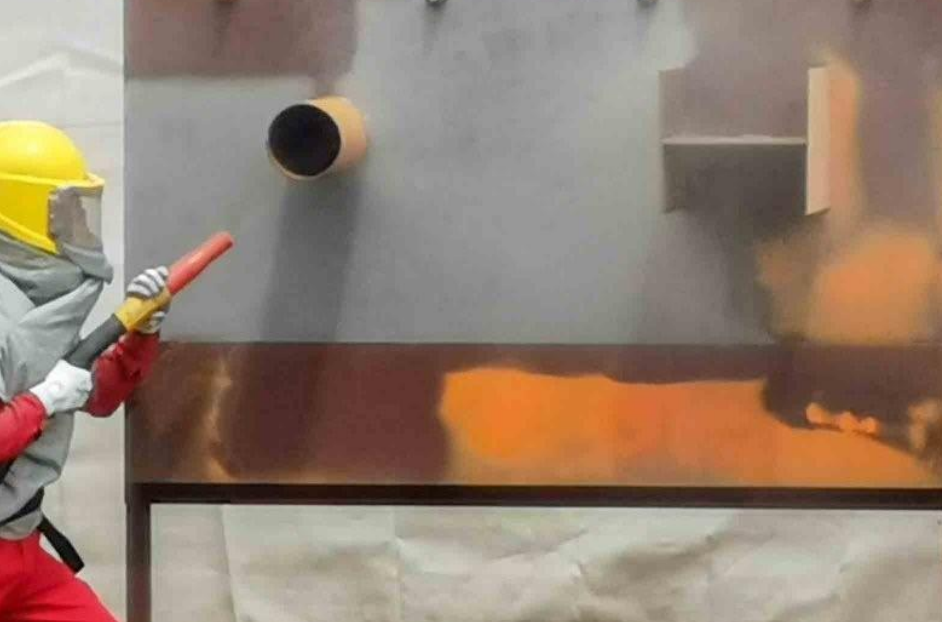
Importantly, garnet is just one option in a crowded blasting media market. Other materials include natural minerals such as silica sand, staurolite, and olivine; manufactured media including aluminium oxide and steel grit; byproducts such as copper slag, coal slag, and nickel slag
Despite this competition, garnet is often prized for its performance, recyclability, and ability to produce cleaner finished surfaces with reduced dust – all factors that matter in industries governed by strict environmental and safety requirements.
Geography of global supply
While Australia and China dominate market share, garnet mining is far from a two-country story.
The US hosts several major garnet deposits, while large-scale production also occurs in India and China. Additional mining occurs in Czechia, Pakistan, and South Africa,
And beyond these active producers, garnet resources also exist in Canada, Chile, Spain, Thailand, and Ukraine, servicing both domestic use and export markets.
This geographic spread highlights how essential garnet is to industrial economies – and how diverse its supply base has become.

Despite the wide distribution of deposits, garnet buyers do not treat all sources equally.
USGS data underscores that buyers in the waterjet and blasting sectors are acutely aware of the trade-off between price and performance. Producers in low-cost regions may enter the market with cheaper products, but end users require consistent quality to meet strict cutting or blasting specifications.
In high-precision applications, meeting – not just approaching – those specifications is what unlocks long-term contracts. That’s why established brands remain strong, even as new entrants emerge.
Garnet may not make the headlines like lithium or rare earths, but industry fundamentals suggest it is an industrial mineral moving into a new era. A combination of growing waterjet adoption, increased infrastructure spending, global shipyard expansion, and the need for cleaner blasting media is sharpening the focus on supply reliability and product quality.
At the same time, structural imbalances – particularly the oversupply of fine alluvial garnet and the undersupply of coarse product – are creating opportunities for producers that can tailor their output to market needs.
Garnet’s lack of spot pricing, opaque data environment, and dependence on long-term relationships make it a more specialised market than most. But that’s also where its opportunity lies. In a world where industrial precision and project scale keep growing, garnet’s role as a dependable, high-performance abrasive will only become more important.
For now, the industry remains one of mining’s most quietly strategic markets – and one that the world is beginning to pay far closer attention to.
Write to Adam Orlando at Mining.com.au
Images: USGS & Heavy Minerals


