



This article is a sponsored feature from Mining.com.au partner Great Boulder Resources. It is not financial advice. Talk to a registered financial expert before making investment decisions.
A golden number sits at the centre of Great Boulder Resources’ (ASX:GBR) Side Well story. 1.02 million ounces. It looks good on paper. It looks even better as a doorway to what comes next.
“One million ounces is a really exciting milestone,” says Great Boulder Managing Director Andrew Paterson.
“It demonstrates scale, unlocks options, and opens up the kinds of conversations we can have moving forward.”
For Paterson, it is also a psychological line in the sand that many juniors spend years chasing, because it signals the project is moving forward from promise to genuine opportunity. The milestone carries extra meaning because the company has been working toward it for about four years, backed by an early conviction that Side Well has the potential for greatness.
“We said that we’d get there pretty early on, and it’s rewarding to come back to the market and say we’ve done what we said we were going to do,” says Paterson.
Close to town, close to opportunity
Great Boulder’s Side Well site is in a strategic location, immediately east of Meekatharra in the Mid West region of Western Australia. It hosts several key prospects and deposits across two main corridors, including Mulga Bill, Eaglehawk, Flagpole, and Loaded Dog in the Central Corridor, and Ironbark, Saltbush, and Golden Bracelet in the Eastern Corridor.
“It’s very flat terrain,” says Paterson.
“If your dog runs away, you could still see it three days later. It is hot, sparse country with almost no trees and a little bit desolate, but we are literally 10 minutes out of town with other mills in the area, so it’s a really good place to be.”
Being near infrastructure keeps costs down, shapes the work, and lifts morale. With easy access to power and water, plus a hospital and an airport in town, workers can fly in and out with ease.
For a small team, that accessibility is critical. It reduces operational friction in the early stages of an exploration story, when every extra hour on the road, every delayed delivery, and every logistical problem can slow momentum.
“I worked on a project in New Guinea, where if you needed anything, it had to come in on a barge and would take a week to arrive. Side Well’s logistics make it simpler to keep drilling, keep learning, and keep moving,” Paterson says.
Discipline through the messy middle
Great Boulder’s one million ounce milestone doesn’t come without a hiccup or two, but the colourful journey makes it all the more satisfying.
“It was tough going at times, but through adversity we maintained the discipline to keep our options open when the market started paying attention,” Paterson says.
That discipline shows up in how Great Boulder talks about the project. Side Well is not pitched as a mine. Instead, it is framed as a growing system with improving confidence and a set of practical steps that can expand choices over time.
A COVID-era discovery story
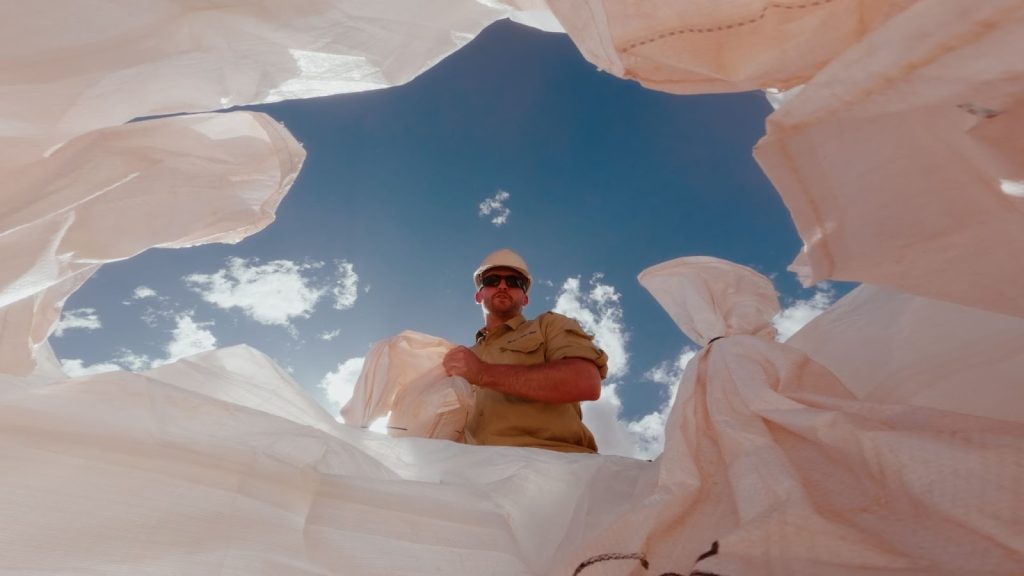
Side Well’s story begins during the COVID-19 lockdown. Paterson and his exploration manager Daniel Doran are both in Perth looking for another gold project. With fieldwork restricted, the pair has the time to sit with data, interrogate what was already public, and work through possibilities across the state. Eureka, they discover Side Well. By the second half of 2020, they are drilling.
Paterson says the first thing they realise is that it isn’t easy. They drill holes with an exploration model in mind, but the ground gives them completely different results. Instead of forcing the early model to fit, they accept that the geology is more complicated and go back to fundamentals.
The team resets, and by building an understanding of the system from surface and subsurface geochemistry, they create a map. By March 2021, Great Boulder has enough information to drill properly, and they strike gold.
“We hit the first high-grade discovery at Mulga Bill on two of the first three drill holes. It’s amazingly successful with high grades straight away, but there are still a few roadblocks to come,” Paterson says.

The moment everything clicked
Through 2021 and into 2022, Great Boulder keeps drilling and encountering results that do not always land where they are expected. Targets appear offset. Mineralisation shows up somewhere else and confusion builds. It is a period defined by learning and recalibration. Holes that should have worked do not always behave as predicted, and the team keeps adjusting their understanding of the geometry of the mineralisation rather than simply chasing the next intercept.
“We slowly start to realise we are drilling the wrong way,” Paterson says.
“We turn the rig around 180 degrees, begin drilling in the opposite direction, and it starts to make sense.”
Soon after, Great Boulder delivers its first resource estimate at roughly 0.5 million ounces. From there, the growth is slow and steady. The team keeps adding ounces and making new discoveries within the same area.
Growing ounces, then growing confidence
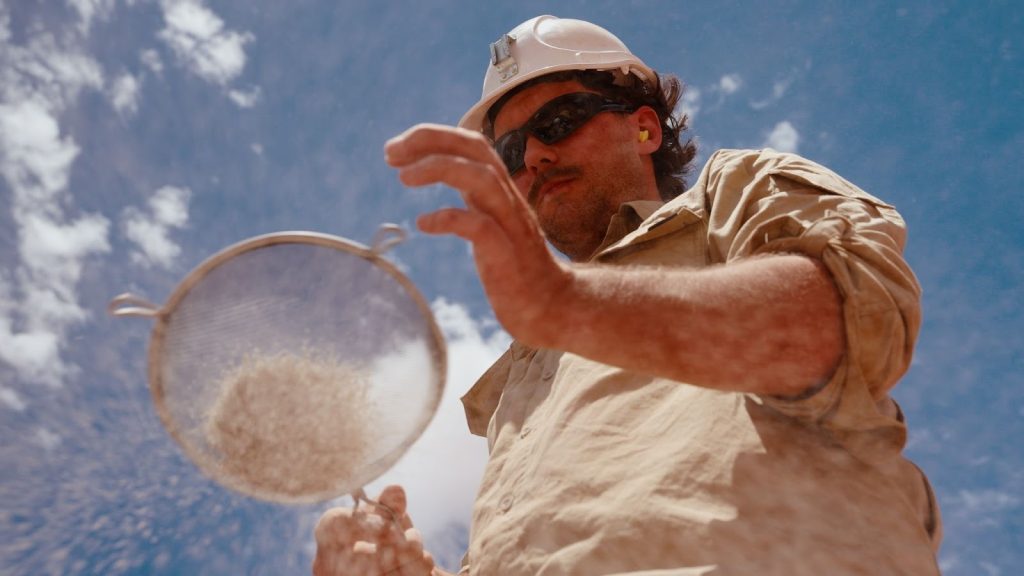
Counterintuitively, the sprint to one million ounces also means easing off at times, by intentionally slowing the growth rate to lift confidence in the mineral. This is the part where many exploration stories look less glamorous than the headlines. The work that builds the resource base is only part of the job. The work that improves the quality of the resource is what turns scale into something that can support decisions.
Paterson explains that “when the first resource comes out, much of it is inferred, the lowest confidence level under the JORC code. To lift trust, we do infill drilling which can mean repeating drilling effort at tighter spacing, not necessarily to grow the number, but to improve the quality of what is already there”.
It is work that takes time and runs alongside ongoing growth drilling. The results have been worth it with Great Boulder’s resource base and confidence profile growing rapidly. Paterson puts the indicated portion around 61% to 62%. 90% of the ounces carry open pit potential.
“Open pit potential is essentially a measure of how close the gold sits to surface. It is less risky, less expensive, and statistically a lot safer from an occupational safety perspective.”
A bigger ambition for 2026
For Great Boulder, the one million ounce moment is a permission slip to think bigger.
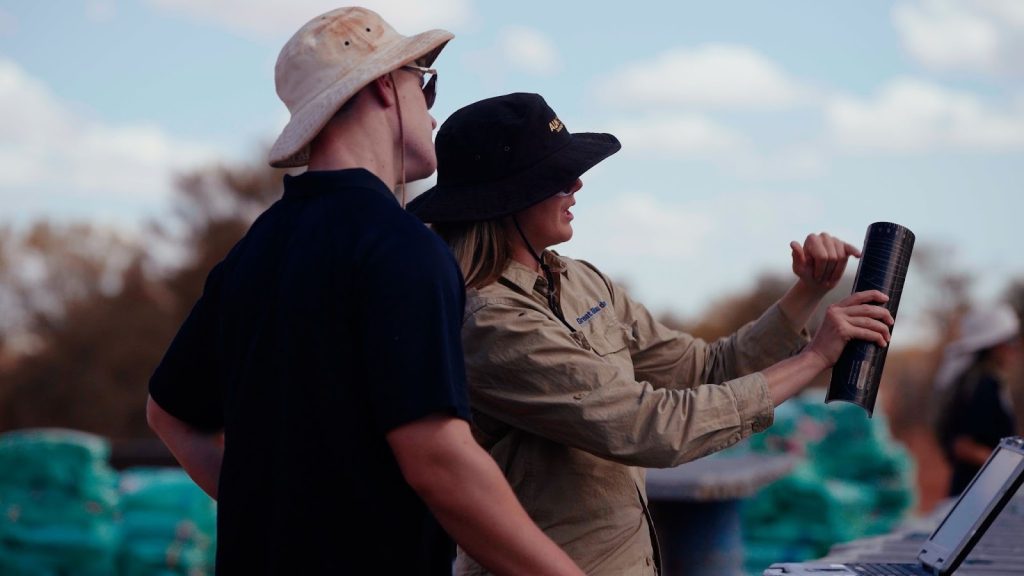
“Our ambition now is to reach 1.5 million ounces. It will give us enough metal to consider building our own mill.”
Great Boulder heads into 2026 in an enviable position, with two clear priorities for the year ahead. The first is advancing approvals at its first deposit, Ironbark, by securing both a mining agreement and a mining lease. Priority two is to keep growing the resource base, not just for size, but to preserve flexibility.
Asked what success looks like by the end of 2026, Paterson keeps it grounded in fundamentals. Growth and discovery remain the engine, with the mining agreement a key catalyst, and shareholder returns the clearest scoreboard. The risk profile, in his view, is steady.
“There is nothing that really keeps us awake at night,” Paterson says.
“We think now we’ve got a pretty good handle on the geology. We have good stakeholder relationships in the region and everything that we’re aiming to achieve is quite achievable.”
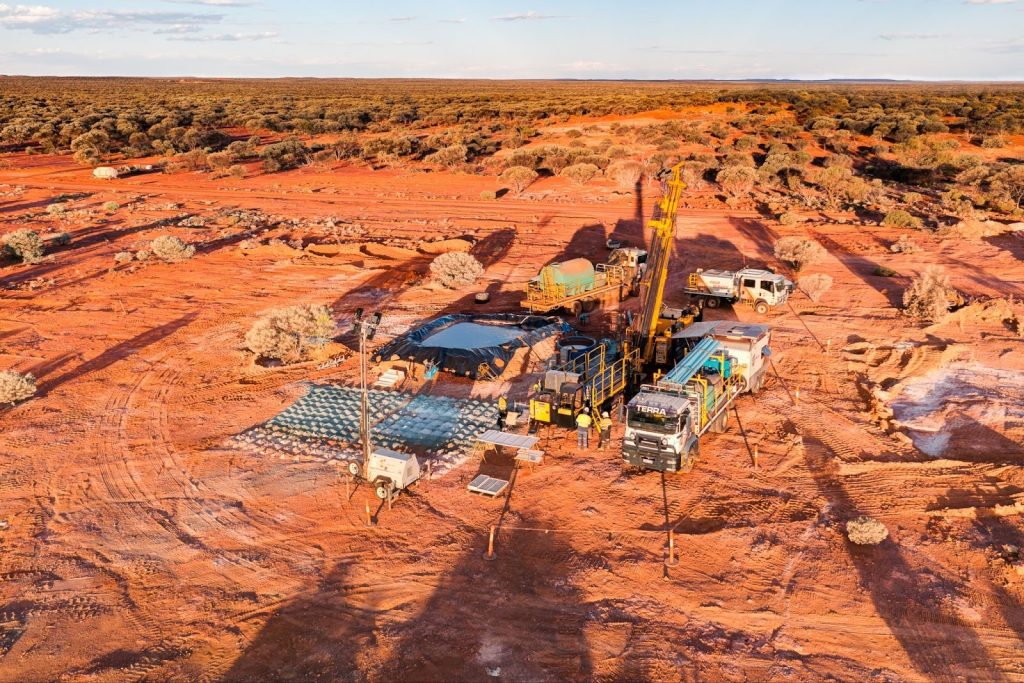
With around 16 staff, Great Boulder’s pace is extraordinary and there is no slowing down. Drilling is continuous at the three rigs, and a fourth rig is being considered. The operation is running at an annualised rate of more than 120,000 metres a year. That tempo drives constant news flow and market updates.
“We probably report to the market about 30 to 40 times a year and have already seen it respond since our one million ounce announcement in December. The company’s valuation has lifted roughly 25% to 30%.”
The next milestone
The next ambition is reaching 1.5 million ounces, but there is no clear timeline as to when that next milestone could arrive.
“I’m hoping to have more clarity on that ideally by mid-year,” says Paterson.
In 2026, the question is less whether Side Well can grow, and more how many credible paths that growth can open.
Write to Kate Ryan at Mining.com.au
Images: MINING CREATIVE and Mining.com.au


