The views expressed in this article are those of the author and do not necessarily reflect the views of Mining.com.au, its affiliates or the companies Scott North is associated with.
“If we’re going to miss, let’s miss big.”
Those words, half humour, half faith set in motion one of the great stories in Australian exploration.
In late 1991, a small WMC team rolled their rigs onto a flat, featureless stretch of black soil outside of Cloncurry. No outcrop, no gossan, no reason to stop the ute. Except for one magnetic anomaly on the geophysical map, a subtle, tight bullseye named FC5, sitting near mining lease ML 2674 in the old Fort Constantine belt.
What they hit would change how an entire generation of geologists explored.
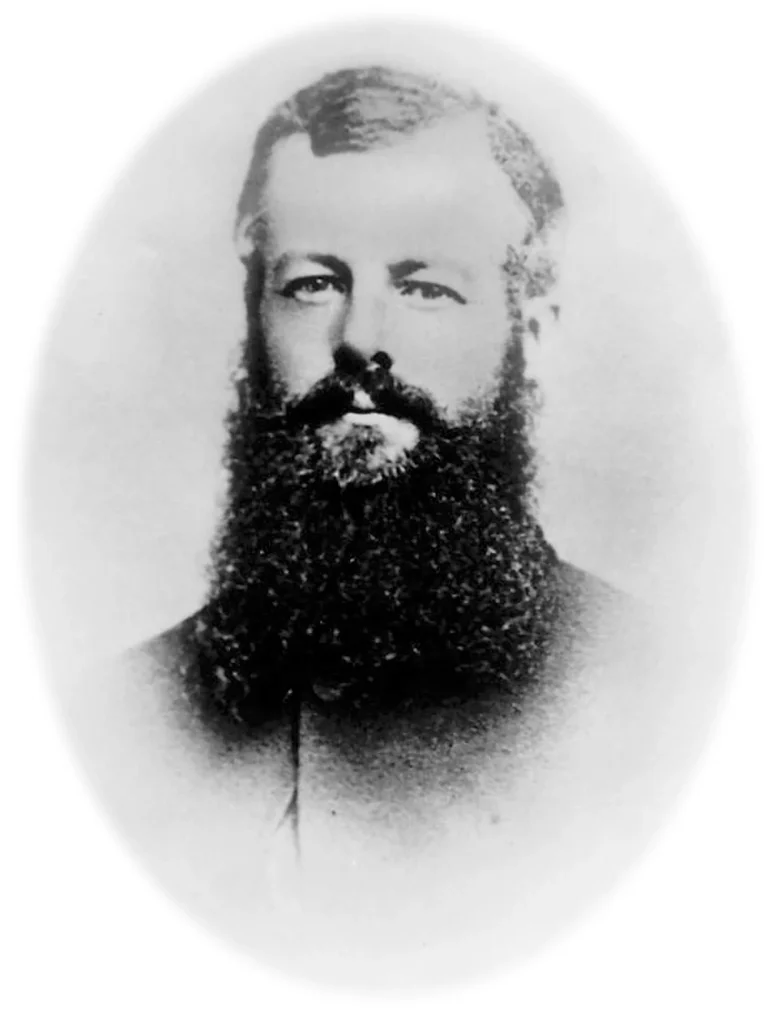
The Cloncurry district has always had characters. Ernest Henry himself was one, a 19th-century explorer and prospector who founded Hughenden and Cloncurry, and whose name still echoes across Queensland copper country for that very reason.
But a century after Henry’s first finds, the district held a far bigger secret, a copper-gold giant completely hidden under 50m of barren cover.
Drilling blind on a hunch and hope
By the early 1990s, WMC had already earned its reputation with discoveries like Olympic Dam. Exploration director Dr Roy Woodall and Eastern Region manager Chris Middleton were convinced Mount Isa still had more to give.
They re-processed BHP’s (ASX:BHP) magnetic datasets, stitched together surveys, and generated a new suite of anomalies, which were FC1 to FC7, across the Fort Constantine belt. One stood out. A dense, strongly magnetic. Just odd enough to matter.
Woodall’s philosophy was simple: “If you want to make a discovery, you’ve got to be prepared to drill blind.”
Inside WMC, the Ernest Henry story began quietly in 1989. The company had recently completed a series of regional geophysical reviews across northwest Queensland, trying to marry old magnetics with new gravity coverage.
Senior geophysicist John Vearncombe led a small technical team that noticed a curious magnetic and gravity feature north of Cloncurry, a compact, pipe-like anomaly that didn’t fit the known geology. It laid beneath deep tertiary cover, invisible to mapping, but its magnetic intensity was extraordinary.
By early 1991, the anomaly had been ground truthed, modelled, and ranked. It became Fort Constantine Prospect 5, or FC5, and was approved for a single diamond hole funded under WMC’s high-risk “Discovery 2000” program.
The proposal wasn’t popular. Some may have thought it was another “Olympic Dam-style daydream”. But Woodall backed it. “If we’re going to spend the money, spend it on the hole that teaches us something.”
In October 1991, the rig arrived. The first hole EH001 was collared directly over the magnetic high.
Fifty metres of nothing, the red rock
The first 50m were nothing but overburden, black clays, gravel, and sand. Then the core changed. Brecciated volcanics, magnetite flooding, green actinolite veins.
As the driller pulled up the first copper-stained core, it was radioed to the field office, “You’d better get up here, this one’s red.”
The geos knew immediately they were onto something. Even before assays came back, the textures screamed sulphide-rich breccia. When the first results arrived it was 1.6% copper and 0.5 grams per tonne gold over broad zones. Follow-up holes FC6 and FC7 repeated the result, proving a plunging pipe of mineralised breccia trending southeast.

The discovery announcement in late 1991 didn’t make big headlines. WMC was cautious, it had seen too many “discoveries” fade. But inside the company, word spread fast, this could be another Olympic Dam moment.
By Christmas, partners WMC and Hunter Resources knew they’d found something major. They named it Ernest Henry, after the district’s original prospector who had first struck copper in the 1860s.
A small crew with a big conviction
The discovery wasn’t luck, it was the product of a methodical team that combined old-school geology with cutting-edge geophysics.
- Roy Woodall, WMC’s exploration director, had cultivated a corporate culture that rewarded scientific curiosity. He gave his regional managers the freedom and budget to test bold ideas.
- Chris Middleton, heading WMC’s Eastern Region, had spent a decade studying the Mount Isa complex structural history. He recognised that magnetite-rich breccias could host copper-gold, even without surface expression.
- Geophysicists John Vearncombe and Ian Green modelled the FC5 data and argued for a deep magnetic source, not just a basaltic unit.
- Exploration geologists like John Menzies and Tim Roberts coordinated the drilling, mapping, and core logging – a small field crew working out of a makeshift camp near Cloncurry.
Their teamwork reflected WMC’s discovery ethos: multidisciplinary, data-led, and relentlessly patient, which in today’s markets is very hard for any geologist to have.
Geologically, Ernest Henry turned out to be a textbook iron oxide-copper gold system, though the textbooks hadn’t yet been written.
The orebody was a steeply plunging breccia pipe, roughly 250m by 300m in section, hosted within altered felsic volcanics of the Fort Constantine Volcanic Suite. Magnetite formed the dense matrix chalcopyrite that carried the copper-gold nestled alongside.
It lay completely concealed beneath cover. No geochemical halo. No structural clue. Only magnetics and the faintest hint of conductivity betrayed its presence.
When drilling the discovery, the grades were extraordinary for a blind target: ~1.6% copper and 0.5g/t gold, with supergene caps running up to 4% copper near the top of the breccia.
The magnetic high wasn’t an ironstone bluff, it was a billion-year-old hydrothermal system, injected by fluids from a buried granite pluton around 1.5 billion years ago. Actinolite, biotite, and red feldspar alteration zoned outward into hematite and chlorite haloes – the fingerprints of a long-lived, oxidised fluid engine.

From one hole to a modern mine
Between 1992 and 1995, WMC drilled the deposit systematically, tightening spacing to 100m and tracking the breccia more than a kilometre down-plunge.
By 1993, the resource stood at 69 million tonnes @ 1.6% copper and 0.5g/t gold. By 1996, before construction, it had grown to 166 million tonnes @ 1.1% copper and 0.54g/t gold.
The orebody’s geometry and grade continuity made it perfect for large-scale mining. The project’s economics were confirmed with a concentrator built on-site, fed by an open pit moving roughly 60 million tonnes of material annually in its early years.
It was one of the first truly modern, data-driven discoveries of its kind, a triumph of geophysics and conviction when there was no surface expression.
The success drove a rush of new geophysical programs across the Eastern Succession from Osborne and Mount Elliott to Selwyn and Mount Margaret. Every junior outfit from Townsville to Mount Isa wanted its own “Ernest Henry-style” target.
Magnetics, gravity, and induced polarisation surveys became the new prospector’s pick. A data-led revolution was underway. It also changed how capital viewed exploration risk. Investors, once sceptical of deep-cover drilling, started backing science-based programs. The language of “seeing through cover” entered boardrooms.
By the early 2000s, Queensland’s undercover search space was one of the busiest exploration corridors in the world and it all traced back to ML 2674.
Today, Evolution Mining (ASX:EVN) owns 100% of Ernest Henry, producing around 48,000 tonnes of copper and 70,000 ounces of gold per year. A 2023 resource extension confirmed the system remains open at depth, with underground drilling chasing the orebody well beyond the old pit walls.
Nearby prospects like Bert and Mount Margaret sit within the same magnetic belt; the geological echo of the original FC-series anomalies that Woodall’s team first mapped more than 30 years ago.
For all the tonnes, ounces, and dividends, Ernest Henry’s real contribution lies in mindset. It shattered the belief that world-class deposits could only be found where rocks stick out of the ground. It proved that data, persistence, and courage to drill the invisible could rewrite the geological map.
Beneath the black soil of Queensland, Ernest Henry taught a generation that discovery now belongs to those who dare to see differently to look beyond the obvious, trust the science, and keep drilling when nothing at surface says you should.
“The next great discovery won’t be found by sight,” as one geologist later put it. “It’ll be found by conviction.”
Subscribe to Scott North at LinkedIn
Images: John Oxley Library, State Library of Queensland & Evolution Mining