


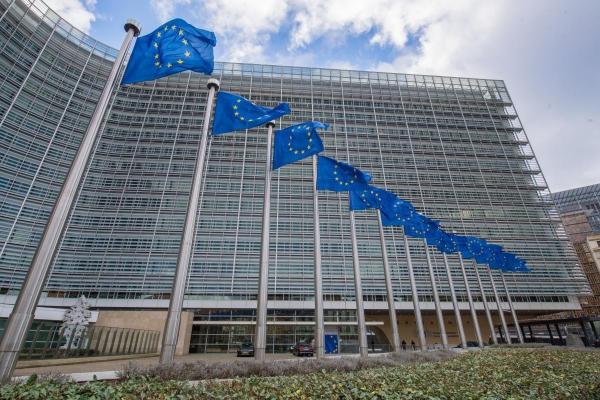
The European Commission is approving schemes to support clean technology manufacturing capacity, while deepening strategic partnerships in renewable energy.
Earlier this year, the commission approved a €1 billion ($1.63 billion) Slovak scheme to contribute to the transition towards a net-zero economy. The purpose of the scheme is to ensure sufficient manufacturing capacity for clean technology.
Under the scheme, the aid will take the form of grants and income tax relief. The scheme will be open to small and medium-sized enterprises and large enterprises carrying out investments that add manufacturing capacity for clean technology.
Deepening Egyptian partnership
Meanwhile, Egypt and the European Union (EU) are deepening their strategic partnership with a financing package of up to €690 million to upgrade and expand the Egyptian electricity network.
The package combines a €600 million loan from the European Investment Bank’s development arm, EIB Global, with up to €90 million in grants from the European Commission.
Led by the state-owned Egyptian Electricity Transmission Company, the project aims to integrate a total of 22 gigawatts of renewable energy capacity into the grid by 2030, enough to supply around 10 million households with electricity.
The project is one of the first concrete operations under the Trans-Mediterranean Renewable Energy and Clean-Tech Cooperation Initiative, a flagship of the Pact for the Mediterranean, to support renewable energy and clean-tech cooperation between the EU and its southern Mediterranean partners.
The program also includes the construction of substations and the installation of advanced transmission lines to integrate solar and wind power generated in the Red Sea and Gulf of Suez regions into the national grid.
The investments are expected to reduce transmission losses, improve electricity reliability, strengthen energy security, and support sustainable economic development.
More EVs in Europe
The European Commission also highlighted this week that more European drivers are buying fully electric cars and benefiting from growing cost savings.
According to the European Automobile Manufacturers’ Association, more than one in five new cars registered in the EU in April 2026 were fully electric, up from 15.7% in April 2025 and an average of 17.4% over 2025.
Overall, between January and April 2026, around 750,000 new fully electric vehicles (EVs) were sold in the EU.
Drivers switching to EVs are saving more on fuel, while the EU is reducing its dependence on imported oil and cutting its fossil fuel import bills.
The International Energy Agency reports that, with oil prices at US$100 ($143) per barrel, electric vehicle drivers enjoy fuel cost savings that are 35% higher compared to a year ago.
For the EU, the uptake of EVs has cut oil demand by an estimated 140,000 barrels per day, representing a 4.5% reduction in car-related oil use, saving an estimated €4.5 billion per year in fossil fuel imports.
Write to Aaliyah Rogan at Mining.com.au
Images: European Commission


