


Tropical Cyclone Alfred has prompted the closure of several mine sites across Queensland as it intensifies and moves towards the southeast coast, bringing heavy rainfall and gales with damaging wind gusts, as reported by the Bureau of Meteorology.
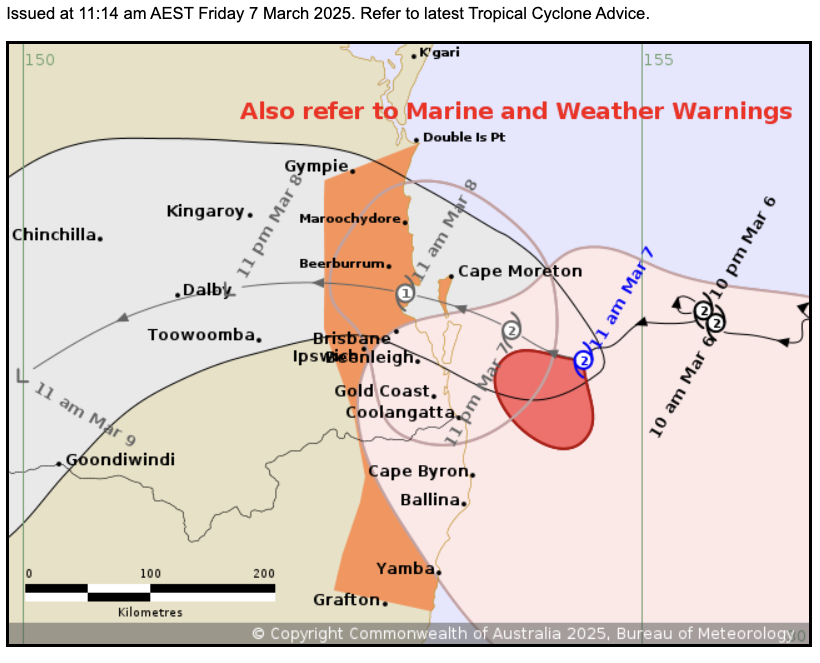
BOM has classified Cyclone Alfred as a category two system, forecasting it to impact Southeast Queensland as early as Saturday morning. The cyclone is expected to bring heavy rainfall, strong winds, and ocean disturbances, which could impact key regions in Queensland and New South Wales.
The bureau has issued a series of warning zones, stretching from Double Island Point in Queensland to Grafton in New South Wales. Areas including Brisbane, Gold Coast, Sunshine Coast, Byron Bay, and Ballina, are all under alert as the cyclone’s path draws closer.
In preparation for the severe weather event, Holcim Australia reports several quarry and concrete plants in Queensland have halted operations as of 5 March, with plans to resume on 10 March.
Similarly, quarries and concrete plants in the Northern Rivers region, including sites in Ballina, Lismore, Brunswick Heads, Casino, and Byron Bay are also closed until 10 March.
The Coffs Harbour area in northern New South Wales has also followed suit, with closures beginning at 12pm AEDT today and expected to reopen on 10 March.
This widespread shutdown comes after the Resources Safety and Health Queensland (RSHQ) regulatory urged quarries in the regions to prepare for Cyclone Alfred.
With more than 400 sites expected to be in the firing line, RSHQ Chief Inspector of Mineral Mines and Quarries Hermann Fasching says sites need to manage the risks of misfires, flying hazards, and lightning strikes.
“Sites need to make sure there are no structures that can become mid-air weapons during cyclone winds,” Fasching says.
“They also need to pay careful attention to explosives because there’s an increased tendency for fume events and potential misfires in wet weather.
“Finally, have a rescue-system ready. An adequate emergency response and rescue system must be in place in case a severe weather event causes injury, entrapment or damage to buildings or infrastructure.”
The Australian Rail Track Corporation (ARTC) also prepared the rail network in anticipation of the cyclone.
ARTC has mobilised crews and resources along the New South Wales and Queensland North Coast rail corridor including construction crews at the Queensland end of the rail line.
Several ARTC contractors have been on standby to support and the corporation is working with local mines to stockpile materials, including rock to ensure there is an adequate supply for any necessary responses along the corridor.
As Tropical Cyclone Alfred approaches the Queensland coast, $15 million in emergency assistance has been made available to south east councils in the impact zone. The Community Relief Fund, jointly funded by the Albanese and Crisafulli governments will provide councils up to $1 million to undertake essential immediate clean up and restoration activities.
Councils can use this funding for waste and debris removal from streets, properties, and community assets, and activities to restore public assets. Support has been made available under the joint Commonwealth-state Disaster Recovery Funding Arrangements (DRFA).
The Australian Government is working closely with both the Queensland and New South Wales governments to ensure appropriate recovery support is ready to go for impacted communities over the coming days.
Queensland’s mining sector is considered a cornerstone of the state’s economy, contributing $86.5 billion in nominal gross value added terms in 2022-23.
The state is also home to some of the world’s largest coal reserves and operations, which produced more than 280 million tonnes of coal products in 2021.
Of the coal mines in Queensland, more than one third of all extraction occurred at Peak Downs, Blackwater, Goonyella Riverside, Ensham, Kestrel, and Minerva mines.
These Queensland mine closures follow similar weather-related disruptions from Tropical Cyclone Zelia which formed off the Western Australian coast in mid-February 2025.
Cyclone Zelia, which was marked as a category five system, moved north of Port Hedland and brought destructive winds and heavy rain to the Pilbara region which demonstrated the impact of severe weather on Australia’s mining sector.
In Port Hedland, authorities closed operations, as well as the Dampier Salt operations which comprises two solar salt locations in Western Australia. Dampier Salt is considered the largest exporter of seaborne salt, harvesting millions of tonnes per year.
Write to Aaliyah Rogan at Mining.com.au
Images: Bureau of Meteorology