


Coal is a mineral that keeps power stations running, export earnings flowing, and political arguments burning well into the night.
Last Thursday, the black rock also fuelled a party and Mining.com.au got a seat at the table.
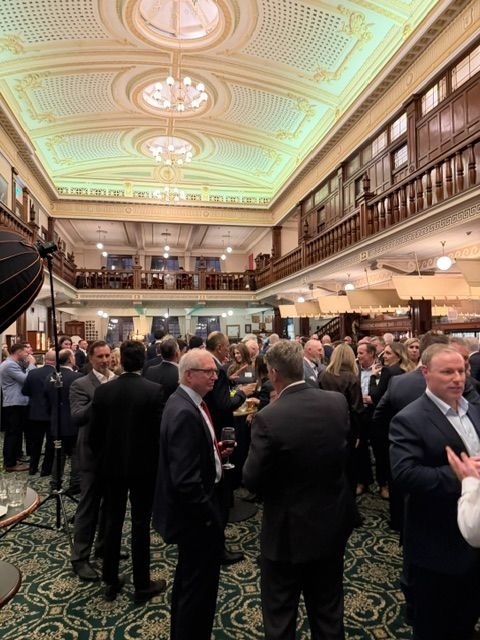
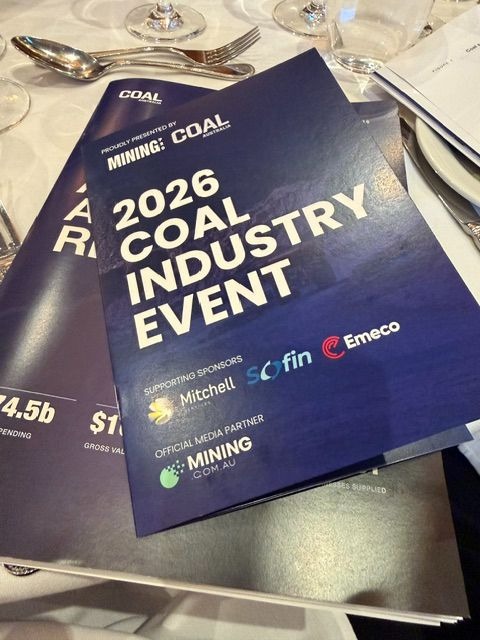
Around 250 industry figures, politicians, and supporters packed the historic Tattersalls Club in Brisbane for the 2026 Coal Industry Event, proudly presented by Coal Australia and Mining Pro.
After an hour of polite mingling, helped along by an open bar, guests took their seats for a three-course meal that served up considerably more than the standard menu.
Politics takes the floor
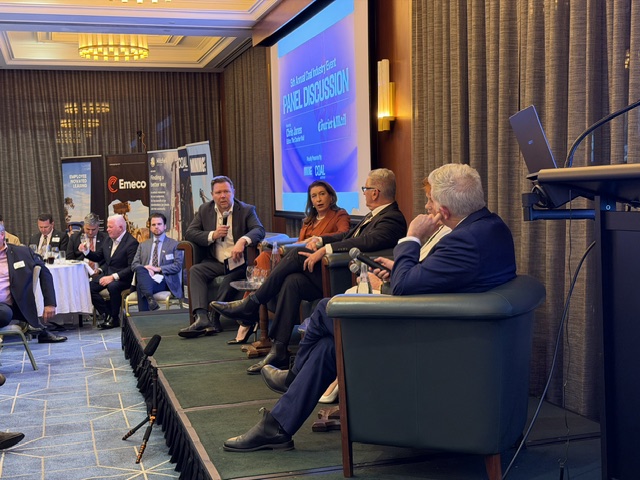
Following a warm welcome, the moment the room had been waiting for arrived: the political panel.
It brought together Labor Assistant Minister for Resources Senator Anthony Chisholm, Queensland Liberal National Party (LNP) Natural Resources and Mines Minister Dale Last, Queensland LNP Senator Susan McDonald, and One Nation Leader Senator Pauline Hanson.
What followed was less polite dinner conversation and more full-throttle debate over royalties, project approvals, energy security, and the future of fossil fuels.
Tasked with keeping the political temperature under control was one brave man — The Courier-Mail editor Chris Jones, who proved he knew how to corral a panel.
Time and again, he steered the discussion back to the issue nobody in the room could ignore: Queensland’s 40% top coal royalty rate.
Jones wasted little time asking LNP Minister Dale Last whether the Queensland Government would reconsider the state’s coal royalty regime.
Last said the government had promised royalty stability before the election and had delivered it by leaving the regime unchanged.
It was an answer that may have satisfied the policy brief, but not necessarily the room.
He defended the Queensland Government’s broader record by pointing to mine expansions, assets changing hands, and new operators entering Queensland as evidence the industry still had momentum.
Last said Queensland remained open for business and encouraged proponents to arrive ready to move.
“Bring an application with you, because we’re keen. We’ll sign it because we want to make it happen,” Last said.
He also pointed to plans to reform the land objection process, shorten approval timelines, and introduce “use it or lose it” provisions for undeveloped tenure.
His goal was ambitious: halve the time required for a greenfield coal project to move from application to production, a process he said could currently take about 12 years.
One Nation Leader Senator Pauline Hanson was not buying the language of stability.
For her, leaving the royalty regime untouched did not create certainty; it was a slow squeeze on the industry.
Hanson warned that shifting taxes, regulations, and approval requirements had made Australia increasingly difficult to invest in, with businesses looking to jurisdictions where the rules were clearer and the goalposts stayed put.
Her verdict was characteristically blunt.
“You are going to destroy the industry,” she said.
Hanson argued the royalty burden had to fall, approvals had to move faster, and governments had to stop treating Australia’s coal, gas, and uranium wealth as something to apologise for.
She said Japanese representatives had warned that Australia’s lack of policy predictability was pushing business towards alternatives, including the US.
Hanson also backed an inquiry into the royalty regime and said she would shut down the federal Department of Climate Change, Energy, the Environment, and Water (DCCEEW), remove the Safeguard Mechanism, and wind back environmental regulation she believed had become excessive.
Then, as Labor and the LNP traded blows, she spotted an opening.
“Is One Nation looking good?” Hanson asked.
The line landed exactly as intended.
More than royalties
LNP Senator Susan McDonald then shifted the debate from royalties to activism and the wider political campaign against resources.
She argued duplicated regulation, restrictions on financing fossil fuel projects, and well-funded anti-mining campaigns were steadily weakening confidence across the sector.
McDonald’s sharpest point was reserved for the question of who was paying for those campaigns.
“If we do not know who is funding the anti-mining, the anti-agriculture campaigns, then we will never move forward,” she said.
McDonald said a future coalition government would speed up approvals, scrap the Safeguard Mechanism, and remove restrictions preventing government-backed finance bodies from supporting fossil fuel projects.
Labor Assistant Minister for Resources Senator Anthony Chisholm had the unenviable task of defending his government’s record in a room that was not always in a forgiving mood.
He said differences within Labor over coal were nothing new and argued the party had long managed competing views on major policy issues.
On the need for more energy supply, however, Chisholm was unequivocal.
“We need more power generation, significantly more power generation. That needs to be what the focus is on,” he said.
Chisholm said some coal-fired power stations might need to remain open longer to support grid stability and argued electricity generation should not become another political football.
He also pointed to the federal government’s improved relationships with major trading partners, saying future resource projects would continue to rely on foreign investment.
The numbers behind the debate
Coal Australia’s figures gave the room a reminder of just how much was at stake.
Its annual report estimated the sector contributed $74.5 billion in direct spending to the Australian economy in 2024–25, including $52.5 billion in supplier purchases and $8.9 billion in wages and salaries.
Including flow-on effects, coal’s total economic contribution reached $164.9 billion and supported 782,243 full-time equivalent jobs. The sector also supported an estimated 14,451 businesses nationally during the 2024–25 financial year.
Queensland accounted for the largest share of direct company expenditure at $38.4 billion, ahead of New South Wales at $26 billion.
The numbers explained why the debate carried so much heat.
By the time dessert plates were cleared, nobody had solved the royalty question.
But the room had made one thing obvious: coal remained economically enormous, politically combustible, and perfectly capable of fuelling a Brisbane party.
Write to Kate Ryan at Mining.com.au
Images: Kate Ryan



