


Chariot Corporation (ASX:CC9) is strategically positioned next door to Lithium Americas’ (TSX:LAC) Thacker Pass Project in Nevada, which is one of North America’s most talked-about lithium developments.
Earlier this week, the US Government requested a 10% stake in Lithium Americas, amid renegotiating a US$2.26 billion ($3.45 billion) loan from the Department of Energy to advance the group’s Thacker Pass Lithium Project in Nevada, with General Motors.
Chariot Corporation’s Resurgent Project, covering 10,137 hectares, is subdivided into two principal claim areas. The project neighbours two of the largest lithium resources in North America with a combined mineral resource of over 87 million tonnes of lithium carbonate equivalent.
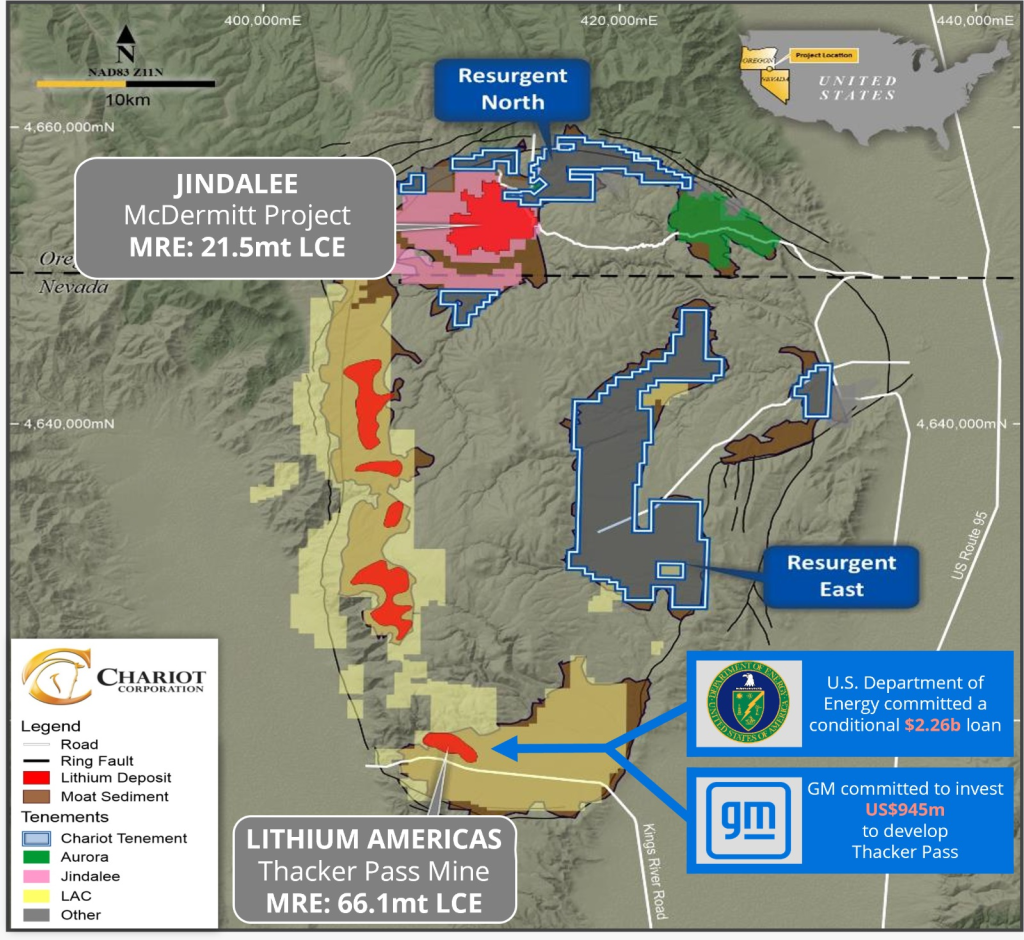
Given the location and geology of Resurgent, Chariot believes that the project shares characteristics most similarly with its neighbouring assets. For example, Resurgent East contains the same moat sediments as the Thacker Pass Project.
Resurgent is considered the largest land position in the eastern half of the McDermitt Caldera and encompasses 1,210 unpatented lode claims. Surface sampling assays from the project have delivered up to 3,865 parts per million (ppm) lithium, with 17 samples exceeding 1,000ppm lithium.
The US Government’s proposed stake in Lithium Americas is considered the latest example of the Trump administration intervening directly into the US economy.
Following the government’s proposals, Lithium Americas’ share price had surged more than 140% – trading at US$3.06 on 23 September to US$7.37 per share as of the time of writing.
The Canadian mining company is in discussions with the Department of Energy (DoE) and its joint venture partner General Moots, regarding the first drawdown on the US$2.26 billion loan.
Lithium Americas says the topic of these discussions include conditions precedent to draw on the loan and associated loan specifics, as well as incremental requests from the DoE.
Lithium is a critical battery mineral necessary in producing batteries, which are vital for US’ national security and economic resilience. The current electric vehicle battery supply chain has a global footprint, with battery minerals travelling an average of 50,000 miles from extraction to battery cell production.
The US Government currently produces less than 1% of the global lithium supply, with Australia being the top producer followed behind Chile and China.
Write to Aaliyah Rogan at Mining.com.au
Images: Chariot Corporation