


This article is a sponsored feature from Mining.com.au partner CGN Resources. It is not financial advice. Talk to a registered financial expert before making investment decisions.
Leonora is a district where discovery can still hide under cover. In WA’s northern Goldfields, it combines proven endowment with ready infrastructure, and plenty of ground that hasn’t been fully interrogated.
CGN Resources (ASX:CGR) is making Leonora the centre of its 2026 push, after securing a large package of highly prospective gold tenure from Patronus Resources (ASX:PTN) in late January. Managing Director and Geologist Stan Wholley says the acquisition is far more than a transaction headline:
“It enables a bigger, more strategic land position for CGN. Leonora is one of Western Australia’s most active gold regions and a clear runway of near-term exploration milestones that can quickly deliver new data.”
The company has been building toward this moment for the past 18 months, and the acquisition gives CGN a larger, more strategic land position in the area.
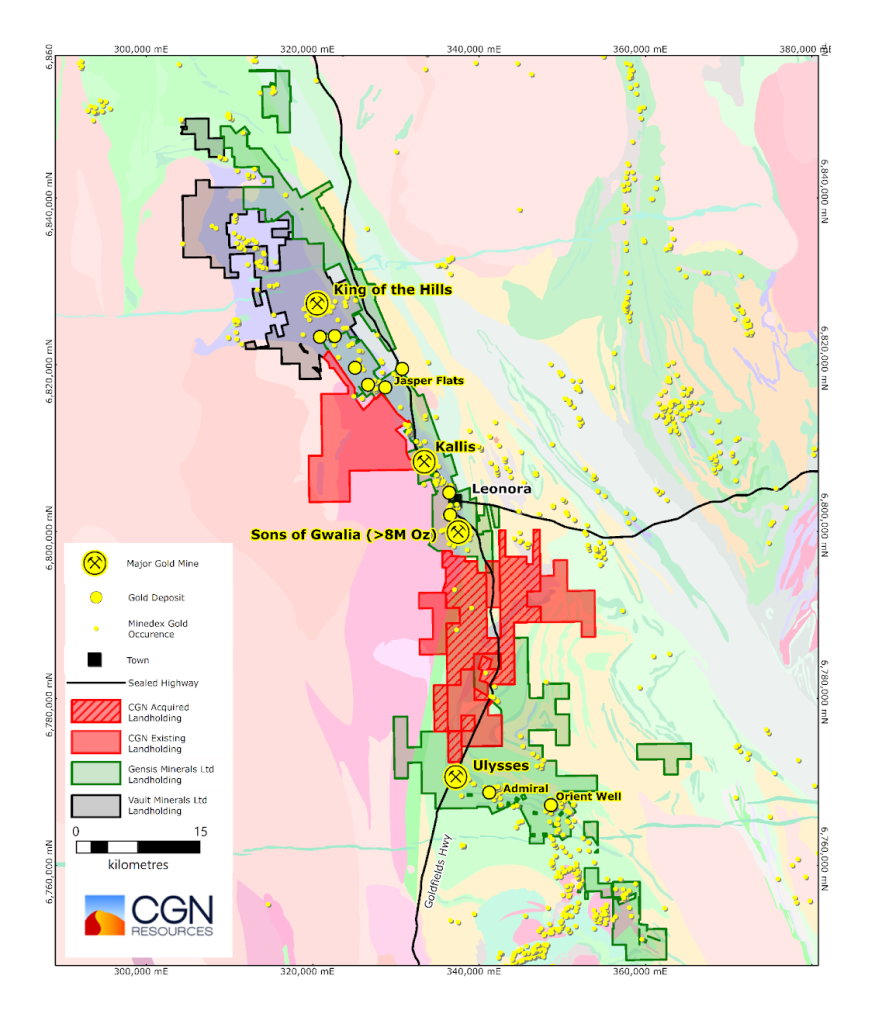
“We now hold a district-scale footprint in Leonora.”
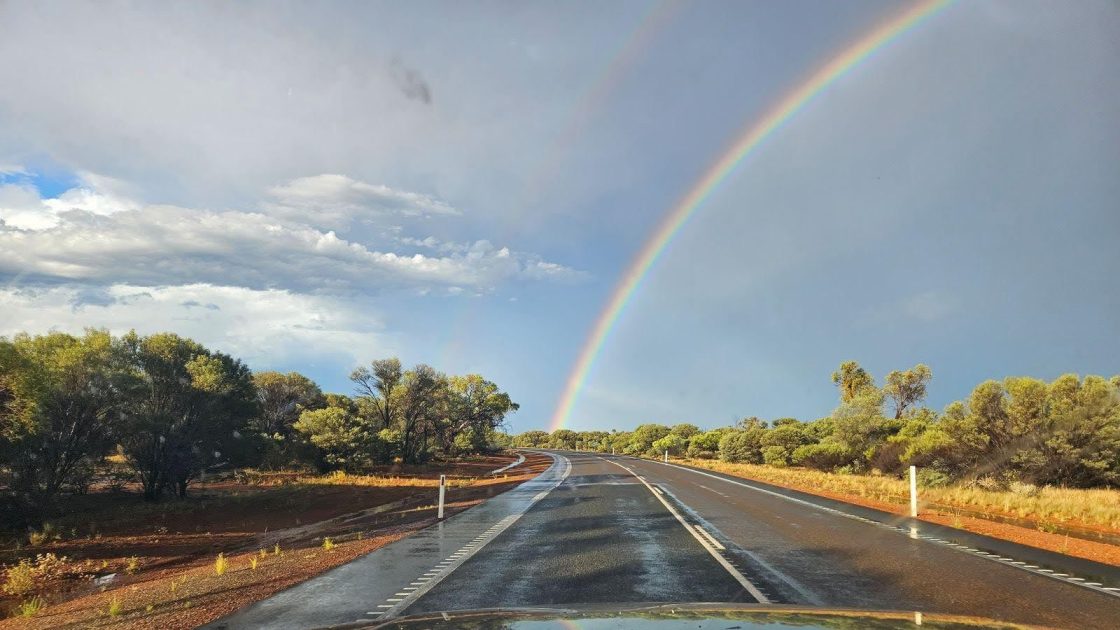
The footprint
At first glance, a large landholding can be hard to translate into real value, but where some juniors see risk, Wholley sees opportunity.
“The more land you have over the right type of rocks and structures gives you a greater chance of exploration success and making a gold discovery”, he says.
In Leonora, that logic carries weight because of its historically prolific reputation. Mining has been continuous since the late 1800s. Wholley estimates Leonora has produced around 20 million ounces of gold.
“Leonora is a hub for mining in that part of the world, which makes it even more attractive.
“All the services that miners need, like earthmoving equipment, sample dispatch, exist already.”
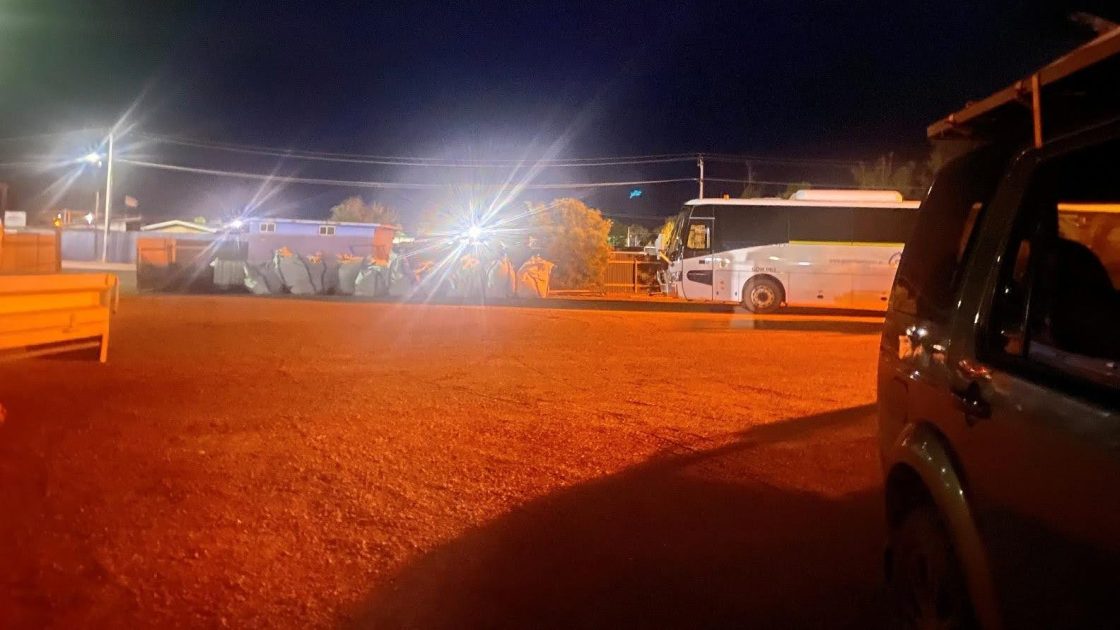
In Leonora, infrastructure is part of the advantage. Being close to accommodation, equipment, and mining services makes it easier to run fieldwork efficiently and keep momentum, turning modelling and target ranking into drill-ready programs without long mobilisation delays.
CGN is also operating in the shadow of big deposits, with Genesis’ Sons of Gwalia and Ulysses, and Vault Minerals’ King of the Hills projects nearby. The company believes the same broad geological setting and major structures that host those deposits extend into its ground. In practical terms, if a major gold system sits on one part of a trend, the next piece of that trend is worth a hard look, especially where historical work hasn’t been systematic for decades.
Proof and opportunity
CGN’s Leonora pitch rests on a balance of two things: historical proof and modern opportunity.
On the proof side, the company says there is considerable gold within its tenure, supported by historical drilling and “dozens of gold hits”. Those hits, Wholley says, are exactly what draws CGN’s attention… not because they are unknown, but because they can signal a bigger system that has not been tested properly at a district scale.
“Whenever you see a nice gold hit in drilling in historical data, it is always something that draws the eye”, he says.
“If someone finds gold, they often follow it up, but if you’re in a big company, perhaps it doesn’t meet your criteria for size. Sometimes it just doesn’t get the effort it should.”
On the opportunity side, CGN believes much of the area has not been systematically explored since the late 1990s and early 2000s. Wholley says historical exploration in that era was often geared toward shallow oxide deposits in areas of outcrop and commonly relied on drilling methods that struggled to properly test targets under cover.
“A lot of it is buried under cover. That put a lot of people off in the past because it’s hard to look through.
“We are willing to do the slower, more disciplined work of reinterpreting the district, then targeting the right host rocks and structures even when they sit beneath transported cover.”
From modelling to metres
CGN describes itself as “geoscience forward”, meaning it puts heavy emphasis on building a strong technical base before the drill rig arrives. In the lead-up to this phase, the company has worked through publicly available datasets across Leonora and started generating its own layers of information, including high-resolution aeromagnetics and geophysical modelling designed to improve its understanding of structures and target corridors.
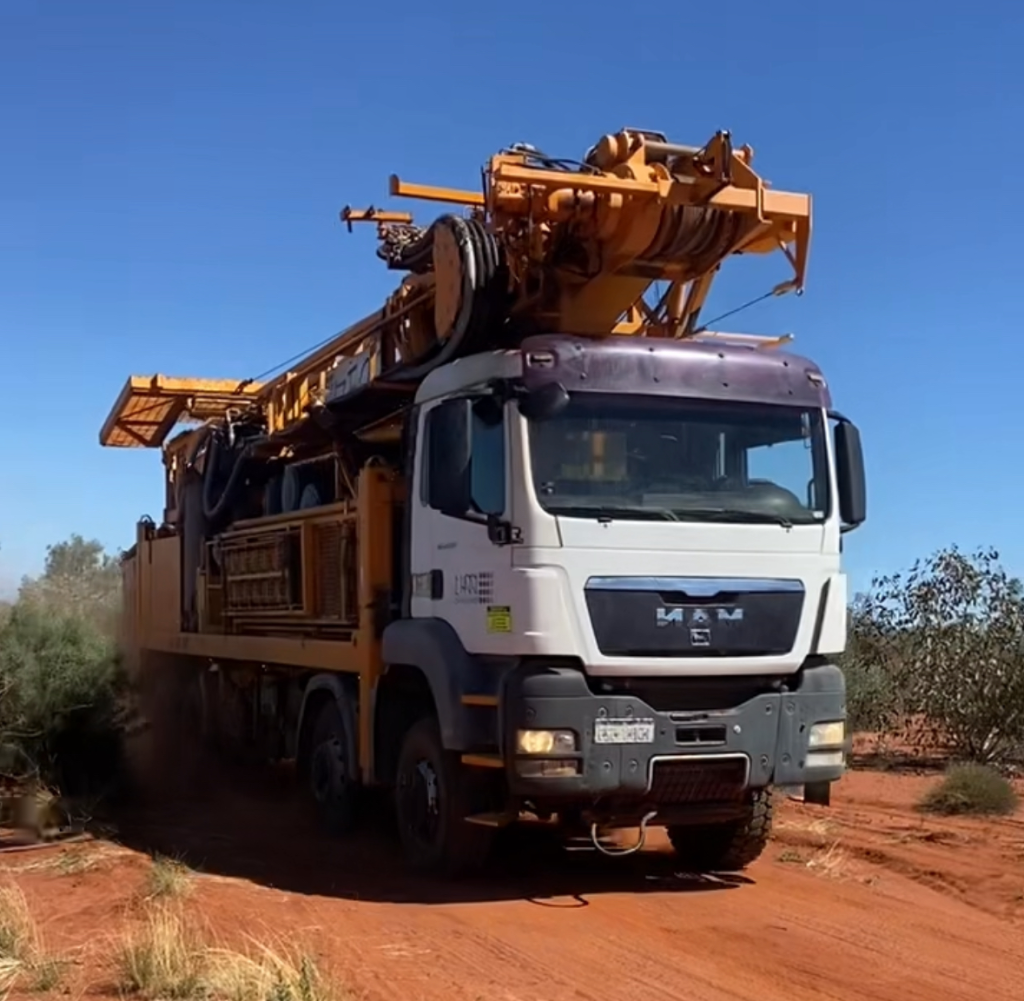
Now the focus shifts from interpretation to on-ground execution. Wholley says the immediate work program begins with reconnaissance sampling and early-stage prospecting this month, alongside the next round of modelling outputs that will help refine and rank priority targets. From there, CGN plans to commence a 4,000m reverse circulation drilling program in April, with assay results expected through April and May. Follow-up drilling will be guided by what that first pass delivers.
For a junior explorer, that cadence matters. It creates a clear path to fresh data and near-term catalysts, and it positions the Patronus acquisition as the start of an action phase, not the finish line.
“The drilling phase is important. It is the part that can move the dial for small companies. A good result can trigger momentum, allow a company to commit to larger programs, and sharpen decision-making quickly”, says Wholley.
The main risk: compliance timing, not geology
In the current Australian exploration environment, the key variable that can influence timelines is compliance, particularly heritage processes that require careful planning and coordination.
“Heritage is always the trickiest to manage because it’s completely out of our control”, Wholley says.
“We’re relying on building a relationship with another group and making sure that they understand what we want and we understand what they want.”
CGN’s focus is to move quickly through the compliance framework without cutting corners. The company is building relationships with Traditional Owner groups in the region and coordinating heritage survey work so priority areas can be cleared for on-ground activities and drilling.
“It is about doing business properly, being consistent and respectful.”
A portfolio behind the Leonora headline
While Leonora is the clear priority, CGN’s broader portfolio remains part of the company’s longer game.
Wholley describes the Webb Project as CGN’s foundation asset and it remains important. It has a suite of targets CGN wants to test, and grant funding will be available to support drilling later in the year. Importantly, much of the heritage and access groundwork at Webb is already done, making it easier to “switch on” when timing and budget allow.
Meanwhile, CGN’s Broadhurst copper project is in a generative stage, with work continuing as it progresses through the steps required before it can become a more active field program.
In terms of practical scheduling, Wholley says Leonora offers flexibility because it can be worked much more consistently through the year. Other remote projects, by comparison, can be more weather-restricted and logistically heavy, narrowing the available work window.
For the first half of 2026, though, CGN’s focus is unequivocal. Leonora is where the company believes it can generate the best return on effort: a large, contiguous land package in a proven gold district, with historical gold already demonstrated, and a modern technical approach aimed at finding what earlier programs may have left behind, particularly under cover.
“We know there’s gold there. It’s physically been found before.”
Write to Kate Ryan at Mining.com.au
Images: CGN Resources