



International Women’s Day 2023 is being celebrated today (8 March), an annual event supported by a diverse range of organisations and institutions including the Australian Securities Exchange (ASX).
The ASX is part of a global collaboration of a swathe of stock exchanges to take part in a ‘ring the bell’ initiative for IWD. The initiative is to raise awareness and push forward the case for women’s economic empowerment, by providing opportunities to advance gender equality and sustainable development in the workplace.
Interestingly, the Australian bourse only appointed its first female Chief Executive Officer (CEO) last year when Helen Lofthouse replaced Dominic Stevens to run the $16 billion-plus equities market operator.
However, in the years leading up to Lofthouse’s appointment the proportion of women on ASX-200 boards, which is dominated by the mining and financial services sectors, ballooned from 8.3% in 2008 to 33.6% in 2021. That period of growth made Australia one of only a handful of countries to breach the 30% threshold without legislated quotas.
Australian Bureau of Statistics data shows that over the past 20 years, the number of women employed full-time in mining nationally rose from just 8,700 in August 2002 to 45,000 in August 2022. That’s a whopping 417.25% increase.
Speaking to Mining.com.au, American Rare Earths (ASX:ARR) President, North America, Melissa (Mel) Sanderson says although the tides are turning, the biggest wave to overcome other than pay remains the industry’s reputation as being unwelcoming to women.
“On balance, it’s still a long and winding road to true inclusivity for women in mining.”
It is mixed progress like this that UN Women, a co-organiser of International Women’s Day and United Nations organisation delivering programs, policies, and standards that uphold human rights and help ensure all women live to their full potential, strives hard each year to advance equality in the workplace.
UN Women is also a supporter of the 67th annual Commission on the Status of Women (CSW67) taking place from 6-17 March, which is the UN’s largest annual gathering on gender equality and women’s empowerment. This year’s theme is “Innovation and technological change, and education in the digital age for achieving gender equality and the empowerment of all women and girls”.
While UN Women says the theme canvasses how the digital age is creating new and unprecedented opportunities to improve the lives of women globally, a 2022 study shows Australasia’s oft touted anachronistic mining sector is falling short on achieving many of those objectives despite the aforesaid improvements.
women in mining still face bullying, discrimination, and endure a lack of career progression opportunities
Last year’s report by the Australasian Institute of Mining and Metallurgy (AusIMM) drilled right down into the issues plaguing the sector. It uncovered a coarse reality that women in mining still face bullying, discrimination, and endure a lack of career progression opportunities.
The report discovered 85% of female respondents said gender inequality was rife in the sector, while 70% revealed bullying remained commonplace. More than two thirds said sexual harassment was prevalent in the industry, which is reportedly more than double the proportion of male respondents.
AusIMM CEO Stephen Durkin said at the time that some of the findings were ‘confronting’.
Mining has become somewhat more inclusive over the years, however many leaders today agree the industry is still archaic in many respects.
Global Lithium Resources Non-Executive Director Hayley Lawrance says while the proportion of women in mining is at its highest, there is room for improvement given the opportunities that exist.
“Opportunities are arguably greater at the junior levels, unfortunately however there is still a ‘pipeline’ issue with women not progressing through the ranks to higher, leadership levels at rates we would like to see.”
Lawrance says, at the board level unfortunately many companies take a tokenistic approach and believe having just one woman is enough to satisfy corporate governance requirements.

In terms of progress, in 2022 for example, Elizabeth Gaines who was then the CEO of Fortescue Metals Group (ASX:FMG), was the second-highest paid female chief executive in Australia and was ranked 13th in the top 20 execs in the country. Gaines was also the first woman to take the helm at the iron ore giant.
On the junior side of town, Peak Minerals (ASX:PUA) is a minnow with just 4 people listed on its directors and management team, however half of those are highly qualified and experienced women – CEO Jennifer Neild and Non-Executive Director Oonagh Malone. Neild has more than 18 years’ experience across a range of commodities and jurisdictions and previously held positions with Xstrata Nickel and Newmont Australia.
Workplace culture starts at the top
As Neild tells Mining.com.au, ultimately the shortcomings revealed in AusIMM’s report and overall workplace culture are both derived from organisational leaders and cannot just be a footnote in a company’s value statement.
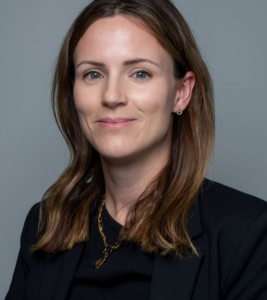
“It needs to be seen in the board, senior management and all employees encouraged to step forward and speak up. Those who allow it or do not speak up against the behaviour should be held to account.”
American Rare Earths’ Sanderson echoed Neild’s sentiments. Sanderson told this news service it seems almost unfathomable women in mining still face the issues described by AusIMM and that companies can only thrive in an environment of diversity.
“Leadership matters. Not just vertical, but horizontal. Team leaders and line managers are in charge of presenting candidates for training opportunities, conference attendance and managing projects. Sadly, too often those vital opportunities to grow and to build networks are given by guys to guys. A strong network composed both of men and women is necessary for women to thrive and rise.
Both senior men and women need to consciously act to model the value of inclusivity by more deliberately diversifying their personal structures. Importantly, and particularly in the field, men need to be prepared to confront and denounce inappropriate comments or actions by colleagues – not just chuckle uncomfortably or pretend they didn’t see or hear what happened.”
Sanderson says American Rare Earths has 3 ‘dynamic young female geologists’ on its team and in fact, 75% of its current field staff are women. The company is also seeking to shift the paradigm that at senior levels of the corporate ladder only limited positions are available for women.
“I personally think the problem is that male structures are almost invariably pyramidal and as a woman approaches the narrow space at the top, she perceives that there is room only for one, so doesn’t ‘reach down’ to bring others up with her. We need to realise that we can reshape the pyramid into something more like a barrel, thereby providing more opportunities for all.”
Australia must lead the way
Kristen Podegiel, who is Non-Executive Director at Silver Mines (ASX:SVL), says Australia needs to take the lead in reforming the current anachronistic structure of the industry. She notes mining must collectively examine the current wayward ways of working to acknowledge the systems and processes that no longer serve the sector.
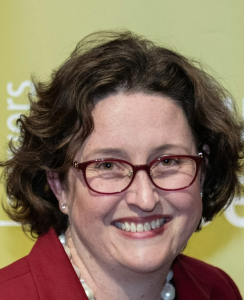
“If the Australian mining industry can lead the world when it comes to developing mining technology and better ways of doing things, there is absolutely no reason why we shouldn’t be able to do the same in this space.
It should not take legislative changes like the need to publicly publish our pay gaps, which for mining as an industry has gone backwards to 14.4% this year, and positively ensure sexual harassment does not occur for these issues to be front and centre of what we do every day.
Treat it as a mine optimisation exercise – because it is. The industry and your operation can’t be the best it can be until we get these issues addressed.”
Building alliances to break barriers
As Peak Minerals’ CEO explains, many issues have been addressed by the sector over the past decades yet some barriers have simply shifted or have been repackaged in other ways. Barriers that still exist for women include gaining respect of peers, building connections that help perform their job, and having their opinions heard by superiors. In many respects, she says, female workers are often held to different standards to their male counterparts.
“Now women have an expectation surrounding them – they are given more opportunities to further their careers or work suitable hours for their lifestyle but there is an expectation that they are exceptional. If there’s a misstep or a mistake the level of forgiveness is minimal. Equality and improving the numbers of women entering mining will improve this.”
Silver Mines’ Podegiel agrees that fewer barriers exist and some have shifted, however the contemporary challenge is now one of ‘perception’. She adds there is a distinct shortage of skilled labour overall and the ‘tap’ of females prepared to join the industry cannot simply be turned on.
“So many companies are actively seeking to engage more females in the industry and that is wonderful, but there is simply a shortage of females interested in entering the industry”
“So many companies are actively seeking to engage more females in the industry and that is wonderful, but there is simply a shortage of females interested in entering the industry. Companies end up largely poaching females from one another and while that is from a growing pool of females, that is still a far too limited pool.
We have to start thinking differently about the challenge and how we can massively increase the pipeline of females inspired to enter the industry.”
Podegiel says initiatives such as the annual International Women’s Day events, small-scale mentoring programs, and occasional careers fairs will not be enough to fill the shortage in the near-term and perhaps even for the decades ahead.
Sanderson concurs that many role shortages exist and agrees overcoming some perceptions continue to remain a challenge. She notes women are still disproportionately represented in many areas in mining including in legal, financial, as well as ESG roles.
“The road to the C-suite still tends to run through ‘hard’ functions, especially mining engineering. Pay inequality is real but is not limited to the mining industry. The biggest obstacle, however, is the industry’s reputation as unwelcoming to women. On balance, it’s still a long and winding road to true inclusivity for women in mining.”
Unconscious bias
One dimension to the issues raised by AusIMM is the idea of unconscious bias. It is defined as prejudice in favour of or against one thing, person, or group compared with another, usually in a way considered unfair. Unconscious bias with women in the workplace can manifest in many ways, such as how we judge and evaluate their performance, or how male workers act towards their female colleagues in general.
Silver Mines’ Podegiel reckons unconscious bias is ‘absolutely’ prominent in mining and exists in addition to conscious bias.
“But I also know that we all have unconscious biases, regardless of our gender. It is the responsibility of each of us, and especially those of us in leadership roles, to be aware of that and then to work to actively counter that in ourselves and in our teams and in our companies.”
Neild chimes in that while everyone has unconscious bias, it is a cycle the mining sector can still break for the next generation by the actions and words of today’s leaders.
However, Sanderson does not believe unconscious bias exists and labels it is a cop-out for some companies and leaders. She says studies show things said to children about others and even the way they are taught to play games reflects subconscious values, based on social perceptions and complicated histories.
“When that does become a cop-out, however, is when company leaders excuse a lack of progress to inclusivity by effectively speaking shrugging shoulders and mumbling that nobody meant anything bad…that’s the ultimate cop-out. Refusing to recognise that there is a problem is a conscious, not unconscious bias made by choice. And no, it doesn’t mean women are whiners either.”
Advice? Just do it!
There’s a range of agencies and groups currently providing women access to resources to assist their work life in mining. Women in Mining and Resources Queensland (WIMARQ) is one non-profit organisation dedicated to connecting, nurturing, and supporting women to achieve their goals within the Queensland mining and resources sector. It seeks to influence improvements in gender diversity and inclusion outcomes through our thought leadership reference group.
Communications Director for Gold Coast-based critical minerals company QEM (ASX:QEM), Joanne Bergamin, who is founding head of WIMARQ, is a major advocate for diversity in the sector.
Through running a range of WIMARQ events, Bergamin often advises and mentors women on how to be successful in Australia’s mining sector.

While the advice of leaders often varies, the consensus generally has been simply ‘just do it’. Having a willingness to learn and help others perform, as well as building relationships, and not skipping steps have also been touted as important by industry leaders for any woman wanting to work in mining.
Podegiel adds: “Honestly, go for it. There are incredible and cutting-edge opportunities in this industry especially for people who love learning, making a difference and problem solving. And for this industry to solve the challenges that lie ahead of it, we desperately need a greater diversity of thinking and better ways of working collaboratively – and that directly depends on having the most diverse group of people we can possibly have working on those challenges.
We need a diversity of genders, backgrounds, cultures, experiences, and ways of approaching problems and that presents immense opportunities for individuals looking to enter the industry.
One of the favourite pieces of advice I ever heard was: if you never ask, the answer is always no. I learned very early on to be curious and never shy away from asking questions and asking others including those far more ‘important’ and senior than me, for advice and help. I have found that people love to help other people. There are so very many people who have helped me on my career journey and continue to do so.”
“Pick the fights that matter and build alliances to break down barriers”
Sanderson notes that prior to joining American Rare Earths she has always worked in male-dominated industries – first as a diplomat and later in mining. At whatever level women find themselves, Sanderson says it’s important to use instinct, as well as intellect to separate deliberate slight from casual comment not meant to wound.
“Pick the fights that matter and build alliances to break down barriers.”
As Peak Minerals’ Neild explains: “There is no industry that offers such a diverse range of roles whether you are technical or not. It’s a dynamic industry that requires strong leadership by women or gender neutral individuals to help shape the future of it. There are huge opportunities for women to move into these roles if they can learn to ask for it.”
Write to Adam Orlando at Mining.com.au
Images: iStock & Supplied


