


The recent rise in currencies outside America seems to have jolted the world into action with US President Donald Trump’s honeymoon in the White House clearly over and the hangover just beginning.
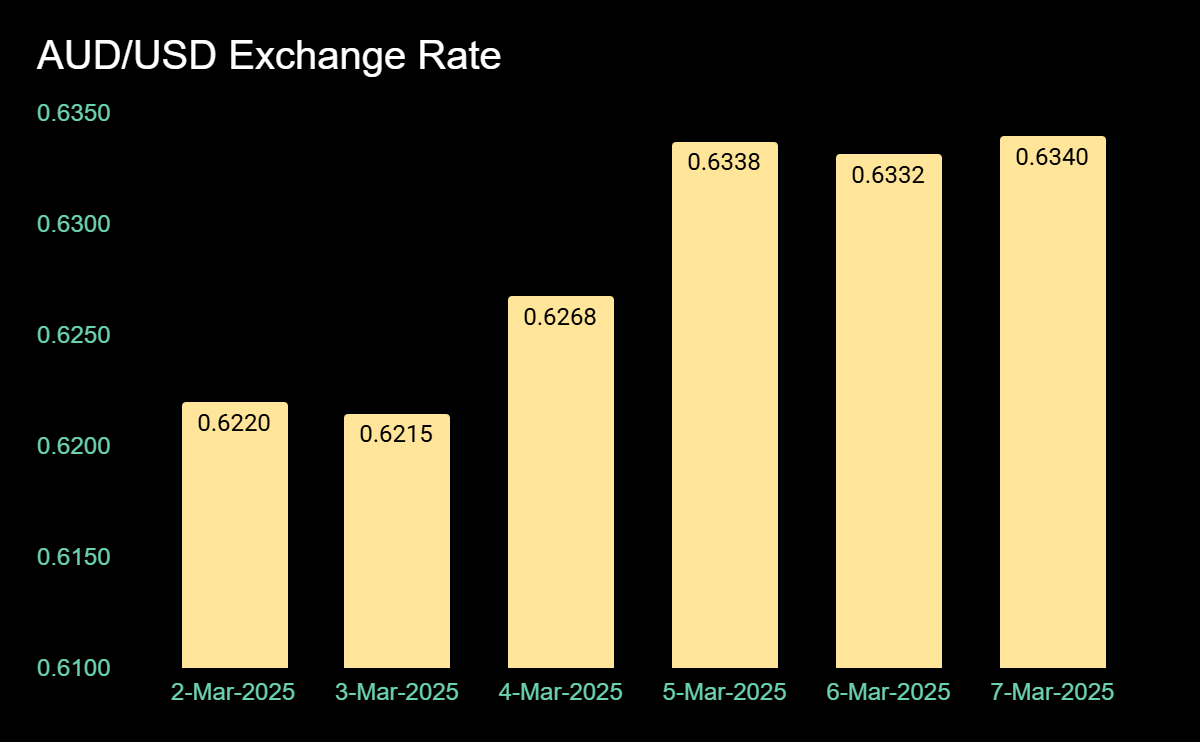
The Australia dollar is heading to US$0.64, in a period of strengthening that has surprised even the most pessimistic amongst the analyst class.
Simply put, tariffs are an own goal in dumb policy making that exposes the interdependence of the United States on supply chains outside its borders.
Cars made in the US for example require parts refined and manufactured in Canada as well as Mexico which despite being cheaper to make because of recent US dollar strength are likely to become more expensive as said parts are now subject to tariffs upon entry into the US.
The US is taxing its own citizens and for the kicker making products unnecessarily more expensive.
Such examples become evident in the exchange rates listed across display boards globally.
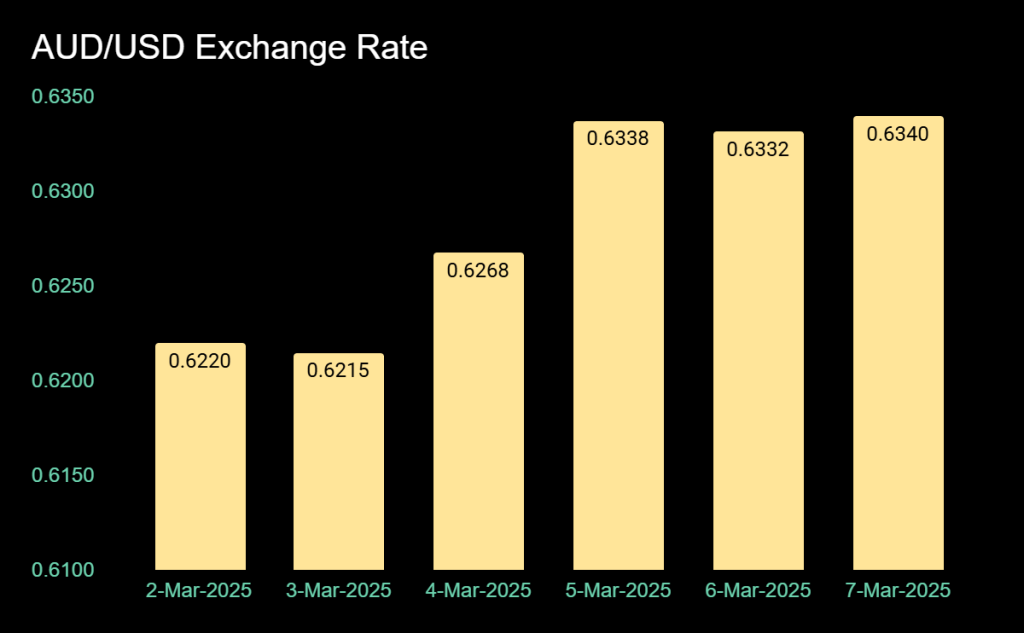
The AUD/USD exchange rate sits at 0.6340, reflecting a 1.6% increase over the past week noting the Australian dollar is a commodity based currency that is tied into the precious metals story as much as it is connected with the bulk minerals one.
Yet, despite pessimism over coal and iron ore, the reverse is true for Australia gold exports which are running hot with non-monetary gold hitting a record $5.3 billion in exports in January.
Markets hate uncertainty and while gold prices continue to tell an interesting story about what constitutes safe haven status, demand for the precious metal from Australia has helped maintain the country’s trade balance surplus in the last month especially.
Normally the same export category touches over a billion dollars per month but the last two months have been a boon for the trade data more broadly and a positive tailwind for the outlook of the Australian dollar.
Ironically, more than 85% of non-monetary gold exports went to the US in the last month meaning commodity-based currencies, especially those with precious metals are likely to come into greater focus over the coming months.

It appears markets have responded or woken up to the fact that the crash or crash-through style way of doing things in terms of success is ultimately a verdict handed down by financial markets and indeed the ones where currency is the focus.
The S&P 500 is down 2% on the week while the technology benchmark, the Nasdaq-100 fell 2.6% in the Thursday session as investors weighed the economic fallout.
Revisiting the failed policies of the 1970s is only going to be exposed far more quickly by a world more interconnected than ever.
Write to Dan Petrie at Mining.com.au
Images: Mining.com.au


