


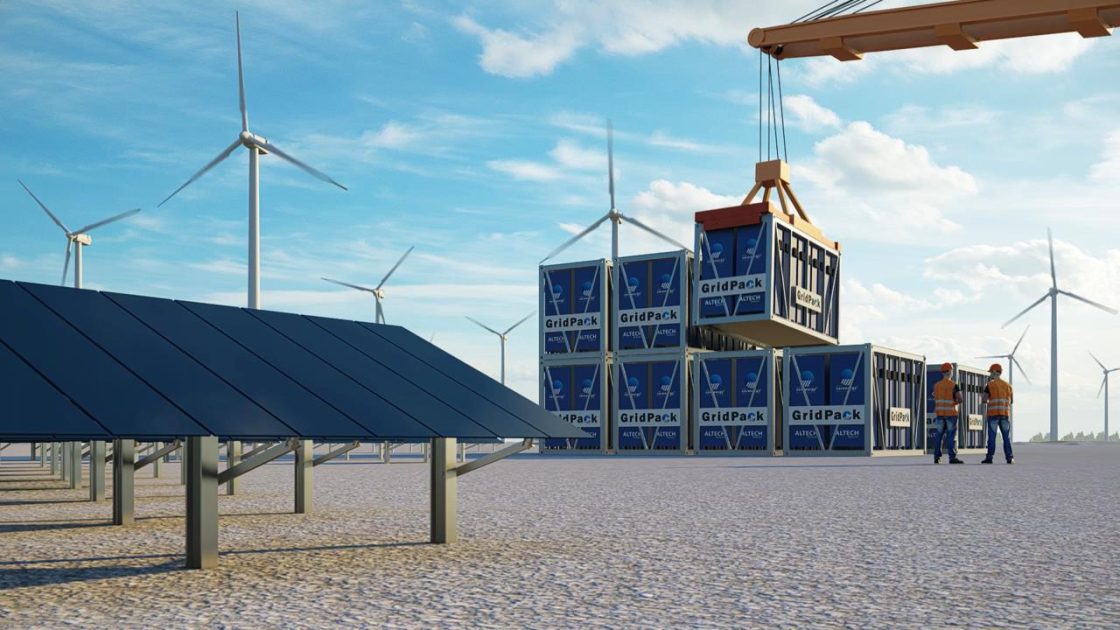
Altech Batteries’ (ASX:ATC) Cerenergy battery has been formally recognised in the highest possible green rating category, ‘Dark Green’, by an independent body.
The accreditation was handed down from the Centre of International Climate and Environmental Research, formerly CICERO, now owned by S&P Global Ratings in Norway.
The Cerenergy battery is a solid state, sodium chloride battery. While lithium-based batteries are expected to continue as the dominant battery technology, sodium-based batteries are tipped to play an increasing role, particularly in the stationary storage market.
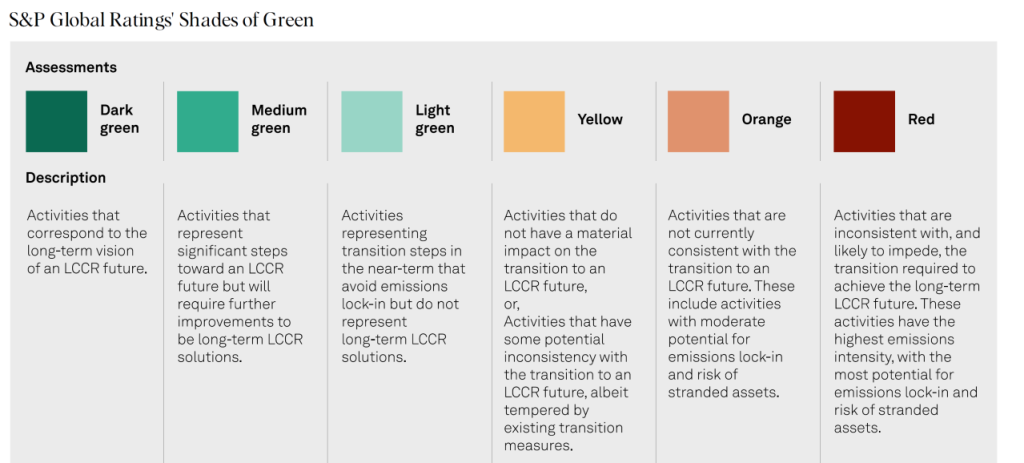
Eligible projects are assessed based on their environmental benefits and risks, using ‘Shades of Green’ methodology.
Altech says S&P assessed the project as ‘Dark Green’, primarily reflecting the importance of battery storage in the transition of the power and industrial sectors, the contribution to the development of alternatives to lithium ion and cobalt-free batteries, and the Cerenergy battery’s “comparatively low expected emissions and fossil-free direct production process”.
The International Energy Agency estimates sodium-based batteries account for around 10% of annual capacity additions by 2030.
Sodium-based batteries are increasing in appeal because they require no critical mineral inputs such as lithium, graphite, copper or cobalt.
The primary materials in Altech’s Cerenergy battery are sodium, alumina, and (recycled) nickel derivatives.
The technology is still nascent and there is limited research on its environmental impact. However, Altech’s battery has expected combined scope one, two and three emissions of 14kg of carbon dioxide per kilowatt hour.
By comparison, emissions generated from lithium ion batteries were estimated by IVL Swedish Environmental Research Institute in 2019 to be in the range of 61 to 106kg of carbon dioxide per kilowatt hour, depending on the electricity mix.
This means the Cerenergy battery is capable of producing one-third less emissions than a lithium battery.
Altech says the direct production process will be powered by renewable energy, with the company having entered a solar power purchase agreement, complemented by on-site solar installations.
The Cerenergy battery is also fully recyclable, which will take place at the plant and be carried out via mechanical, rather than chemical, recycling methods, which typically entail lower emissions and energy use.
Managing Director Iggy Tan says that the positive project assessment, formally termed a “second party opinion” , confirms that Altech’s Cerenergy project aligns to the International Capital Market Association’s Green Bond Criteria and is suitable for finance via green bonds.
“The project can now be accessed by investors that participate in the green bond market, the size of which is approaching US$250 billion annually and a large portion of which is present in Europe,” he says.
“The Cerenergy project’s green shading score does not affect bond pricing, rather it provides a transparent mechanism by which green bond investors are able to categorise their investment in terms of climate risks and impacts.”
Write to Angela East at Mining.com.au
Images: S&P Global Ratings and Altech


