

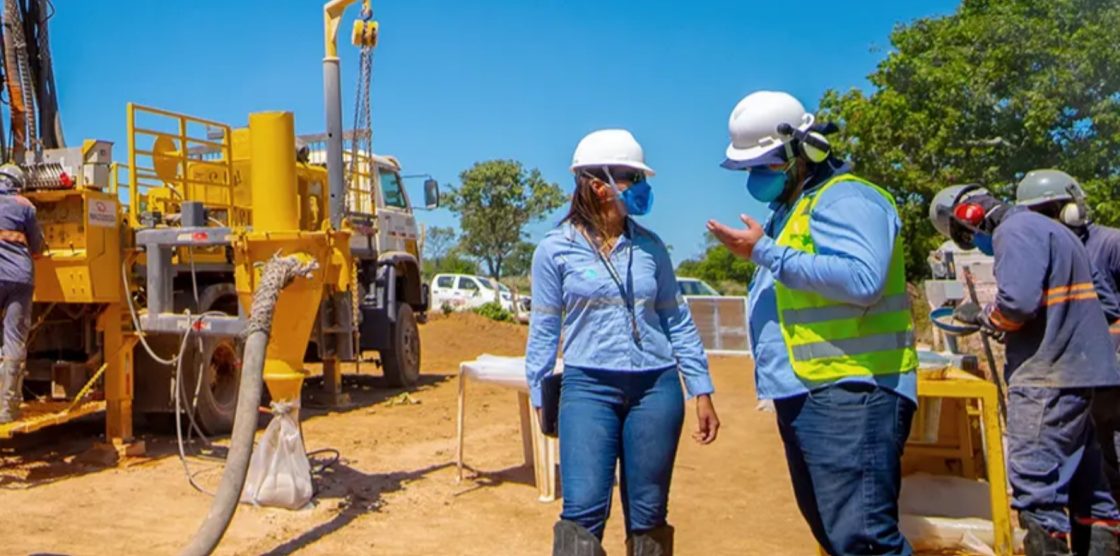
Aclara Resources (TSX:ARA) has received awards in the ‘Innovation’ and ‘Environmental Sustainability’ categories from the 2024 Mining Technology Excellence Awards.
The company says the accolades are in recognition of its technology for environmentally responsible extraction of heavy rare earth elements (HREEs).
Aclara ‘s proprietary Circular Mineral Harvesting (CMH) technology garnered the Innovation award, as Aclara seeks to set a new benchmark in sustainable rare earth extraction. This technology, which has been piloted at a semi-industrial scale, allows for the production of high-purity heavy rare earth carbonates with minimal environmental impact.
Aclara’s strategic initiatives, including the establishment of its subsidiary Aclara Technologies in the US and strategic partnerships are progressing its position in the development of a responsible supply chain for permanent magnets essential to clean technology sectors.
In the realm of environmental sustainability, Aclara’s CMH process has continued to develop the heavy rare earths sector by eliminating the need for explosives, crushing, milling, and tailings dams, thus significantly reducing the environmental footprint of mining activities.
The Mining Technology Excellence Awards is one of the most widely recognised programs in the industry, celebrating the achievements and innovations within the mining industry. The awards highlight companies and individuals driving progress and transformation in the sector.
| What are rare earth metals? The group of metals referred to as rare earth elements comprises a group of elements of the lanthanide series. Metals in the lanthanide series are lanthanum (La), cerium (Ce), praseodymium (Pr), neodymium (Nd), promethium (Pm), samarium (Sm), europium (Eu), gadolinium (Gd), terbium (Tb), dysprosium (Dy), holmium (Ho), erbium (Er), thulium (Tm), ytterbium (Yb) and lutetium (Lu). In addition, yttrium (Y), and scandium (Sc) are often grouped with the lanthanides and referred to as REE. Geoscience Australia assesses the lanthanides and yttrium together and has produced a separate review of scandium. Although these elements are referred to as rare, they are not particularly rare in the Earth’s crust. | When reporting on REEs, companies may use a broad subdivision of the group into Light Rare Earth Elements (LREE), Heavy Rare Earth Elements (HREE) and, occasionally, Medium Rare Earth Elements (MREE). While not formal groupings they are commonly used in today’s reporting on various exchanges. Heavy rare earths are defined by their higher atomic weights relative to light rare earths. They are less common and some elements within the group are facing shortages as demand outpaces supply, making them more valuable than LREEs, though they also have smaller markets. The HREE list includes dysprosium, yttrium, terbium, holmium, erbium, thulium, ytterbium, yttrium and lutetium. |
Write to Adam Orlando at Mining.com.au
Images: Aclara