


It’s often a forgotten metal despite playing an essential role in literally thousands of products. After large falls in 2023, zinc demand is again continuing to strengthen with Australia’s refined output expected to increase in the coming years before easing in 2026.
The Department of Industry, Science and Resources’ (DISR) latest issue of its Resources and Energy Quarterly: September 2024 notes price movements will drive Australia’s zinc exports to rise from $3.8 billion in 2023–24 to $3.9 billion in 2024–25 but ease to $3.7 billion in 2025–26.
DISR forecasts the zinc price to steady over the outlook period to 2026, increasing from about US$2,720 ($3,972) a tonne in 2024 to US$2,770/t in 2025, before slipping back to about US$2,710/t in 2026.
In mid-April, the zinc spot price was trading more than 5% higher to about US$2,847, hitting its highest level in nearly a year at the time. Strong global inflationary pressures and low outright metal prices had been straining zinc mining operations, leading to the closure of several smelters in Australia and Ireland.
Trading Economics analysts anticipated a further decline in output due to scheduled maintenance, amid investors shrugging off the concerns about delayed Fed interest rate cuts. Additionally, there was a growing belief the global manufacturing slump had somewhat bottomed out, boosting the demand for zinc as a building material, as reported by Mining.com.au.
Compared to DISR’s June 2024 quarterly, forecast zinc export earnings for the outlook period have been revised down by 6.4% ($269 million) in 2024-25 and 8.2% ($328 million) in 2025-26.
“The decline is being driven by a downward revision in ore export volumes, as mine production forecasts decreased, and a modest reduction in forecast zinc prices,” DISR reports.
“Australia’s mine production forecast decreased by 8.2% in 2024-25 and 10.1% in 2025-26 from the June 2024 Resources and Energy Quarterly. The Century mine in Queensland has seen lower than expected past production, revising down the mine’s forecast production numbers. Lower forecasted production from Century was the main driver in Australia’s mined production downward revision.”
Export earnings declined in the June quarter due to weak ore volumes. Australia’s export earnings for both zinc concentrates and refined zinc (combined) fell 5.9% year-on-year to 900 million during the period. DISR notes this decline was driven by a further fall in Australia’s ore export volumes, down by 15% year-on-year in the June quarter 2024.

“This meant despite ore export prices strengthening (up by 8.7%), export ore values declined by 7.4%. Australian mine production declined by 1.6% year-on-year in the June quarter 2024. This came off an already low base, with production in 2023 already adversely affected by the closure of several small mines,” DISR reports.
Mine closures continue to affect Australia’s zinc output. Aeris’s (ASX:AIS) Jaguar and Aurora Metal’s King Vol mines remain in care and maintenance, with both ceasing production in mid-late 2023.
Glencore’s (LSE:GLEN) Lady Loretta mine in Mount Isa is also due to close in 2025 due to a depletion of mineral reserves. Production at Glencore’s McArthur River mine – Australia’s second largest zinc mine – plummeted by 12% year-on-year in the June quarter, after a tropical cyclone wreaked havoc early in the year.
DISR says these falls were largely offset by a 12% year-on-year increase at Glencore’s Mount Isa mine – Australia’s largest zinc operation – with output rebounding from the heavily rain-affected disruption to production in Q2 2023.
As such, in a sign zinc may once again be the forgotten metal, Australia’s mine output is projected to fall by an average 1.1% per year over the outlook period to 2026, largely due to Glencore’s Lady Loretta mine closing in 2025.
Strongest zinc in the chain
Yet the longer term outlook is not overly grim. There’s a number of Australian miners with early stage zinc assets in their portfolio.
Belararox (ASX:BRX) is an advanced mineral explorer focused on securing and developing high-value, clean-energy resources with projects exposed to a range of metals including zinc.
Cazaly Resources’ (ASX:CAZ) Halls Creek Copper, Zinc and Silver project is situated 25km southwest of Halls Creek and extends over 10km of strike on the Halls Creek Mobile Zone which is ‘highly prospective’ for a range of commodities including copper, gold, and nickel.
Last month, Kuniko (ASX:KNI) reported initial assay results from a recent mapping and sampling campaign at the Vågå Project in Norway had returned promising results of up to 5.53% copper and 8.59% zinc, as reported by Mining.com.au. The Vågå Project forms part of the historically renowned Trøndelag volcanogenic massive sulphide mining district, which hosts nine historical copper mineral occurrences, including the Åsoren, Rustgruve, and Rapham copper mines.
Endeavor is Polymetals’ (ASX:POL) major underground silver-zinc-lead mine, located 40km north of Cobar, in central-western New South Wales, Australia. The project is the second largest mine (behind the CSA Copper mine, 30km south) in Australia’s richest polymetallic region known as the Cobar Basin. Polymetals acquired Endeavor in 2023 and is in process of restarting mining activities targeting silver, zinc, and lead metal production in H1 2025.
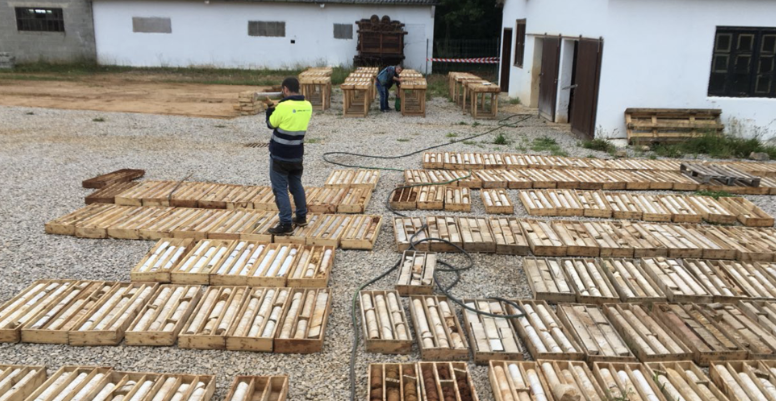
In August, Variscan Mines (ASX:VAR) entered into an exclusive marketing agreement with Square Trading Singapore for the future sale of zinc and lead concentrate from the Novales-Udias and Guajaraz projects in Spain. Under the agreement, both parties will negotiate and agree to a competitive, commercial marketing fee, immediately following Variscan announcing the results of a mine restart study.
At the time, Square Trading Executive Chairman Staffan Ever noted that zinc plays an increasingly critical role in the energy transition and fits into the company’s strategy to diversify into future-facing commodities, as reported.
“Moreover, we strongly believe this partnership can help Variscan to progress the projects towards production, knowing that they have a committed and experienced marketing partner.
“We are dedicated to supporting Variscan in advancing and maximising value from their projects through our robust partnership including our investment via Zinc GroupCo further aligning us for joint success,” Ever said.
The missing zinc
Zinc’s versatility is such that it is the fourth most used metal on earth, behind only iron, aluminium, and copper. The International Zinc Association says it is excellent for coating to protect steel from corrosion.
As it is indispensable in a vast range of consumer and industrial products, zinc plays an essential role in literally thousands of products across the healthcare, agriculture, manufacturing, and industrial sectors.
“Zinc is a remarkable metal. Its life-saving benefits and the many unique properties make it essential for everyday life,” the association says.
“Zinc is a remarkable metal. Its life-saving benefits and the many unique properties make it essential for everyday life”
“Zinc plays a crucial role in transportation, energy storage, healthcare, infrastructure, renewable energy, consumer products, and food security. As a resource, it is widely available, sustainable, and will be a key partner in transitioning to a low carbon future.”
Despite the plethora of applications for zinc, global refined production is only poised to rise by 1.3% a year over the outlook period to 2026, with most new capacity from 2025 onwards located in China.
Zinc mine output over the outlook period is forecast to achieve average annual growth of 2.5% after multiple price-induced mine closures have cut output worldwide over the past year.
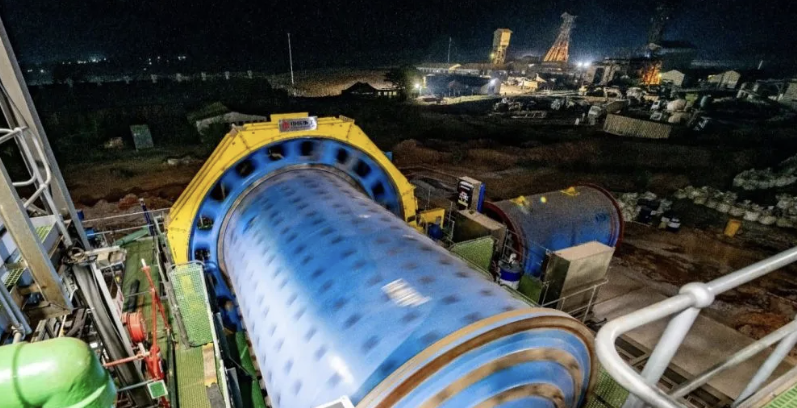
Multiple mines, however, have already reopened in recent months. Ivanhoe’s (TSX:IVN) Kipushi mine in the Democratic Republic of Congo (DRC) reopened in May 2024 following 31 years in care and maintenance. The mine has an expected annual production of 278,000t.
Strong consumption in the June 2024 quarter was largely driven by Asian steel demand.
“Zinc consumption is heavily affected by the global industrial cycle, reflecting its primary role in galvanising steel and through this role, its use in the manufacturing, construction and automotive sectors,” DISR reports.
“Growth in these sectors pushed global refined zinc consumption up 3.5% year-on-year in the June quarter 2024. This demand growth was largely driven by Asia, with China experiencing 1.9% year-on-year growth, while ex-China Asia demand growth rose by 19%.
“China is the world’s largest zinc consumer (51%). China’s zinc demand has been supported by manufacturing (up 6.3% in the year to July), with 9% growth in vehicle manufacturing in this period. China’s fixed asset investment grew by 3.6% in the year to July, supporting zinc usage.”
Partially offsetting the June 2024 quarter consumption growth seen in Asia were declines in the US – down 1.2% year-on-year – and the European Union – down 8.4% year-on-year.
However, zinc is far from a forgotten metal as the outlook for US demand is improving. After weak steel production in 2023, strong growth in the construction and manufacturing sectors suggest a recovery in 2024, according to DISR.
Total private construction grew year-on-year by 7.9%, and manufacturing output was up 25% in H1 2024. The US Manufacturing PMI has also strengthened in 2024 relative to 2023.
Write to Adam Orlando at Mining.com.au
Images: Variscan Mines, International Zinc Association & Ivanhoe Mines


