

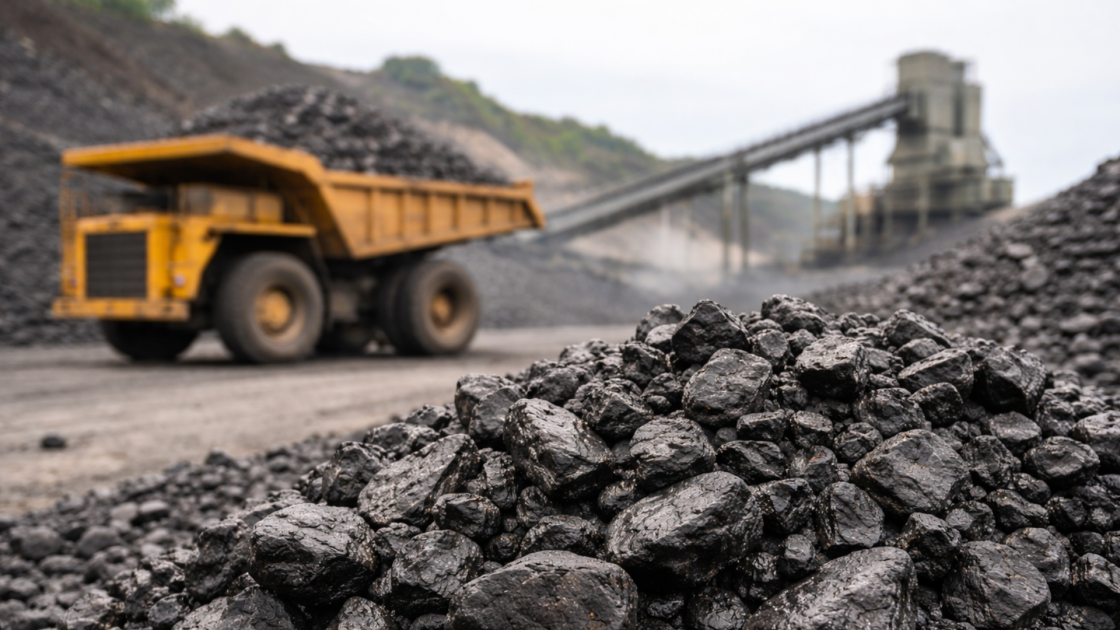
The US Department of Energy’s (DOE) Office of Critical Minerals and Energy Innovation has announced US$75 million ($108.1 million) in funding across five projects that will use coal and coal feedstocks to produce rare earth elements (REEs) and other critical minerals.
Under the Mines & Metals Capacity Expansion – Piloting Byproduct Critical Minerals and Materials Recovery at Domestic Industrial Facilities program, funding will enable the development of pilot facilities to produce market-ready critical materials.
Assistant Secretary of Energy Audrey Robertson says coal and coal byproducts have the potential to produce something valuable for US industries.
“By investing in these facilities, we can increase domestic critical mineral production and help mitigate the financial risk of commercial deployment.”
The DOE also notes that while the investment will provide new sources of critical minerals for the US economy, it also unlocks additional value for the domestic coal industry, which has recently seen around US$700 million in investment for infrastructure and operations.
The announcement shows the US is running two parallel strategies: one focused on building a modern critical minerals supply chain, and the other aimed at extracting additional value from legacy coal assets to keep those communities economically relevant.
The US has made an aggressive push for critical minerals independence across the value chain, while simultaneously continuing to invest and support its coal economy.
Coal remains economically important in the US and has long been a politically sensitive industry. Funding REE and other critical mineral recovery from coal allows the DOE to support domestic supply chains without appearing to abandon the coal communities.
The strategy highlights the tension within US energy policy as the government invests significantly into clean energy and critical mineral supply chains while continuing to channel money into coal infrastructure.
The DOE has framed this as unlocking value, but it also underscores the political complexity of a transition away from coal.
The coal industry in the US is seeing declining production, with the US Energy Information Administration (EIA) forecasting lower output across all producing regions through to at least December 2027. Weekly coal production has fallen to around 9 million tonnes per week, compared with an average of almost 9.07 million tonnes per week over the same period in 2025. The EIA also predicts total coal production will decline by more than 4% year over year in 2027.
Consumption has also been on the decline with the shift to cleaner energy sources, with total consumption in Q1 2026 down by 11% compared to the same period in 2025.
The DOE’s latest push reinforces the government’s dual-track approach to resource security, growing critical minerals capacity while also extracting new value from legacy coal regions.
It is clear that the US wants to expand domestic REE supply without sidelining coal communities, even as production and consumption continue on a downward trend.
Write to Amy Rotman at Mining.com.au
Images: US Department of Energy