


The UK can build the wires and pylons and it can secure the copper. But does that necessarily mean it can build the grid?
Last week, the UK Government announced its plan to accelerate electricity network investment, marking the beginning of one of the country’s largest infrastructure buildouts in decades.
Around £70 billion ($133 billion) is expected to be invested in the electricity network over the next five years as the UK Government works to expand and modernise the grid.
The expansion is part of the UK’s broader push to increase renewable generation, connect new sources of electricity to the network, and improve the system’s capacity to meet rising power demand.
That creates an equally significant resource challenge.
Copper will be needed for cables, conductors, transformers and other electrical equipment. Aluminium will carry electricity across overhead lines, while steel will be essential for transmission towers and electrical substations.
According to a 2025 study by the UK Critical Minerals Intelligence Centre (CMIC), the national grid infrastructure could require 1.1–1.6 million tonnes (Mt) of copper and 200,000–300,000 tonnes of aluminium between 2023 and 2050.
That makes copper one of the obvious commodities to watch as the UK electrifies.
Copper shortages are, after all, implied as an easy-to-understand concept. If there isn’t enough copper, the metal’s price surges, the green energy transition stalls, and upgrades to power grids and AI data centres are delayed.
This means that the UK will need to secure enough raw materials early to avoid supply shortages slowing its grid expansion.
That is where the mining sector comes into the picture.
Filling the copper gap
Copper is one of the commodities at the centre of the global electrification race.
Its role in power grids, renewable energy, electric vehicles, data centres, and other electricity-intensive infrastructure has pushed miners and governments to focus on how quickly new supply can be brought online.
Major producers are responding. For example, Rio Tinto (ASX:RIO) is pursuing growth across its copper portfolio, as the company positions the metal as a key part of its future business.
A broader pipeline of projects will also be needed to fill the gap between rising demand and available supply.
Some of the companies contributing to that pipeline include Gunnison Copper (TSX:GCU) and Revolver Resources (ASX:RRR).
Gunnison Copper’s Johnson Camp mine in Arizona, US, is a traditional open pit mine that uses copper oxide and sulphide leaching.
The company recently agreed with Rio Tinto’s joint venture Nuton to add 2.72Mt of mineralised material to the stage two mine plan. Additional material will be mined between 2027 and 2029 without extending the existing demonstration schedule.
Gunnison’s namesake project, also located in Arizona, is a fully vertically integrated operation producing finished copper cathode on-site, contributing to the domestic US supply chain.
Meanwhile, near-term producer Revolver Resources is developing its copper projects in Queensland to support the world’s accelerating electrification efforts.
The Dianne Project historically produced 63,758 tonnes of copper ore with an average grade of 22.7% copper from open-cut and underground operations between 1979 and 1983.
Revolver is aiming to bring Dianne back into the production through optimisation studies, pre-construction activities, and further exploration. A final investment decision is targeted in the coming months.
Despite these companies’ efforts to increase copper supply to meet demand, another potential bottleneck sits further down the supply chain.
A bottleneck that cannot simply be solved by producing more metal.
Transformers.
What are transformers and why are they important?
Transformers are electrical devices that use copper wire coils for their internal windings to transfer electrical energy between different voltage levels.
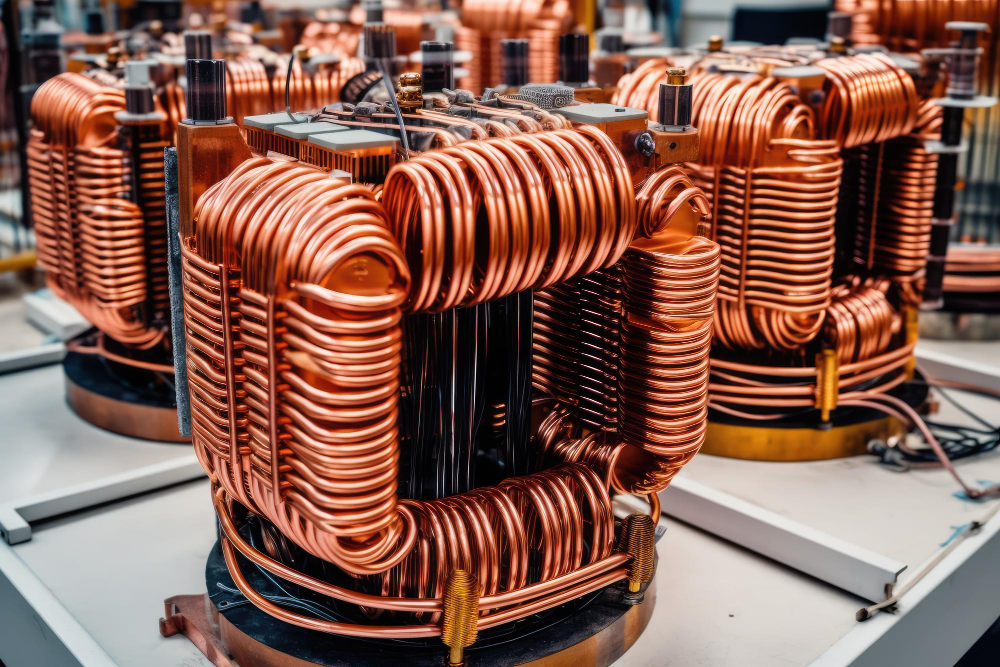
They are among the least visible components of the electricity system. But without them, the power generated by a new wind farm, nuclear plant, or solar project cannot necessarily be moved through the network at the voltage required to reach consumers.
Now, the UK is discovering that transformers are not something that can simply be ordered when a project is ready to go.
Energy UK cited an analysis showing equipment lead times of around 15 months for 33 kilovolts (kV) transformers, two years for 132kV transformers, and four years for 400kV transformers.
Ofgem’s March 2026 assessment also paints a broader picture.
Transformers and cables have increased by 75% and 100%, respectively, since 2021, while high voltage direct current (HVDC) cable lead times can now exceed five years.
Those delays could threaten critical infrastructure projects and slow grid expansions such as the UK Government’s Great British Grid.
The problem, then, is no longer whether the world can mine enough of the metals required for electrification.
It is whether the mining, refining, manufacturing, and infrastructure industries can expand quickly enough.
It is also about whether these industries can turn those raw materials into the physical equipment needed to make the energy transition work.
Copper may be the metal the market is watching.
But the transformer could be the piece of the puzzle that determines how quickly that copper actually becomes electricity infrastructure.
Why are transformers so difficult to manufacture?
The transformer supply chain is under strain, leading to delays, higher costs, and procurement risks, as reported by Northfield Transformer.
One of the main difficulties in manufacturing transformers is that they require more than just copper.
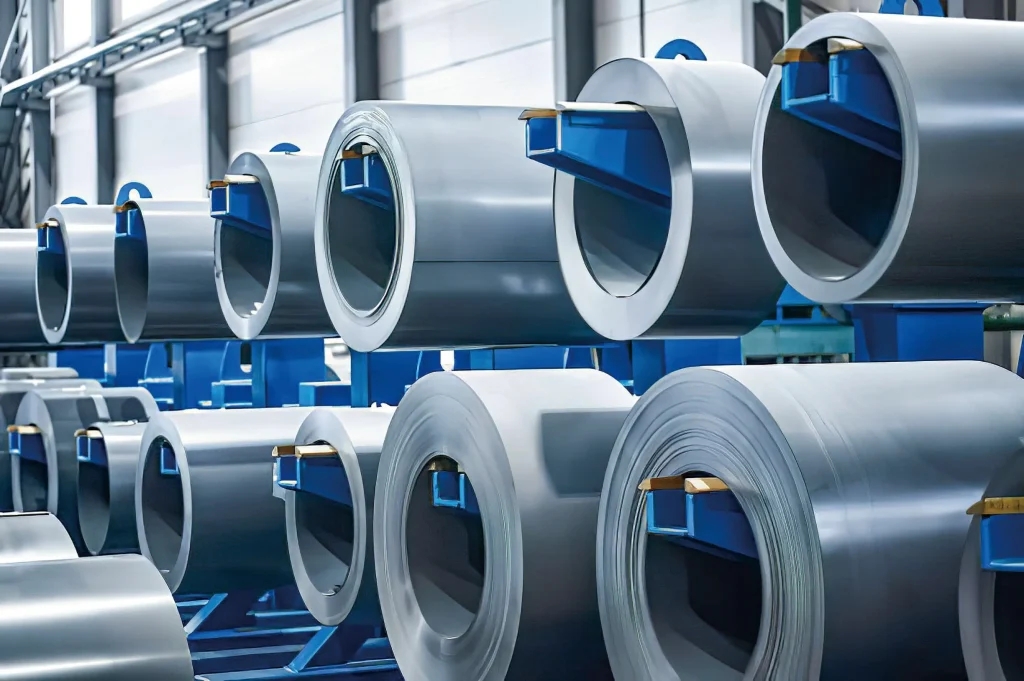
Transformers require grain-oriented electrical steel (GOES) for the magnetic core. GOES is a specialised material with a tightly controlled crystal structure, which introduces a completely new potential supply chain constraint.
The International Energy Agency (IEA) has also identified copper, aluminium, and GOES as materials affected by rising prices.
There is also a shortage of the specialist labour required to manufacture transformers. Wood Mackenzie reports that original equipment manufacturers (OEMs) cite labour shortages as a key reason for not scaling up output to meet the growth in demand.
Manufacturing capacity is another constraint.
Only a small number of companies globally have the specialised engineering expertise, heavy-lifting logistics, and ultra-clean factory facilities required to manufacture the largest ultra-high-voltage and large power transformers.
The consequences became clear in March 2025, when a fire at an electrical substation in Hayes, Hillingdon, London, effectively shut down Heathrow Airport.
Replacing the transformer that caught fire at Heathrow was not considered an easy fix. Bloomberg previously reported that Novogrid Vice President of Engineering Conor Murphy said, “There is a lead-time of over a year for a new transformer of this size.”
The Heathrow shutdown resulted in more than 1,000 cancelled flights, highlighting how a small and overlooked component can have consequences beyond the electricity network itself.
The UK isn’t competing for transformers in isolation.
Europe, the US, China, India, Australia, renewable energy developers, data centres, and industrial projects are all expanding electricity infrastructure simultaneously.
Even if copper miners successfully respond to higher demand, more copper will not automatically solve a transformer shortage.
The UK’s challenge becomes broader than securing enough metal.
It is about filling the entire supply chain gap early enough.
From the mine and refinery to the factory floor and, ultimately, the grid.
Write to Aaliyah Rogan at Mining.com.au
Main image: iStock