


Google (NASDAQ:GOOGL) has entered a 20-year agreement for 3,590 megawatts (MW) of power from Constellation Energy (NASDAQ:CEG), with a quarter of that supply, 890MW, coming from new nuclear energy.
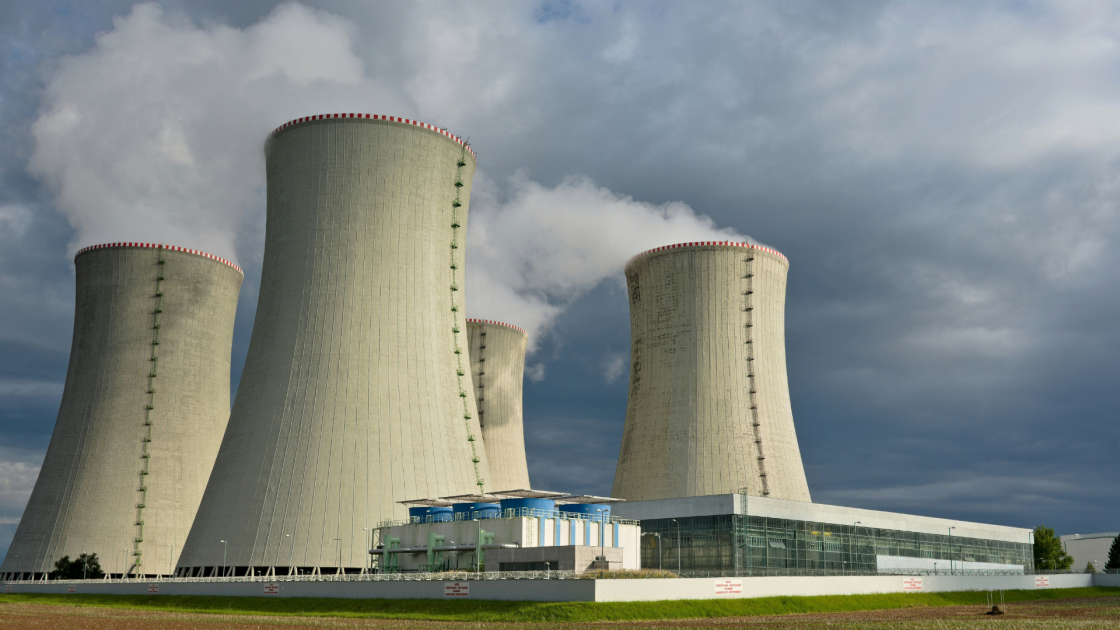
The landmark power purchase agreement will set the course for new investments in equipment and technology at 11 Constellation-owned US nuclear units in Illinois, Pennsylvania, and New Jersey, bringing additional reliable power to the grid.
The energy capacity is entirely new, expanding the total electricity generation available across the PJM Interconnection grid.
In total, the agreement represents over US$4.3 billion ($6.2 billion) of new investment by Constellation. It also helps sustain around 4,400 existing jobs while creating an additional 7,200 new jobs during the construction period.
Alongside this agreement, Constellation has selected Google Cloud and Gemini Enterprise under an expanded five-year technology alliance as they develop an ‘AI for energy’ blueprint. The blueprint will use AI to reduce costs, improve performance, ensure sufficient power to meet demand, and safeguard the grid.
The two companies note that with the rise in demand for electricity across the nation, nuclear developments are a practical, near-term way to generate the power that’s needed.
The 890MW of incremental capacity in this agreement is equivalent to the output of several small modular reactors or a large new conventional reactor. The companies say the partnership is in line with the US Government’s UPRISE program, which seeks to accelerate public-private collaboration to grow output from existing US nuclear infrastructure.
Amanda Peterson Corio, global head of energy and power at Google, says that the company is committed to responsible growth by investing in clean, reliable power while also bringing new capacity to US grids.
“Our agreement with Constellation to fund nuclear reactor uprates will strengthen the PJM grid, which serves 67 million people, all while protecting energy affordability and supporting local union jobs,” Corio says.
Constellation Chairman, President, and CEO Joe Dominguez says that the focus must be on both preserving and expanding the nation’s existing nuclear fleet for new clean energy generation.
“This long-term clean energy collaboration with Google can serve as a model for how technology companies and the energy industry can work together to responsibly develop the digital economy and invest in our nation’s energy infrastructure in a way that delivers grid-wide benefits for all, funded by private entities,” Dominguez says.
This agreement comes just a week after Constellation signed a similar agreement with Amazon (NASDAQ:AMZN) to expand the Calvert Cliffs Clean Energy Centre in Maryland.
The growing focus on expanding nuclear capacity in the US, and the public-private partnerships fuelling that growth, mean new opportunities for the companies that will provide the future feedstock for these plants.
Bridging the domestic gap
American Uranium (ASX:AMU) is advancing the Lo Herma Project, Wyoming’s only defined in situ recovery (ISR) development asset, with a focus on filling the US uranium supply gap.
The company notes that 92.3% of all US uranium was sourced overseas as of 2024, with 36% coming from Canada and 17% from Australia, reinforcing the need to grow both domestic and allied sources.
Lo Herma is an advanced ISR project with a 9.96 million pounds (Mlb) triuranium octoxide (U3O8) JORC resource @ 630 parts per million. Of this resource, 7.38Mlb sits within the development footprint, with 54% classified as indicated.
American Uranium currently has a Scoping Study underway, expected in Q4 2026, following an upgrade to its mineral resource estimate earlier this year.
Terra Clean Energy (CSE:TCEC) is also focused on domestic US supply, with the past-producing Marysvale Uranium Project in Utah.
Terra highlights that without a stable supply of domestic uranium, the US nuclear power industry is vulnerable to geopolitical risk, supply shocks, price volatility, and disruptions from foreign policies and export restrictions.
The company notes that mine production has fluctuated domestically, with 2024 figures showing US mine production at 0.7Mlb U3O8,, down from a 2014 high of 4.9Mlb U3O8,. While production rebounded substantially in 2025, up to 2.1Mlb, this is still not enough to supply all of the country’s uranium needs.
Terra’s Marysvale Project covers 380 acres across four past-producing mines: Prospector One and Four, and Freedom One and Two. The district has historically produced over 1.33Mlb of U3O8, at an average grade of 0.22%.
The company has plans for a 10,000ft diamond drilling program, with holes varying from 250–2,000ft in depth.
Terra Clean also owns the Powder Mountain Project in Wyoming and South Falcon East in Canada’s Athabasca Basin.
Athabasca Basin primed to meet global demand
Another company operating in the Athabasca Basin is Skyharbour Resources (TSX-V:SYH), a uranium explorer and prospect generator company.
Skyharbour’s portfolio provides it with ownership interests across over 682,100 hectares spanning 44 uranium properties. The company notes that uranium prices are currently trending higher with the growing recognition of the integral role of nuclear as a clean, reliable form of baseload electricity generation.
The company highlights the looming shortfall of uranium supply to meet the growth in demand, noting a cumulative global supply gap through 2036 at around 379Mlb.
Skyharbour is primarily focused on the Russell Lake Uranium Project, an advanced-stage exploration asset strategically located between major projects and mills on all sides.
The company completed drill programs in 2024 and 2025, supported by its partnership with Denison Mines (TSX:DML). It plans for over 15,000m of drilling in 2026, as well as extensive ground geophysics across the broader project area.
As tech giants like Google and Amazon secure massive, long-term nuclear supply agreements, the growing need for nuclear power is becoming increasingly clear. That need extends beyond powering AI and data centres to broader domestic grid support. This means the focus needs to shift to domestic and allied feedstocks to keep these reactors running.
With North American utilities facing structural deficits and relying heavily on foreign supply, uranium explorers across the continent are well positioned to help fill the supply gap.
Write to Amy Rotman at Mining.com.au
Main image:


