

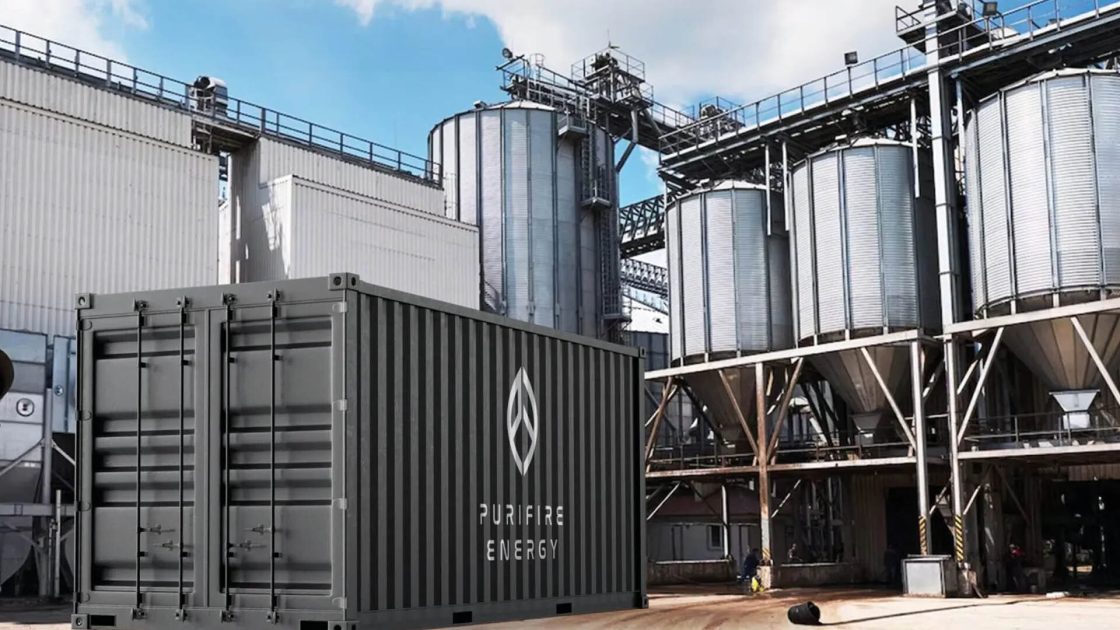
UK clean energy innovator PuriFire Energy has signed a letter of intent with the world’s largest independent feeder carrier X-Press Feeders, to support the development and supply of green biomethanol for the shipping sector.
Green biomethanol is a renewable, low-carbon liquid fuel produced from biomass sources such as agricultural waste, forestry residues, and municipal solid waste. It is considered a cleaner alternative to fossil-based methanol, offering up to 95% reduced CO2 emissions.
Under the letter of intent, both companies will explore the potential for X-Press Feeders to offtake biomethanol produced by PuriFire. This includes an initial targeted production range of 10,000–15,000 tonnes per year from PuriFire’s planned facilities.
Both companies will also explore the co-development of larger port-based biomethanol production facilities across the UK and Europe. The agreement will also support a distributed fuel supply system that aligns with X-Press Feeders’ vessel operations and regional needs.
By combining X-Press Feeders’ fleet-scale demand signal with PuriFire’s decentralised production model, the companies aim to create a vertically integrated aligned fuel supply chain. It is expected to be one that can be replicated at multiple port locations across Europe and internationally.
What the companies are saying…
PuriFire Energy CEO Neel Shah says X-Press Feeders is actively shaping the future of shipping.
“Working with the largest independent feeder carrier validates demand for our technology at the highest level and provides a clear road map for deploying biomethanol production where it’s needed most,” Shah says.
“Together, we are demonstrating that decarbonising maritime fuel can be both effective and a competitive edge, rather than a compromise.”
X-Press Feeders head of fleet efficiency and performance Shivendu Gadkar says the success of the company’s decarbonisation strategy depends on access to and availability of cost-effective green fuels at scale.
“PuriFire’s technology, which produces biomethanol directly from wastewater, represents exactly the kind of innovation the industry needs,” Gadkar says.
Reducing emissions
The letter of intent highlights the growing momentum for green methanol as a maritime transition fuel, as operators seek to reduce emissions while maintaining operational flexibility.
According to the European Commission, maritime transport is one of the most energy-efficient modes of transport and a large source of greenhouse gas emissions. In 2018, global shipping emissions represented 1.076 billion tonnes of CO2 and were responsible for around 2.9% of global emissions.
The commission’s projections show that these emissions could increase by up to 130% of 2008 emissions by 2050. At EU level, maritime transport represents around 3–4% of the EU’s total CO2 emissions or above 124 million tonnes as of 2021.
Effective from January 2025, the EU’s FuelEU Maritime law introduces greenhouse gas reduction targets for ships calling at EU ports, aiming for reductions of up to 80% by 2050, with penalties for non-compliance.
PuriFire’s patented hydrothermal gasification technology converts wastewater and waste carbon into green fuels such as biomethanol and biomethane.
Biomethane is a gaseous, renewable natural gas upgraded from biogas used directly in gas grids or as vehicle fuel. Meanwhile, biomethanol is a liquid alcohol produced from biomass or by converting biomethane, used as a sustainable chemical feedstock or maritime fuel.
Write to Aaliyah Rogan at Mining.com.au
Images: PuriFire Energy