

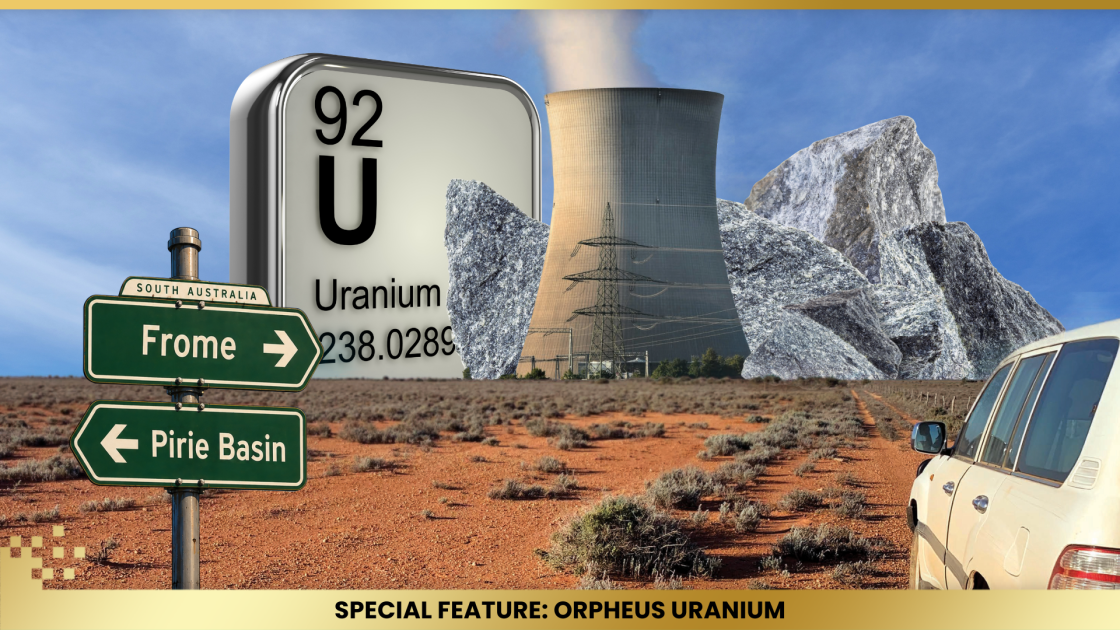
This article is a sponsored feature from Mining.com.au partner Orpheus Uranium. It is not financial advice. Talk to a registered financial expert before making investment decisions.
Over the past two years, Orpheus Uranium (ASX:ORP) has been quietly building an extensive portfolio of uranium assets in Australia’s most prospective districts, positioning itself as one of the best pure uranium plays on the ASX.
In 2026, the company plans to shift gears and focus on exploration success to advance these projects.
Mining.com.au caught up with Managing Director Clinton Dubieniecki at an industry event in Hong Kong to discuss this transition.
Here, Dubieniecki talks about how the Orpheus team plans to achieve its goals by leveraging its strong uranium exploration and production experience, and how he believes the company can contribute to the global energy supply.

A portfolio of uranium assets
Orpheus’ strategy is to build a portfolio of projects with assets at various stages of exploration.
The rationale for this, Dubieniecki explains, is to create value by leveraging the team’s internal exploration skills or through changes in the uranium market.
Orpheus is currently focused on progressing its more advanced sedimentary-style uranium projects in South Australia, including its 100% owned Frome, Pirie Basin, Marree, and Radium Hill South Projects.
Of these, the initial 2 projects are located within basins that host producing or developing uranium assets.
“We’ve built our strategic portfolio of assets based on geological relevance and with assets that share geological synergy with known deposits,” Dubieniecki says.
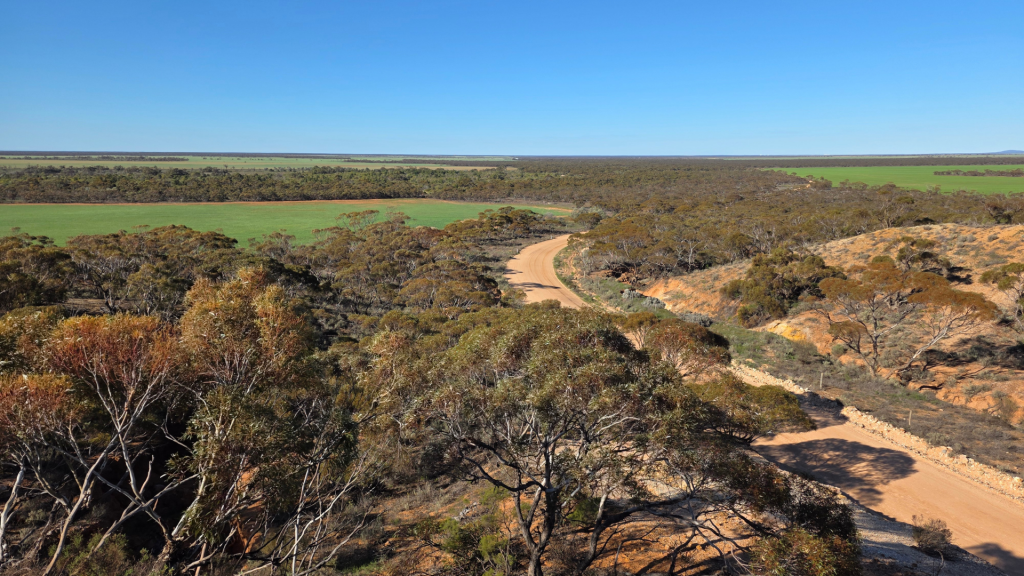
The Pirie Basin Project is a recent example of the projects that Orpheus has been targeting. After recently receiving the government’s approval for the transfer of the exploration licences, it is one of the company’s high priorities.
The project has over 40km of strike of Pirie Basin sediments, a geological corridor that also hosts Alligator Energy’s (ASX:AGE) 18-million-pound Samphire Uranium Deposit, which is currently undergoing in-situ recovery trials.
However, this is the first time the ground to the south has been held by a uranium-focused junior explorer — and Dubieniecki is excited to add this to the pipeline of drill-ready projects.
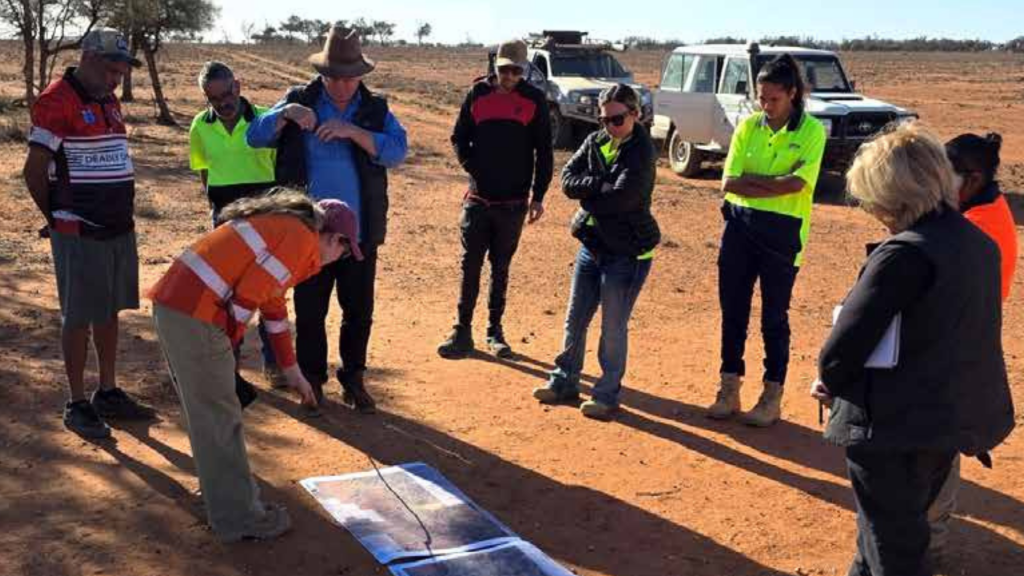
“Over the past 18 months, we have worked hard to get the foundations right across our entire portfolio. Engaging with stakeholders, negotiating multiple NTMAs with traditional owners, gaining regulatory approvals, and getting to ‘decision-to-drill’ across multiple projects,” Dubieniecki says.
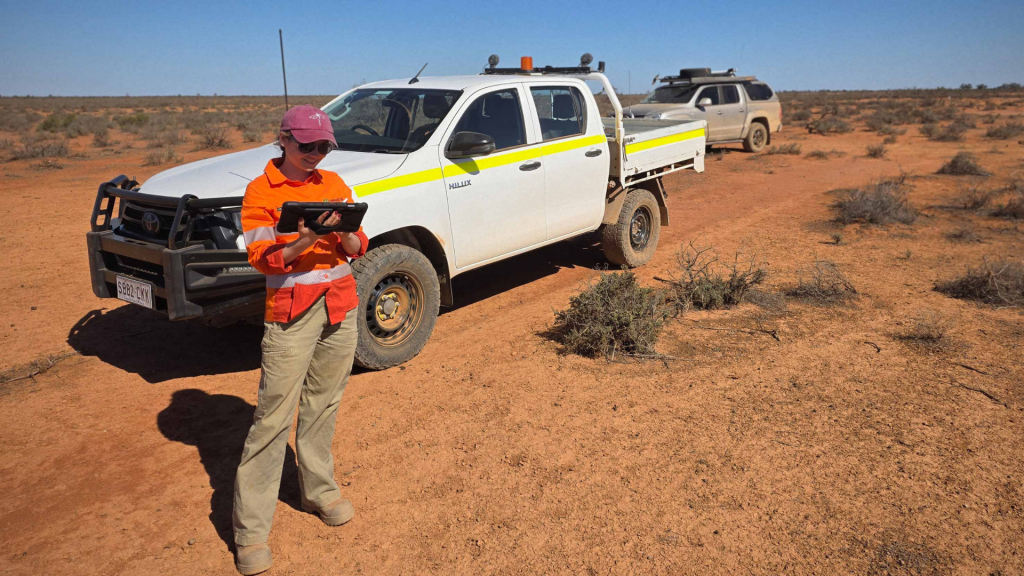
“Looking at South Australia, we now have the capacity not just to run small stop-start drilling programs, but to roll from one project to the next, which gives the company an edge in logistics, costs, and, importantly, the ability to capitalise on any momentum we gain from drilling results.”
Expanding the horizons
While the company has been focused on districts that are more supportive of uranium exploration, it is now looking to the future with its Mt Douglas Project in the Northern Territory and the recently acquired Oobagooma Project, located in the Canning Basin in Western Australia.
“We recognise we need to keep evolving our portfolio. Whilst initially focused on South Australia, which is generally supportive of the industry, we are now expanding our project generation to take in states that we see as having long-term opportunities.”
Although the current political environment makes uranium exploration more challenging in those jurisdictions, Dubieniecki notes that shifts in global energy markets and decisions, such as the move to repeal the prohibition on uranium mining in NSW, point to further shifts in the future.
If that is to occur, projects like Oobagooma — which hosts ‘significant’ historical uranium intersections and has known mineralisation extending across 4km of strike and 1.5km in length — have the potential to become key projects in the company’s portfolio.
In the meantime, the Orpheus team plans to add value by applying modern techniques to the abundant historical data available for the project.
Dubieniecki says that he has actively added data analysis expertise to the Orpheus team for this purpose. This expertise, he adds, has significant potential to create value across all of the company’s advanced greenfield projects.
IsoEnergy cornerstone investment validates strategy
In February 2026, Orpheus Uranium received firm commitments to raise $4.36 million, with $1.5 million coming from IsoEnergy (TSX:ISO | NYSE:ISOU), a globally diversified uranium company with a $1 billion market capitalisation.
IsoEnergy has a similar global strategy of building a portfolio of assets at various stages of development, and the investment in Orpheus provided it with exposure to greenfield exploration in Australia.
“I believe that IsoEnergy coming on as a cornerstone investor validates what we’ve been building,” Dubieniecki says.
“It shows that what we have done over the past year, which wasn’t necessarily advanced-stage activities, but rather the consolidation of assets and working through the process to have multiple assets at a decision-to-drill stage, whilst uranium prices were trending lower, was the right thing to do.”
Long-term upside in nuclear energy demand
While nuclear power isn’t on the cards in Australia, in North America and Europe, the outlook is very different because climate and other factors make the implementation of renewables more challenging.
With a growing need for clean, stable power, nuclear is currently emerging as a top choice for many governments. In 2023, COP28, the UN’s 28th annual climate change conference, launched a declaration to triple nuclear energy capacity by 2050. That strategy was reaffirmed more recently at COP30, with 33 countries now signed on to lead this charge.
Dubieniecki also points to the growing energy demand from the private sector as a major factor in the global shift toward nuclear power. New data centres, he says, now require large, consistent power supplies and drive direct investment in the nuclear industry.
2026: An inflection point for Orpheus?
Because nuclear energy is a lower priority for energy grids in Australia, Dubienicki says that uranium explorers are often overlooked by the market.
However, that gives Orpheus an edge. With a portfolio designed to convert potential discoveries and capitalise on the growing need for clean energy sources, it is able to position itself as a ground-floor entry point into Australia’s uranium exploration sector.
“We see upside in this commodity, and we do have this long-term vision that uranium will continue to grow. I think quite a few will see that the value and upside are near,” Dubieniecki says.
Write to Amy Rotman at Mining.com.au
Images: Mining.com.au and Orpheus Uranium