


Copper miners are looking beyond conventional mine development to find new ways of growing production, with historical tailings, existing infrastructure, and brownfield expansions emerging as important parts of global supply.
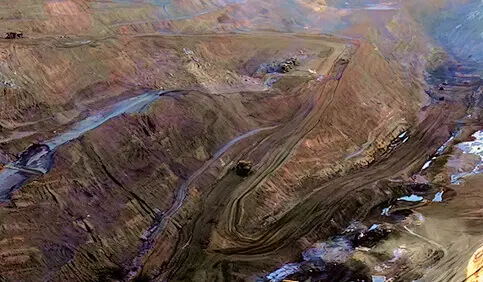
That trend is highlighted by ZCCM Investment Holdings (LSE:ZCC), which has given shareholder approval to the new US$498 million ($714.8 million) tailings leach plant at Konkola Copper Mines, in which ZCCM holds a 20.6% stake.
Located in Zambia, the facility is expected to be the largest tailings leach plant in Africa. At full capacity, it will produce approximately 70,000 tonnes of LME Grade A copper (Cu) cathode per year by reprocessing 546 million tonnes (Mt) of historical tailings grading at 0.54% Cu.
By turning historical tailings into revenue, the plant adds output from Konkola’s existing asset base, improves overall resource recovery, and adds to Zambia’s export earnings. As a result, it supports the national target of 3Mt of Cu annually by 2031 and Konkola’s ambition to reach 300,000 tonnes per year.
The project reflects a broader shift across the copper sector as producers, developers, and explorers look for ways to bring more metal into the supply chain.
For established miners, that can mean extracting additional value from existing operations and waste streams, while developers and explorers are advancing projects that could provide entirely new sources of supply.
Konkola Copper Mines is not alone in pursuing this approach. Across the sector, companies are assessing tailings reprocessing, resource extensions, plant expansions, and brownfield opportunities, alongside traditional greenfield exploration.
This trend highlights how the next wave of copper supply could come from a combination of new discoveries and previously overlooked resources.
Tailings in Chile: Halo Minerals
Halo Minerals (AIM:HALO) owns and operates the Playa Verde Project in the Atacama region of Chile.
Playa Verde is a copper tailings asset that will be mined using an electric, single-wheeled suction dredge, with the ore processed via leaching. Its initial mineable resources and reserves total 34.2Mt of Cu, with the opportunity to produce 60,329 tonnes of refined Cu.
However, CEO Andrew Dennan previously told Mining.com.au that the project’s beach contains an additional 20Mt of resource in the western berm and shoreline area.
“So, that’s obviously very synergistic minerals for us to process because it’s right there next to the plant,” Dennan explained.
Around 250Mt of tailings was dumped in a riverbed before migrating 120km downstream to form what is now Playa Verde and the Green Beach.
“We have this, effectively, artificial beach which has 53 million tonnes of resource at 0.24% copper, which is about 126,000 tonnes of contained metal,” Dennan adds.
In late September, Halo announced it is advancing towards a final investment decision for Playa Verde. The company is evaluating a range of funding options, including senior project debt, strategic investment, royalty and streaming finance, equipment finance, and offtake-linked prepayment funding structures.
Brownfields discoveries: QMines
Meanwhile, a similar theme is emerging in Australia, where companies are looking to established mining districts for additional copper supply rather than relying solely on new greenfield discoveries.
For example, QMines (ASX:QML) is advancing the Mt Chalmers Copper-Gold Project in Queensland, a historical mine that produced roughly 1.24Mt @ 2% Cu, 3.6 grams per tonne gold (Au), and 19g/t silver (Ag).
The company recently doubled its drilling program to 20,000m, aiming to grow the resources and progressively bring additional deposits into the Mt Chalmers mine plan.
Some of the latest results include 16.7m @ 1.04% Cu, 1.16g/t Au, and 26g/t Ag from 23.3m; and 2.7m @ 1.29% Cu, 4.44g/t Au, 109g/t Ag, 5.25% zinc, and 3.04% lead from 23.3m.
Exploration Manager Tom Bartschi says these first two pontoon holes have delivered “exactly what this program was supposed to test” — mineralisation directly beneath an area of the Mt Chalmers pit that has seen limited modern drilling.
“These holes are providing fresh core directly beneath the pit for future resource modelling and further geometallurgical test work,” Bartschi says.
Rather than starting from an entirely new mineral system, QMines is using the historical Mt Chalmers mine as a foundation for further resource growth. The approach highlights another potential source of future copper supply.
Write to Aaliyah Rogan at Mining.com.au
Main image: Konkola Copper Mines


