


IN LONDON: For decades, London has been one of the world’s greatest launchpads for mining ambition. It is a place where explorers can raise millions of dollars, developers are able to finance the next phase of growth, and miners build global businesses from one of the world’s oldest financial centres.
At the centre of that story sits the London Stock Exchange’s (LSE) Alternative Investment Market (AIM), which is a major global hub for juniors and mid-tier mining companies.
For the mining sector, the AIM market became synonymous with risk appetite: a home for junior explorers chasing the next major find, developers advancing projects, and emerging producers looking to scale.
However, this landscape has since shifted.
A tougher funding environment, changing investor priorities, geopolitical uncertainty, and a growing focus on critical minerals seems to have reshaped the relationship between mining and London’s capital markets. As a result, the question facing the industry is whether AIM remains the destination of choice for mining companies.
So, is London still home to the explorers, developers, and miners of today, or is it moving elsewhere?
London’s enduring appeal
Compared to the Australian Securities Exchange (ASX) and the Toronto Stock Exchange (TSX), AIM has become a comparatively smaller destination for mining listings. The AIM market is home to roughly 100 mining and exploration companies.
By comparison, the ASX currently has over 860 metals and mining companies, while the TSX has around 200 mining companies listed on the exchange. The TSX’s junior counterpart — the TSX Venture Exchange — lists roughly 950 to 1,000 mining and exploration companies.
Despite the stark difference in numbers, Halo Minerals (LSE:HALO) CEO Andrew Dennan says that London’s strength extends well beyond the size of its mining sector.
“London has a well-established investor base that understands industrial projects, be that exploration or development stage, or gas, oil, or metals — it’s quite a generalist market,” Dennan tells Mining.com.au.
Speaking to this news service, Meridian Mining (TSX:MNO) CEO Gilbert Clark echoes a similar view, describing London as the second biggest capital market in the world behind New York.
According to The Global City, London processes US$4.7 trillion ($6.8 trillion) in foreign exchange trading, which is more than one third of the global foreign exchange transactions. This figure represents more than the next three largest centres — New York (US$2.3 trillion), Singapore (US$1.5 trillion), and Hong Kong (US$883 billion).
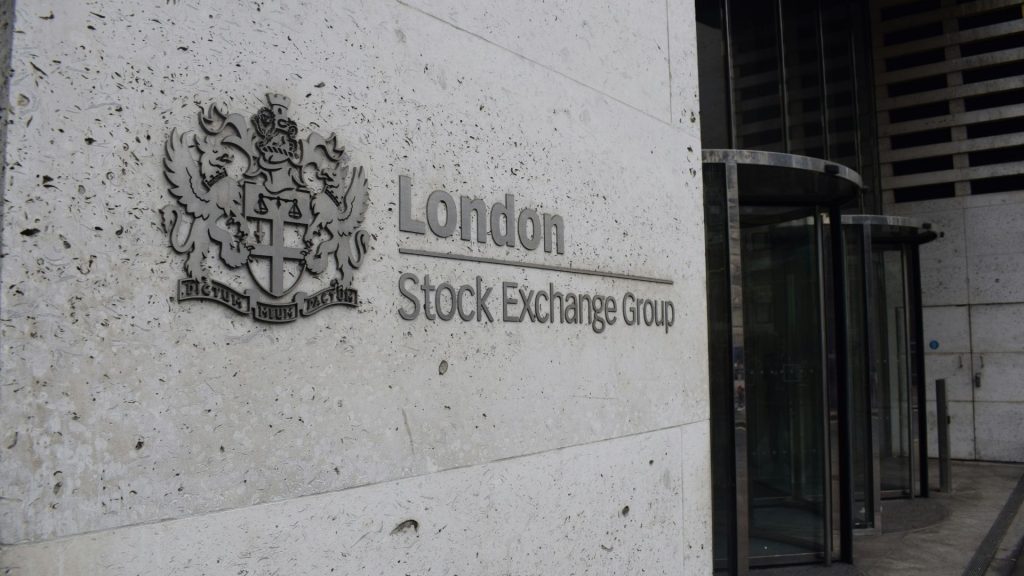
In early May 2026, Meridian began trading on the LSE, following the launch of an equity offering to raise £25 million ($48 million).
“We looked at basic economics. We saw Canada’s total market is US$2.2 trillion with a population of 40 million people and when we look at England with a population of 60 million people and the US$4.4 trillion economy — so when we combine that we’ve got over US$6.5 trillion in economic mass of people investing in our company,” Clark says.
London’s longstanding relationship with mining is also reflected in some of the industry’s biggest names.
For example, Rio Tinto (ASX:RIO) was established in London in 1873 before merging with Consolidated Zinc in 1962 to form the Rio Tinto-Zinc Corporation, which was listed on the LSE.
The UK listing remains the company’s primary listing with roughly 77% of total shares.
Similarly, Anglo American (LSE:AAL) maintains its primary listing in London after forming through a merger with Minorco in 1999. Although Anglo American does not have a listing on the ASX, it has a secondary listing on the Johannesburg Stock Exchange (JSE).
Choosing London
Despite increased competition from other exchanges, London continues to offer advantages that many mining companies consider difficult to replicate.
Dennan explains that London benefits from having a well-established institutional audience.
“There are a lot of generalist funds there, as well as some of the specialist funds,” he tells this news service.
“There is a sort of market capitalisation hurdle that you need to get to land on their radar, but as you develop your business and de-risk things and hopefully the share price appreciates, that reality becomes more attainable.”
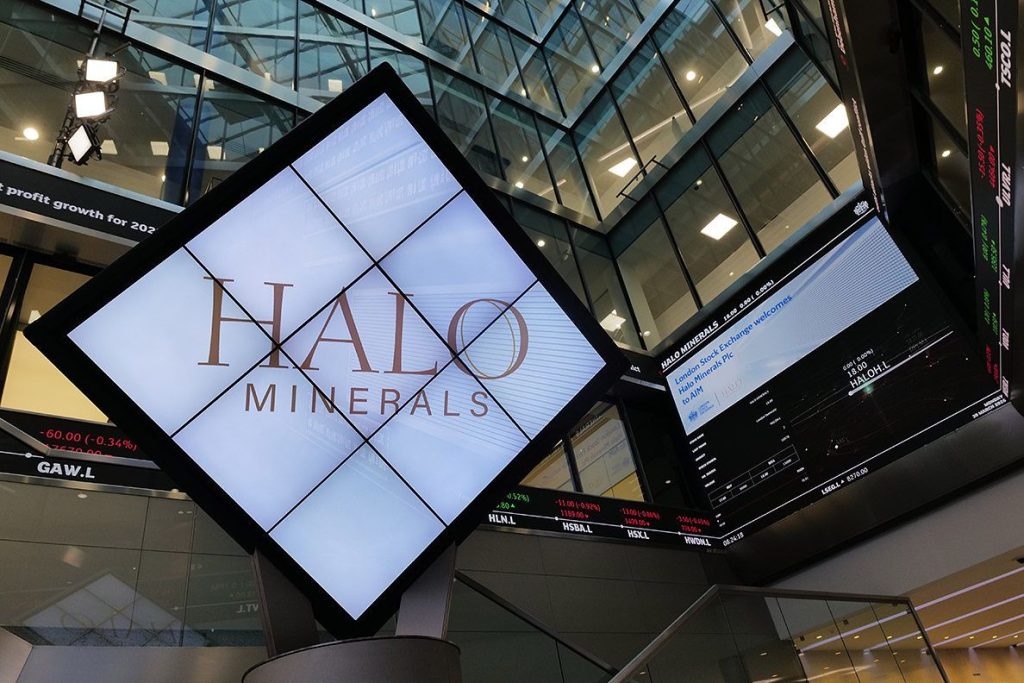
Halo Minerals began trading shares on the AIM in late March 2026 after raising £4 million via issuing 22.22 million shares at £0.018 per share. On admission, Halo had 110.74 million shares on issue, with a market capitalisation of £20 million.
Dennan says the familiarity within the London market is one of the reasons why listing on the AIM made sense for Halo Minerals.
“The familiarity of the faces and the players in the space means it’s much more accessible for us to navigate certain attributes versus the ASX or TSX, which are also obviously on different timelines subject to different regulatory loopholes and hurdles that you need to navigate,” he says.
Serval Resources (AIM:SRVL) CEO Robin Birchall believes London’s mining market has shown signs of recovery alongside stronger commodity prices.
Serval listed on the AIM market in April 2026. Prior to this move, the company operated as an AIM-bound shell called Oscillate which was listed on the Aquis Stock Exchange.
Birchall says that with London being one of the world’s biggest finance centres, there is a plethora of investors and infrastructure in place where capital flows through.
“Americans or whoever, they don’t fly to Madrid to make an investment or they don’t fly to Frankfurt — they come to London,” Birchall tells this news service.
“When you take it in the circumstances that we are a UK company, it would have been a bit strange to go to Canada — the Canadian market was a bit depressed.
“We could have gone to Australia, but if you want to go there, you need to be there four times a year and it’s a lot of travel. Africa is well understood in the London market.”
Dennan says that London understands Africa, as he notes the financial hub is familiar with exploration risk.
“[London] has done a lot of deals in Africa and Latin America and so it understands emerging markets as well,” he adds.

London’s market challenges
Although London is one of the largest capital markets globally, the city is facing growing challenges in attracting capital to mining companies.
Investors have become more cautious toward the sector, driven by stricter environmental, social, and governance (ESG) mandates, reduced appetite for speculative investments, and a preference for exchanges such as the ASX and TSX, which continue to dominate global mining capital raisings.
At the end of June 2026, mining shares slipped due to a decline in gold amid ongoing conflict in the Middle East, with Anglo American, Fresnillo (LSE:FRES), and Rio Tinto down between 1.2% and 3%.
Speaking to Mining.com.au, Empire Metals (AIM:EEE) Managing Director Shaun Bunn says that while listing in London has helped the company establish a strong retail shareholder base, attracting larger institutional investors has proven to be more difficult.
“There is no doubt we’ve got large retail support [in London], but we’ve struggled to get, at times, some of the bigger institutional funds to come to register here,” Bunn explains.
“They’re more generalist, they don’t necessarily understand or they don’t look at mining or commodities like this. You go and talk to investors about titanium and they don’t understand much about it.”
Even with a market capitalisation exceeding £300 million and inclusion in the FTSE AIM 100 index, Bunn says institutional hesitation remains.
“We get feedback like ‘we like your story, we think it’s fantastic, but we won’t invest in it’,” he adds.
To broaden its investor base, Empire Metals intends to pursue a secondary listing on the ASX toward the end of this year, a move the company believes could attract greater support from institutional and pension funds.
London’s position as a global mining finance hub may not be as dominant as it once was, but its influence has not disappeared.
For many companies, Europe’s largest financial hub offers deep financial expertise, experienced investors, and an established ecosystem that understands the complexities of resource development.
Rather than losing relevance, London’s financial market seems to be evolving. While AIM is not the default destination for every explorer and developer, it is an important part of the global mining finance ecosystem.
Write to Aaliyah Rogan at Mining.com.au
Images: Mining.com.au, London Stock Exchange, Halo Minerals & Unsplash