Gold retreated on Thursday as new US inflation data reinforced expectations of another Federal Reserve interest rate hike, a day after the central bank held borrowing costs steady.
Spot gold fell as much as 1.2% to around US$4,016 ($5,715.20) per ounce, reversing three straight days of modest gains. US gold futures also fell to US$4,027 per ounce.

The pullback followed Wednesday’s Federal Open Market Committee meeting, where policymakers voted to leave interest rates unchanged while keeping the door open for further tightening in December.
Fed Chair Kevin Warsh also indicated that the central bank would likely reduce the number of scheduled interest rate decisions from eight to six annually, starting in late 2027, a move analysts say could introduce further uncertainty into financial markets.
Meanwhile, fresh economic data showed that US inflation accelerated in September, driven partly by higher gasoline prices and rising costs for other consumer goods.
The personal consumption expenditures (PCE) price index, the Fed’s preferred inflation gauge, rose 0.5% in September, following an unrevised 0.3% increase in August, according to the US Commerce Department.
High Ridge Futures Director of Metals Trading David Meger tells Reuters: ”A stubbornly high inflationary outlook that continues to run hotter than Fed targets is paving the way for thoughts that the Fed will raise rates at the December meeting.”
“That’s … the main drag on the gold market right now, and today’s PCE report did nothing to allay that fear.”
Interest rate pressures persist
Markets are anticipating another rate hike before year-end, with CME Group’s FedWatch Tool showing an 83% probability of a December increase.
The prospect of higher borrowing costs has weighed heavily on gold this year, with the precious metal down approximately 7% and heading towards a second consecutive monthly loss.
Higher interest rates typically reduce the appeal of non-yielding assets such as gold, particularly as US Treasury yields rise.
Energy prices have also become a key factor in the outlook for bullion, with the ongoing US-Iran conflict raising concerns about supply disruptions and persistent inflation.
“The next major focal point of the market is a continued watch on the energy market, as we understand that the energy market is a large portion of those inflationary concerns,” Meger says.
He adds that any escalation or easing of tensions in the Middle East could significantly affect precious metals prices through its impact on energy costs.
Investors are also looking ahead to the 3 November US midterm elections, assessing how the outcome could influence fiscal policy and broader market sentiment.
Gold market remains fragile
With bullion trading close to the US$4,000-per-ounce level for much of this week, investors have remained cautious about taking significant positions.
Saxo Bank Head of Commodity Strategy Ole Sloth Hansen tells Bloomberg that investors “are in a wait-and-see mode” as they assess the outlook for interest rates and inflation.
The uncertainty has also prompted warnings from other major financial institutions.
JPMorgan Private Bank (NYSE:JPM) Head of Rates and Foreign Exchange Strategy for Asia Yuxuan Tang recently said gold could face further downside pressure as US interest rates continue to rise.
However, she believes bullion could stage a strong recovery once the Fed completes its tightening cycle, with gold likely to find “a solid bottom” only when interest rates peak.
Tang also warned that thinning liquidity towards the end of the year could amplify price movements in either direction.
For now, the gold market remains finely balanced between persistent monetary policy pressures and longer-term demand for the metal as a hedge against economic uncertainty.
“At current price levels, it’s almost flip-a-coin territory,” Saxo’s Hansen says.
Write to Jackson Chen at Mining.com.au
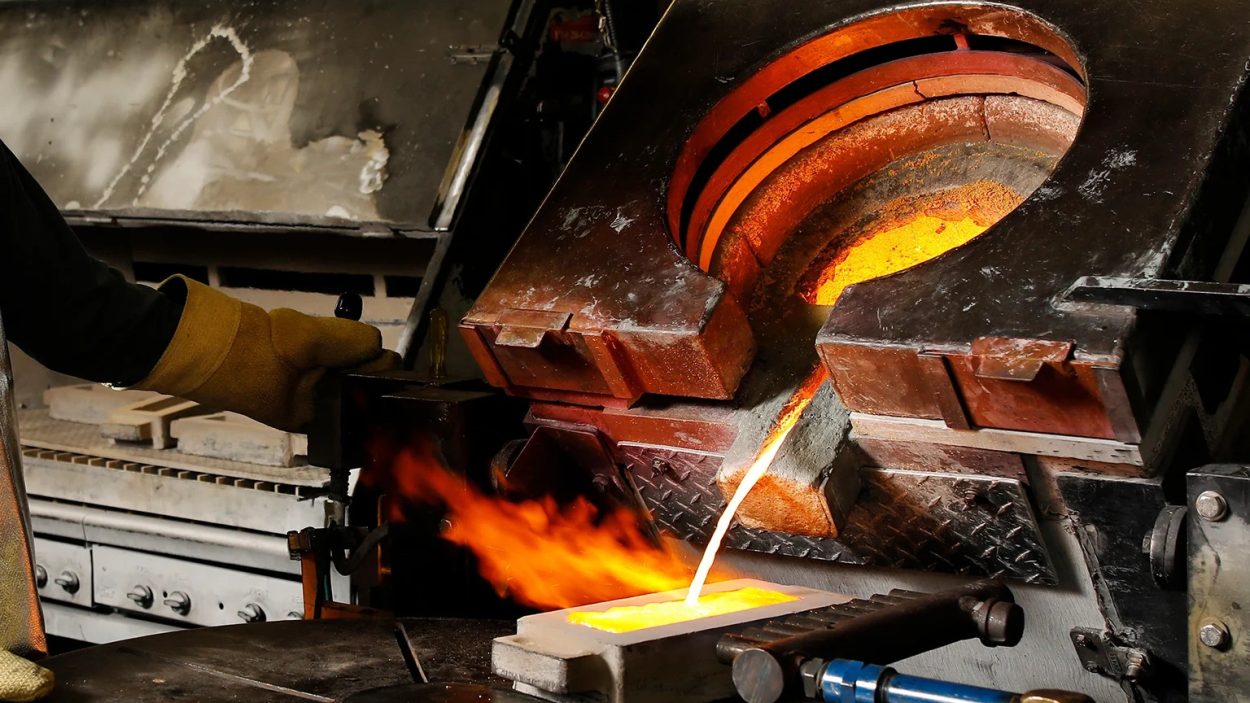
Main Image: The Royal Canadian Mint