

The global mining outlook for 2026 looks stable — but stability still carries challenges. Projects that execute well will likely find support. Those that do not tend to fall away quickly. And there is little tolerance for delay, cost blowouts, or strategic drift.
For investors, this environment offers predictability. For operators, it demands discipline. For governments, it requires restraint as much as ambition. Mining remains essential to the global economy. That does not change.
What changes is how the industry chooses to grow. In 2026, the mining sector is poised to succeed not by expanding fastest, but by lasting longest.
The global mining sector enters the year in a position few would have predicted during the last boom – except perhaps for legendary investor Rick Rule who in July told Mining.com.au of the bull market ahead.
Commodity prices remain supportive, demand signals seem to stay intact across multiple markets, and governments show unprecedented interest in resource supply chains. Yet the industry does not behave as though it is on the cusp of another supercycle.
Instead, mining moves into 2026 defined by restraint.
Mining.com.au reporting in 2025 consistently shows a sector shaped less by optimism and more by discipline. Capital is allocated carefully. Projects advance cautiously and selectively.
While the global political landscape is tumultuous at best, policy obviously influences outcomes but does not override economics. Across jurisdictions, the industry prioritises resilience over expansion.
The result is a global mining outlook that is stable, demanding, and unforgiving of excess.

Moving past the supercycle narrative
Mining.com.au coverage increasingly notes what is absent from market commentary: talk of a supercycle. Commodity demand remains strong in absolute terms, particularly for copper, gold, and energy transition materials. However, supply responds more cautiously than in previous cycles. Investors, lenders, and boards remember the capital destruction of past booms and resist repeating it.
This restraint defines the 2026 outlook.
Rather than chasing price spikes, miners increasingly tell this news service they focus on margins, cost control, and balance sheet strength. Projects proceed only where the economics remain robust under conservative assumptions. Growth becomes incremental rather than explosive.
The global industry does not lack opportunity. It simply refuses to overreach.
Mining.com.au reporting frequently draws on global economic analysis shows commodity prices heading into 2026 remain broadly supportive, but tightly constrained.
Iron ore prices are poised to stabilise after years of volatility. Demand growth is expected to moderate, particularly in China, but infrastructure replacement and steady steel consumption provide a floor. Major producers are set to focus on efficiency rather than volume growth, reinforcing price stability.
Copper stands out as structurally supported. Electrification, renewable energy, and grid expansion underpin long-term demand. However, supply challenges persist, and project timelines stretch. Prices remain elevated, but markets avoid speculative excess.
Meanwhile gold continues to benefit from macro uncertainty. This news service regularly notes that gold acts as a counter-cyclical anchor, supporting cash flow even as other commodities fluctuate. This stability reinforces gold’s appeal in portfolios and development pipelines.
Battery metals, particularly lithium, could move decisively from hype to reality. Long-term demand remains intact, but short-term pricing reflects oversupply and disciplined capital allocation. Low-cost producers and integrated supply chains outperform.
Across commodities, the message remains consistent – upside exists, but only for assets that execute.

Capital discipline the global filter
Perhaps the most important force shaping the global mining outlook in 2026 is capital behaviour.
Coverage by this news service throughout 2025 highlights a financing environment that remains open but selective. Equity capital flows carefully. Debt returns as a central funding tool, often through specialised lenders rather than traditional banks. Alternative finance, including royalties and streams, becomes standard rather than exceptional.
Capital is available, but it demands conditions. Lenders require milestones. Investors expect delivery. Boards demand capital discipline. Projects that rely on optimistic assumptions struggle to progress, regardless of commodity exposure.
This environment favours experienced operators, brownfields expansions, and projects with existing infrastructure. Greenfield developments face higher hurdles and longer timelines.
Globally, there is consensus that mining investment will not collapse. It simply becomes harder to secure — and harder to waste.
Reporting by Mining.com.au notes governments play a growing role in mining markets, particularly around critical minerals. Supply chain security, energy transition goals, and geopolitical considerations drive policy intervention across multiple jurisdictions. Strategic stockpiling, funding frameworks, and development incentives become more common.
However, policy influence has limits. Government involvement supports project de-risking, but it does not replace commercial fundamentals. Markets remain wary of projects that rely solely on strategic importance rather than economic viability.
In 2026, policy is poised to shape where capital is deployed, but not how it will be. Market observers tend to agree that projects that succeed align government priorities with private-sector discipline.
This balance proves critical. Where policy crowds in private capital, development accelerates. Where it distorts markets, investment stalls.

Fewer projects, higher standards
The global critical minerals sector illustrates these dynamics clearly.
Mining.com.au coverage consistently shows strong political support for lithium, rare earths, nickel, and other strategic materials. Demand outlooks remain compelling, driven by electrification and decarbonisation.
Yet development proceeds slowly.
High capital intensity, processing complexity, and infrastructure requirements constrain progress. Investors are demanding credible pathways to profitability, not just strategic narratives.
In 2026, the global critical minerals landscape is shaping up to feature fewer projects than once expected, but those that advance demonstrate stronger fundamentals. Integrated processing, long-term offtake agreements, and disciplined cost structures become prerequisites.
The sector matures, even as ambition remains high.
Reporting by this news service often highlights cost pressures as a defining issue for the industry. Labour shortages persist in multiple jurisdictions, particularly for skilled operators and technical specialists. Energy costs fluctuate. Supply chain bottlenecks ease but do not disappear entirely.
These pressures reinforce capital discipline. Projects with narrow margins struggle. Operators prioritise productivity improvements, automation, and efficiency gains.
This year, cost control separates viable operations from marginal ones. This dynamic reinforces consolidation, particularly among mid-tier producers.
The global mining industry does not shrink, but it becomes more selective about where and how it operates.
While global themes dominate, regional differences remain important.
Australia continues to benefit from political stability, established infrastructure, and deep technical expertise. Australia is positioning itself as a reliable supplier rather than an aggressive growth engine.
Latin America offers resource scale but faces permitting complexity and political uncertainty. Africa attracts interest for its endowment but demands careful risk management. North America sees renewed investment driven by policy incentives, but cost pressures remain high.
Despite these differences, the underlying trend remains consistent: capital seeks quality, not scale.
As already noted, the global mining sector in 2026 does not resemble the exuberant cycles of the past. It looks quieter. More deliberate. More accountable.
Commodity prices remain supportive but disciplined supply prevents excess. Capital flows but demands proof. Governments engage but cannot force outcomes. Technology improves efficiency rather than transforming fundamentals overnight.
As mining executives tell this news service, this is not a weak cycle. It is a mature one. It is an industry that learns from history. It resists temptation. It prioritises durability over speed.
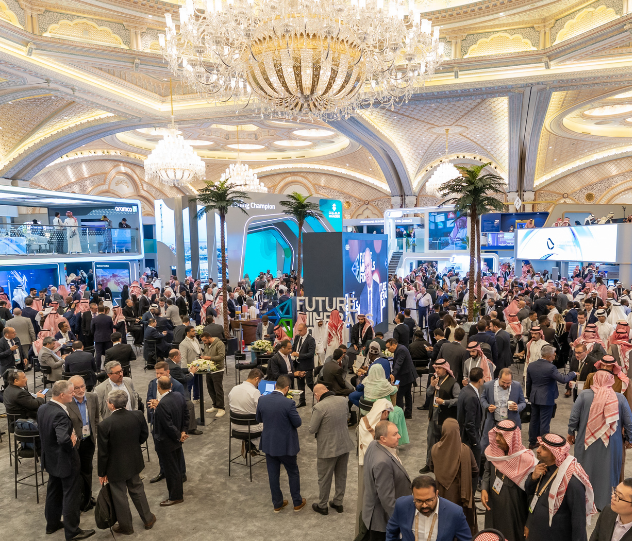
In line with these themes and market outlook, Saudi Arabia’s mining sector is shifting from a long-term ambition to a near-term investment hot-spot, underpinned by mineral potential estimated at US$2.5 trillion ($3.75 trillion), as reported by the Future Minerals Forum (FMF).
Central to the transformation was the 2020 revamp of the nation’s mining investment law, as previously reported, which introduced clear licensing frameworks, tenure security, faster permitting timelines, and globally competitive incentives.
According to FMF, the number of licensed mining companies operating in Saudi Arabia has grown from six in 2019 to more than 150, while exploration expenditure reached SAR$1.33 billion between 2019 and 2023.
The Future Minerals Forum, convened by the Ministry of Industry and Mineral Resources, is set to mark a new record of scale and participation in 2026 with more than 20,000 attendees.
Speaking to Mining.com.au, FMF Director of Strategy and Content Aldo Pennini says attendance at next year’s event – taking place from 13-15 January 2026 in Riyadh, Saudi Arabia – is expected to increase from 18,000 in 2025 and 3,500 in 2022.
The Future Minerals Forum is a government-led mineral platform which brings together industry leaders, experts, governments, academia, and stakeholders to drive mineral resilience and prompt responsible supply.
Mining.com.au is an official media partner at this year’s event and has a team on the floor delivering breaking news and analysis.
Write to Adam Orlando at Mining.com.au
Images: Mining.com.au, FMF26, iStock & Unsplash