Freeport-McMoRan (NYSE:FCX) is revisiting plans to expand its molybdenum production as rising prices and tightening global supplies fuel renewed interest in the metal.
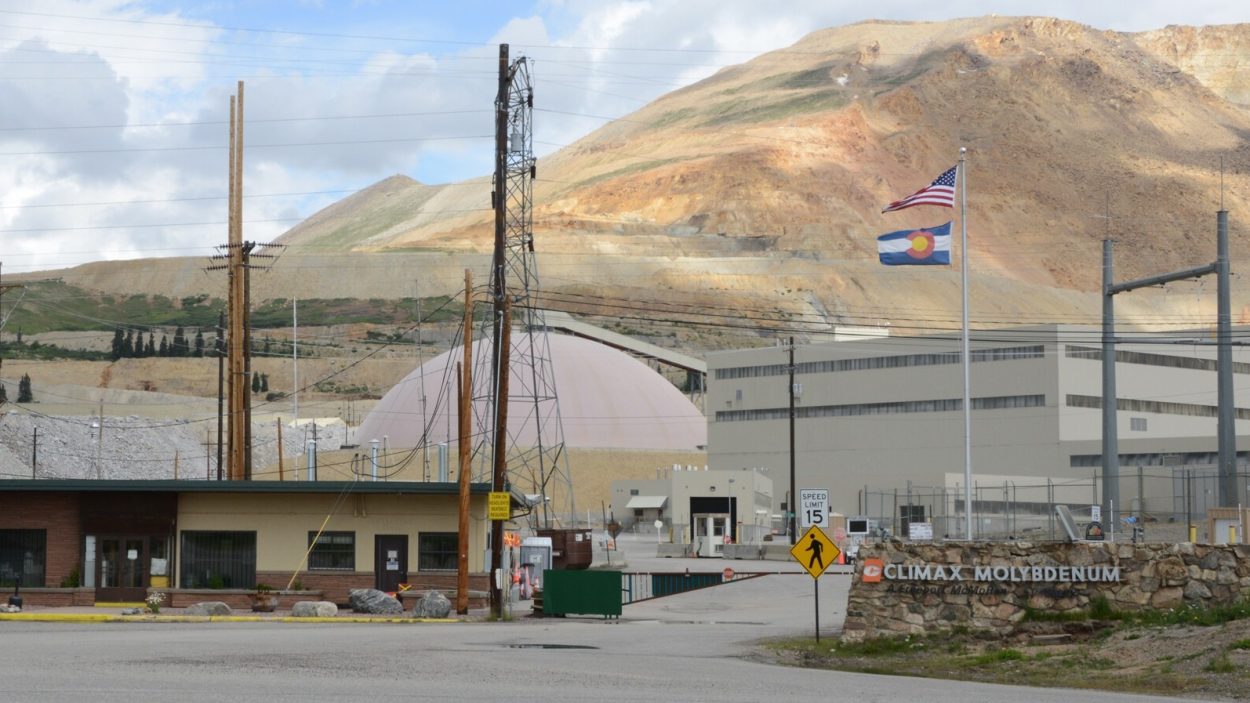
During an analyst call this week, CEO Kathleen Quirk said the US mining giant is exploring opportunities to increase output at its Climax mine in Colorado, citing favourable market conditions.
Molybdenum prices have risen more than 50% this year, with BMO Capital Markets (TSX:BMO) forecasting a sixth consecutive annual supply deficit in 2027.
“We’re very positive on the outlook for moly,” Quirk said, adding that Freeport already has opportunities to expand primary production at Climax.
“And so we’re kind of dusting off our old schedules.”
The renewed interest comes as demand for molybdenum continues to grow, particularly in industries requiring high-strength, heat-resistant, and corrosion-resistant materials.
The silvery-grey metal is widely used to strengthen steel and other alloys, making it difficult to substitute in applications ranging from oil and gas pipelines and nuclear reactors to jet engines and rocket components.
Copper disruptions tighten supply
According to data cited by Bloomberg, approximately 60% of global molybdenum supply is produced as a byproduct of copper mining.
This leaves molybdenum production vulnerable to declining ore grades, investment constraints and operational disruptions at copper mines — challenges that have become increasingly apparent in recent years.
Global copper mine production is now at risk of its first annual decline since 2017, driven partly by setbacks in Chile, the world’s largest copper producer.
Disruptions from extreme weather and mine accidents could see Chile’s copper output fall by as much as 9% this year, as Mining.com.au reported.
The disruptions have also weighed on molybdenum production, which declined 8% in the first half of 2026, according to Bloomberg.
That decline saw Chile, historically the second-largest producer, slip behind the US and level with Peru in global molybdenum production rankings.
Molybdenum demand accelerates
Meanwhile, demand for the metal continues to accelerate.
According to BMO, global molybdenum demand grew at an average annual rate of 4.4% between 2020 and 2025, before accelerating to 8.5% in the first half of 2026.
The bank expects the market to remain tight into 2027, with risks to prices skewed towards further increases.
Bringing additional supply online could prove difficult, particularly in China, which has historically increased primary molybdenum production during periods of shortage.
However, BMO noted that resource depletion and environmental restrictions have reduced China’s ability to rapidly expand output.
Unlike other supply-constrained metals such as tungsten and antimony, molybdenum also has relatively few alternative sources that China could access through imports without further tightening global availability.
Miners revive expansion plans
The tightening outlook is prompting other major producers to reconsider previously developed molybdenum projects.
Canadian miner Centerra Gold (TSX:CG) expects the market to remain in deficit for another six to eight years.
Recently, CEO Paul Tomory described molybdenum as being in “very high demand”, highlighting the need for additional production capacity.
Centerra is targeting first molybdenum production from its Thompson Creek mine in Idaho by mid-2027, with longer-term plans to bring its Endako mine in British Columbia back into production.
Freeport is also considering additional sources of molybdenum beyond its Climax operation.
A potential expansion of the Bagdad copper mine in Arizona could add approximately 4,500–5,400 tonnes of annual molybdenum production, the company says.
Write to Jackson Chen at Mining.com.au
Main Image: The Center for Land Use Interpretation