

IN LONDON: The European Commission has adopted a new guidance to decarbonise buildings and increase circularity, supporting the EU’s climate objectives while improving the efficient use of materials and reducing waste.
The Staff Working document provides guidance on how to reduce greenhouse gas emissions from buildings across their entire life cycle, from design and construction to use, renovation and eventual demolition.
Under the document, design, material supply, construction and operations of buildings are covered in a carbon-efficient manner, considering both supply of and demand for material, energy and built spaces.
It also provides an overview of how different policy measures can work together to reduce emissions across the building sector at both building and building-stock level, while also helping address growing housing needs in Europe.
In the EU, the building sector accounts for a large share of the continent’s greenhouse gas emissions and generates the biggest waste stream in Europe.
The European Commission says reducing the sector’s environmental impact is key to achieving climate neutrality and advancing the transition to a more circular and resource-efficient economy.
As Mining.com.au previously reported, the circular economy, or circularity, refers to practices that optimise resource use and minimise waste across the entire production and consumption cycle, emphasising sustainability and economic efficiency.
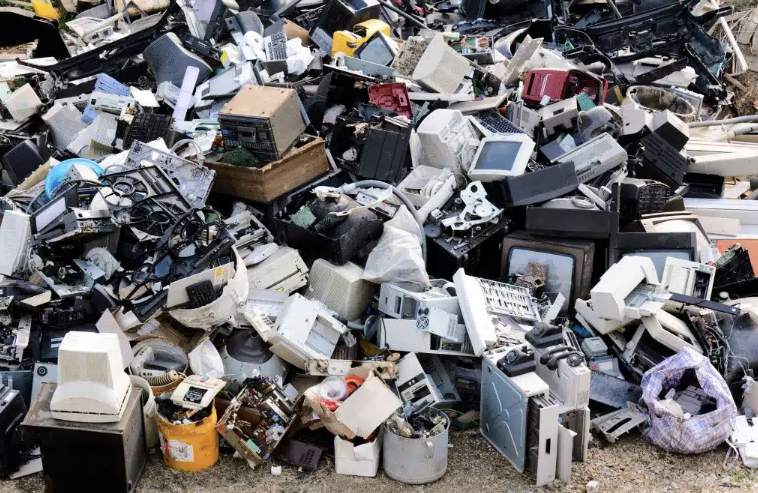
E-waste often contains hazardous materials such as lead, cadmium, and beryllium. Once it is exposed to strong UV radiation or corrodes, other toxic materials can be released into the atmosphere. As a result, the soil can be infiltrated and flow into water bodies nearly, in turn, affecting public health.
With electronic waste volumes currently surging five times faster than documented e-waste recycling, as reported by United Nation’s Global E-waste Monitor, more mining and resources companies are advancing in the digital age and doing their part in the circular economy innovation.
In 2022 alone, the world generated a record 62 million tonnes of e-waste — a staggering 82% increase from 2010.
To visualise this, imagine over 1.5 million 40-tonne trucks in a bumper-to-bumper line encircling the equator, or over 30 Titanic cruise ships, each overflowing with discarded electronics.
Write to Aaliyah Rogan at Mining.com.au
Images: Earth Org