

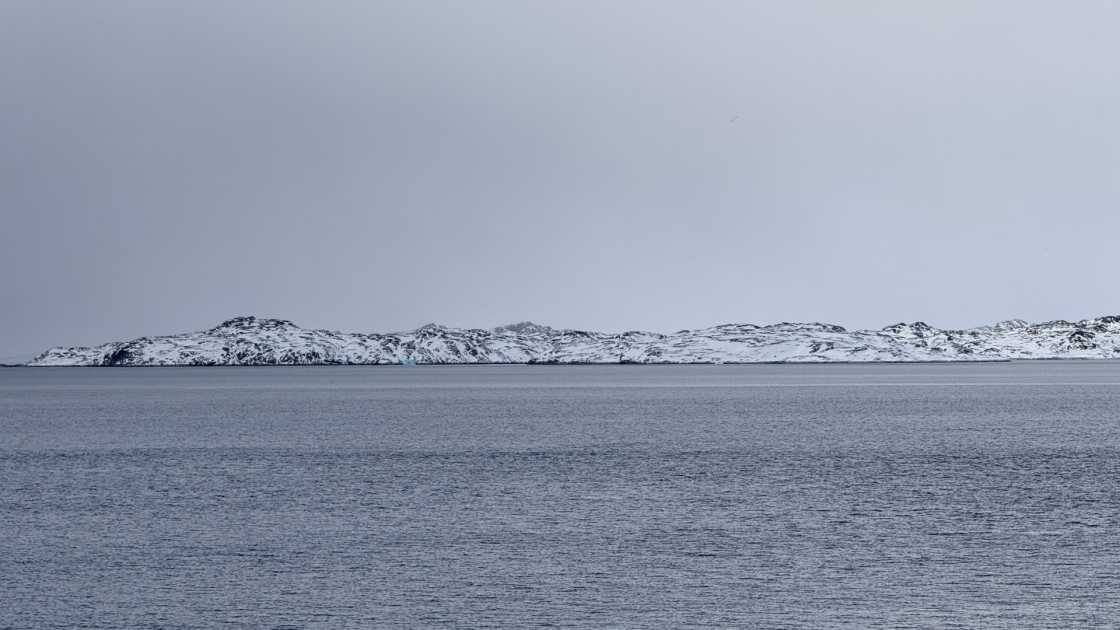
Dalaroo Metals (ASX:DAL) has identified four distinct granite units and interpreted eudialyte-bearing alkaline granites at its Blue Lagoon Rare Earth Project in southern Greenland.
With approximately 65% of geological mapping now complete, the work has also identified numerous aplite sills and beryl-bearing pegmatites.
Field observations indicated a highly evolved alkaline intrusive system capable of generating rare earth and critical mineral enrichment.
“The identification of four distinct granite units, numerous aplite sills, beryl-bearing pegmatites, and interpreted eudialyte-bearing alkaline granites demonstrates that the project hosts a far more evolved intrusive system than previously recognised,” CEO John Morgan says.
“These observations provide valuable clues to the source of the rare earth-bearing heavy minerals previously identified within the lagoon sediments.”
Coarse beryl crystals have been identified within pegmatitic intrusions along the Western Ridge. Beryl is recognised as a late-stage magmatic mineral commonly associated with highly fractionated granitic systems and rare earth element enrichment.
Field mapping has also identified pink alkaline granites containing minerals interpreted to be consistent with eudialyte, pending laboratory confirmation.
Eudialyte is recognised as an important zirconium and rare earth-bearing mineral within alkaline intrusive systems globally. Several of the ‘highest-grade’ heavy mineral samples from the 2025 program were collected immediately downslope from these mapped pink alkaline granites.
The pieces come together at Blue Lagoon
The 2026 field season builds on previous results that returned anomalous rare earth mineralisation from all 113 samples, including peak values of 0.81% total rare earth oxides, 4.42% zirconium oxide, and 99 parts per million hafnium.
Approximately 40% of planned surface sampling has been completed, with widespread naturally concentrated heavy mineral sands identified throughout eastern drainage systems and beach foreshores.
Lagoon sediment sampling using a Van Veen grab sampler is approximately 50% complete, while a ground-penetrating radar (GPR) survey has commenced to provide the first three-dimensional assessment of lagoon sediment architecture.
Weather conditions required the company to modify certain aspects of its exploration program, with the original base camp replaced with a helicopter-supported fly-camp operation and planned mechanised auger drilling replaced with hand auger drilling.
“The scale of the eastern drainage systems has also exceeded expectations. These extensive catchments provide an efficient natural transport pathway capable of delivering weathered material from multiple fertile intrusive bodies into the Blue Lagoon basin,” Exploration Manager Trystan Hughes says.
Southern Greenland continues to emerge as a globally significant rare earth jurisdiction, with neighbouring explorer Amaroq (LSE:AMRQ) recently commencing its maiden drill program at the Ilua Rare Earth Project and Critical Metals (NASDAQ:CRML) advancing the Tanbreez Rare Earth Project.
Dalaroo Metals expects to complete the GPR survey, lagoon sediment sampling, and geological mapping in the coming weeks, with laboratory assay results from hard-rock and heavy mineral concentrate sampling to follow.
Write to JC Villarba at Mining.com.au
Images: Dalaroo Metals