


Next year is shaping up to be a bumper year for copper with global supply constraints likely to push prices higher, incentivising new exploration, and accelerating development for more advanced projects.
Industry executives polled by Mining.com.au agree copper is on the cusp of an inflection point, amid rising commodity prices, inclusion into the US critical minerals list, and production declines from majors giving impetus for explorers to expedite drilling campaigns.
Some are suggesting any new supply constraints, or increased timeframes to remedy those already existing, will have a rapid and dramatic impact on copper, pushing already rising prices even higher – possibly hitting US$6 per pound in 2026.
The market sentiment comes after fresh data shows in Q3 2025, some 18 of the largest 25 copper miners reported quarter-on-quarter decreases in output, including the top four miners. The total third quarter copper production reported by the top 25 miners hit 3.72Mt, according to Benchmark.
While many companies experienced lower production compared to the previous quarter, most have not adjusted their guidance, with some analysts suggesting this shows confidence in meeting their annual production goals.
Benchmark reports among the most notable declines are Codelco and Freeport-McMoRan, which saw 10.2% and 5.3% quarter-on-quarter reductions in copper production, respectively.
Both companies have been affected by operational disruptions that included several fatalities and temporary suspensions of activity.
“Ivanhoe’s operations also remained constrained as dewatering efforts continued, resulting in a 36.4% quarter-on-quarter decrease – the largest proportional drop from a top 25 miner. Hudbay faced setbacks stemming from social unrest at its Constancia site in Peru and evacuations at its Snow Lake operations in Canada due to wildfires,” Benchmark notes.
“Some producers posted quarter-on-quarter gains, the largest of which was a 36.1% increase in production posted by Glencore supported by higher grades at its KCC (DRC), Antapaccay (Peru) and Antamina (Peru) operations.
“Lundin’s stronger quarter (+7.4%) was driven by improved performance at Caserones, Chile while Anglo American (+5.9%) benefited from higher milling rates and better ore grades at Quellaveco, Peru.”
Copper catalysts
As Kincora Copper (ASX:KCC) CEO Sam Spring explains to Mining.com.au, unlike the bullish sentiment around gold and critical minerals, copper is testing all time highest both on the LME and Comex, is firmly in a bull market being up approximately 30% year-to-date, yet not many are talking about it.
“Despite this setting, and recently being added to the US critical minerals list, I think a key reason for this is because copper price has attempted to break out many times in recent years without it being sustainable,” Spring tells this news service.
“While only time will tell if this time is different, we are seeing a very tight physical market, near record low TCRCs (treatment and refining charges), the transition from deficit to surplus appears that it might finally be upon us and the first part of the year is generally a very seasonal strong period for the copper price.”
“The most notable thing is that pricing has been driven by supply disruption, against a fairly weak demand outlook”
Pivotal Metals (ASX:PVT) Managing Director Ivan Fairhall echoes these sentiments, adding that copper is coming into 2026 incredibly strongly.
“Prices are at near record high. The most notable thing is that pricing has been driven by supply disruption, against a fairly weak demand outlook,” Fairhall tells this news service.
“As the global economy stabilises and begins to grow again, the increased demand is going to compound the current shortage,” Fairhall tells this news service.
For Alma Metals (ASX:ALM) Managing Director Frazer Tabeart, the market shouldn’t be surprised to see copper hit US$6/lb in 2026, adding any new supply constraints, or increased timeframes to remedy those already existing will have a dramatic impact on prices.
Projects that have been producing now for quite some time have depleted their reserves, coupled with no new large mines coming online. Compounding this, Star Copper (CSE:STCU) CEO Darryl Jones reiterates that new mine production is declining and the copper surplus is dwindling, noting British Columbia has vast mineral potential in the copper space.
“The potential shortfall that is projected in 2026 to 2030 is precisely the reason projects like ours are critical for the next investment cycle into copper projects,” the CEO tells this news service.
Copper price hike
“Next year is shaping up to be a bumper year for copper with the supply constraints discussed above likely to push prices higher, incentivising new exploration and accelerated development for more advanced projects,” Tabeart adds
Similarly, Renegade Exploration (ASX:RNX) has been bullish on copper for four or five years due to the structural deficit issues.
Executive Chairman Rob Kirtlan notes: “If we get any growth in global GDP the copper price is even better placed to benefit from this.”
“Copper prices have been predicted to rise for some time based on the structural deficit issues and we think we have arrived, as predicted by some, in the current time frame of 2025/26,” Kirtlan tells Mining.com.au.
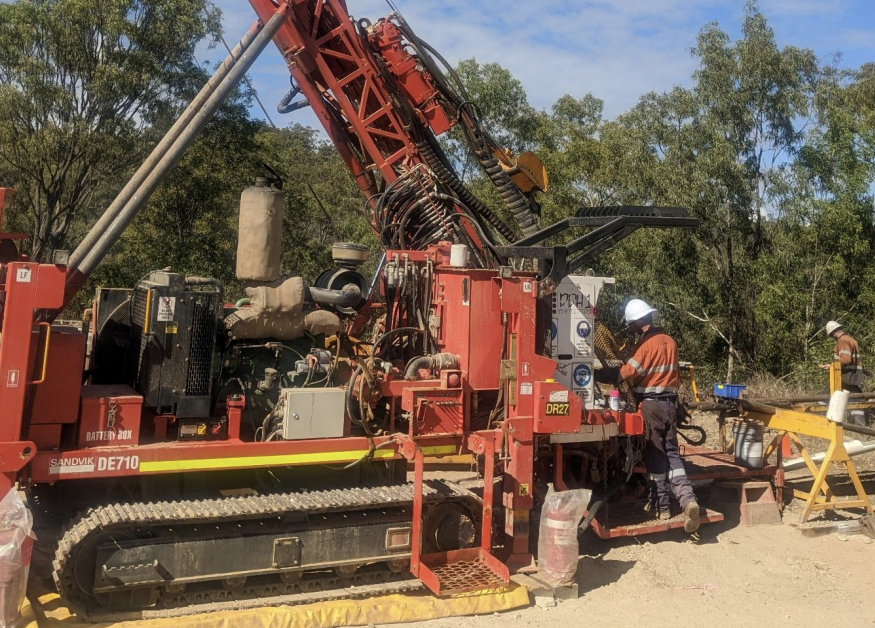
These market conditions are partly driving Revolver Resources (ASX:RRR) push to seek M&A opportunities, after generating a reliable stream of copper production from its Dianne copper deposit in North Queensland in 2026.
Recently speaking to Mining.com.au, Managing Director Pat Williams says expansion opportunities will follow an increase to the bank balance, jumping into the M&A scene in 2027.
“We’ll be looking at small to medium scale acquisition or merger opportunities,” he adds.
The company expects to boost its cashflow once the Dianne deposit, located within the greater namesake project in North Queensland, enters production.
Revolver is focused on finalising residual development workstreams to develop a positive final investment decision, which is expected in the coming weeks, as reported. The company expects to deliver its first copper cathode output in H2 2026.
Pressing pipeline issue
The lack of copper supply pipeline is becoming urgent. Pivotal’s Fairhall says the junior and development sector has been starved of capital over the past decade, and the situation now is that there are few advanced projects that can deliver incremental supply into the market.
Pivotal has a large, shallow, low technical risk project that sits in the tier one global jurisdiction of Québec.
“Projects like Horden Lake are well poised to come into production in the next cycle to deliver needed copper tonnes into an ever growing market,” he continues.
“Projects like Horden Lake are well poised to come into production in the next cycle to deliver needed copper tonnes into an ever growing market”
Global copper demand is increasing year-on-year, with demand driven by the inexorable shift to renewable energy, electric vehicles, and AI and data centres, all of which require significantly higher copper volumes than older technology.
Current global copper production from mines is around 24Mt per year, but the recent supply constraints have removed up to 750,000 tonnes from the production forecast for 2026. This, coupled with potential tariffs on non-US copper production is driving significant price increases, with copper reaching an all-time high in early December this year.
Alma’s Tabeart says new production is urgently required, and to be meaningful, needs to come from large-scale mines that are efficient so that prices do not run out of control.
“With long lead times for permitting and construction, mines with or near to existing infrastructure have a distinct advantage over those in developing countries or remote outback locations lacking the supporting infrastructure,” he tells this news service.
With this in mind, Renegade Exploration has also been aligning exploration activities with the view that copper is moving towards structural deficit around 2025.
Kirtlan thinks the market is there right now as evidenced by the copper price reaction to some recent production problems at the bigger producers.
“We need juniors to be active in the exploration space as we perhaps move a little quicker than the majors when it comes down to it. Whilst we are looking for the ‘big one’ smaller deposits are also on our radar which in the current environment will prove to be valuable,” he tells Mining.com.au.

Supply to lag demand
Copper supply is expected to lag demand as new mines are slow to develop and trade barriers interrupt scrap flows.
According to the Department of Industry Science and Resources (DISR), global copper demand is projected to rise strongly to meet requirements for clean energy technologies, data centres and electricity infrastructure more broadly.
In H1 2025, global copper consumption rose by 1.8% year-on-year, reaching a total of 13.7 million tonnes. China’s refined copper demand rose by 7.7% year-on-year to 8.2 million tonnes in H1 2025, accounting for 59% of global usage.
The International Energy Agency (IEA) projects China’s clean energy investment in 2025 to be US$627 billion, almost double what it was in 2015 and accounting for around 29% of global clean energy investment.
Outside of China, clean energy investment is projected to rise to US$2.2 trillion in 2025, driven by growth in renewables, electricity networks and end-use.
Over the outlook period, copper demand is forecast to grow on average by 2.6% a year, from 28 million tonnes in 2025 to over 29 million tonnes in 2027.
Global copper smelting activity fell again in October, with inactive capacity rising to 15.1% of world nameplate, the highest level recorded this year, according to Earth-i’s SAVANT Global Copper Monitoring Index.
The share of idle capacity lifted 1.7% month-on-month, pointing to a soft patch in refined copper supply as operators extend maintenance and curb throughput.
China drove most of the decline. The index shows Chinese inactivity jumping 6.9% to 13.8%, the steepest monthly rise since April 2024.
Yet the slowdown is uneven. East and South Central China – together close to 30% of indexed capacity – stayed relatively steady, with inactivity of 6.4% and 6.3% respectively. Downtime in these regions was limited to two Anhui smelters: Jinlong (Tongdu) 330,000 tonnes per year and Youjin Guanhua 100,000 tonnes per year.
By contrast, North, Northeast and Northwest China averaged around 40% inactivity, reflecting heavier maintenance and possible rationalisation.
Outside China, smelting activity improved, with the rest-of-world activity increasing by 2.2%, as deduced by a fall of the same magnitude in the active capacity sub-index to 16%.
Earth-i notes monitoring has not yet detected operating signals from the Kamoa-Kakula 500ktpa smelter, despite expectations of imminent commissioning.
The near-term signal is tighter refined supply if elevated Chinese downtime persists into December. The next watch-point is whether rest-of-world gains – and new African capacity – can offset North Asia’s pullback as copper demand trends higher into 2026.

Why are majors seeing production declines?
Kincora’s Spring notes the issues facing the copper industry this year are not unique, generally it sees about 5% of production lost a year due to supply disruptions. However, he says it is estimated that this year it will see the highest level of disruptions in terms of a percentage of total supply for 17 years – potentially above 7.5%.
“The world’s four largest copper mines have all experienced multi-year operational setbacks and all for various different reasons. This highlights the increasing supply side challenge and comes at a time where Morgan Stanley is forecasting the biggest deficit in the copper market for over 20 years,” the CEO tells this news service.
“While trying to pick inflections from surplus to deficit driven by the supply side is very hard, the nature and level of this year’s disruptions in the copper market have the potential to be what the Brazilian tailings disasters were for the iron ore sector in 2019 in terms of a supply shock in an already tight market and that supported a structurally high price environment.”
Adding to this, Renegade’s Executive Chairman says the production declines from majors mostly comes down to grade and permitting.
“Current very large operations have been seeing declining grades and increasing costs for some time. Permitting has affected a number of larger deposits which are seeing delays to them coming online to replace existing operations that are closing or producing less,” Kirtlan continues.
As the ‘easy deposits’ are depleted, mines are getting lower grade, deeper and require higher degrees of technical risk to operate. Fairhall says the recent round of supply disruption has actually been a direct impact of technical failures which is a trend, which is likely to continue as newer more complex mines are developed.
Tabeart tends to agree, noting there are a variety of reasons, but some of the largest reductions have come from major seismic events that caused structural damage and flooding in two of the world’s largest copper mines that could take years to fully rectify (El Teniente in Chile owned by Codelco and Kamoa-Kakula in Zambia owned by Ivanhoe).
In another case, a large inrush of mud has caused a 9-12Mt reduction in copper output in another of the world’s top five mines by size (Grasberg, Indonesia owned by Freeport-McMoRan), Tabeart adds.
“Other cases are related to intervention by sovereign governments over access or royalty/tax rate disputes, highlighting sovereign risk as a potential impact on global supply. This reiterates the benefits of bringing supply online in tier-one jurisdictions,” Tabeart explains.
Global issue, local solutions
The production declines is very much a global issue. As Fairhall notes, mines are getting more and more challenging to develop and operate, “and so this points to an asymmetric downside in terms of the industry’s ability to deliver nameplate capacity”.
Tabeart adds not only is the issue global and occurring across multiple continents but also in multiple deposit styles.
“In addition to short term production forecast declines, we are also seeing decreasing grades in mature mines, and longer (and more expensive) permitting pathways for new mines. Together these are exacerbating the supply crunch,” he says.
“In addition to short term production forecast declines, we are also seeing decreasing grades in mature mines, and longer (and more expensive) permitting pathways for new mines”
Most new production of meaningful scale in the next 10 years is likely to come from the Americas, such as US, Chile, Peru, Argentina, Ecuador, Panama, as well as Australia (Queensland and WA), and to a lesser extent Asia (Indonesia, Mongolia), says Alma’s Tabeart.
“In Australia, Caravel (WA) and Alma Metals (Briggs in Queensland) are both very large, low-grade deposits that have development potential. Operating in tier one jurisdictions is critical for long-term project success and investor confidence,” he says.
“These regions offer stable political environments, transparent regulatory frameworks and well-established legal systems that minimise sovereign risk and reduce the likelihood of sudden changes to taxes, royalties or operating conditions.”
Star Copper’s Jones adds that British Columbia is tagged as “Chile North” so the company feels it is positioned very well and with the “changing tides of globalisation each country is looking to secure their own critical mineral sources”.
Renegade’s Kirtlan, however, believes South America and perhaps North America are best placed.
A lot of the sentiment for exploration is driven by political issues and we are seeing supportive government changes in countries like the US and Argentina, he says.
“With respect to Renegade we are looking in the USA for gold-silver and copper whilst also seeking to monetise our Mongoose deposit in NW Queensland at Cloncurry,” Kirtlan continues.
Pivotal’s Fairhall agrees, adding that global geopolitical tensions are as high as in recent memory.
“Top tier western-alighted jurisdictions will benefit from the capital flows as the global supply chain looks for certainty. The USA, Canada, and Australia are getting a lot of focus,” he adds.
Canada’s copper players
In early December 2025, Canadian explorer Brixton Metals (TSX-V:BBB) discovered a second copper-gold porphyry system this season at the Tempest target within its Thorn Project in northwestern British Columbia.
The Tempest porphyry target is located 2km southwest of the recently discovered Catalyst porphyry system along a northeast-southwest trending corridor that hosts multiple underexplored porphyry-style prospects, including the Camp Creek porphyry.
One hole has been drilled at Tempest during the 2025 season.
Assays from this hole confirm the presence of copper, gold, silver and molybdenum mineralization associated with porphyritic rocks exhibiting moderate to intense alteration and veining.
CEO Gary R Thompson says intersecting two mineralised porphyry systems with its first-ever drillhole at both Catalyst and Tempest “is a remarkable achievement and not something commonly seen in the industry”.
Thompson says these results underscore the “exceptional prospectivity” of the Camp Creek Corridor and reinforces Brixton’s belief that the Thorn Project has the potential to host a large, multi-centre mineralised system.

Fellow Canadian exploration company Leviathan Metals (TSX-V:LVX) will conduct drilling across its portfolio of assets in Botswana and Bosnia in the new year. The company has spent a lot of time and effort this year within its Central Copper Project in Botswana.
Recently speaking to Mining.com.au, CEO Luke Norman says Leviathan is now doing all the pre-work leading up to a drill program in Q1 2026 including “some very high-res geophysics that we’ve established”.
The program will aim to prove Leviathan’s concept of the belief Central has an identical geology backdrop setting to the entire Khoemacau Mine.
The Central Project is interpreted to host 24km of the D’Kar Formation contact, mostly on the limbs and around the hinge of the Hyena Hills dome, as supported by high-resolution ground magnetic survey completed between 2023-2025.
Last month, Leviathan received approval to acquire Cura Exploration Botswana, offering the company landholdings in the Kalahari Copper Belt.
On 28 November. Leviathan closed the Cura Exploration transaction, which was carried out by way of an amalgamation under the laws of the Province of British Columbia pursuant to the terms of a September amalgamation agreement.
Cura recently completed the acquisition of all of the shares of several AfriMetals entities, which are the holders of certain copper and uranium prospecting licenses in Botswana.
The key asset of the AfriMetals entities is the land package commonly referred to as the Central Project, which directly adjoins MMG’s Khoemacau group of deposits and discoveries on the Kalahari Copper Belt.
Together with the nearby Banana Zone, Zone 6, and Ophion (combined measured and indicated mineral resources of 33Mt @1.4% copper and 21g/t silver and inferred mineral resources of 141Mt @0.9% copper and 10g/t silver) were acquired by MMG in 2023 for US$1.9 billion.
The 800km-long Kalahari Copper Belt hosts copper-gold deposits of the sediment-hosted stratiform copper type and is regarded as one of the world’s most prospective areas for yet-to-be-discovered deposits, according to the US Geological Survey.
Most KCB discoveries have been made within the past 25 years and the largest deposits within the past 15 years.
Nine Mile Metals (CSE:NINE) is in progress drilling the second hole at the Wedge Project via the western extension drilling program, following the completion of the first hole.
The first hole intersected 22.4m of massive copper-bearing sulphides, as well as a second sulphide zone in another target which is being geologically logged, measured, photographed and cut for sampling.
Vice President of Exploration Gary Lohman says the mineralisation was intersected where projected and throughout its width, it is massive and looks nondescript.
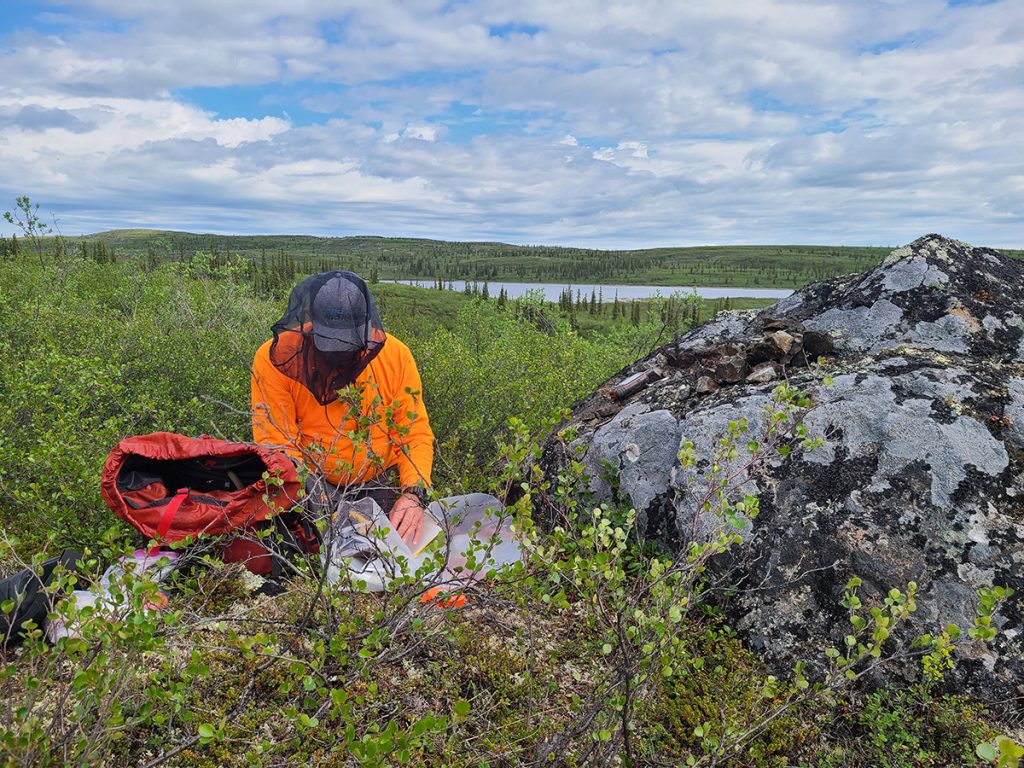
In late November, SPC Nickel (TSX-V:SPC) received assay results from a 2025 exploration program at the Muskox Project in Nunavut, Canada, which highlights the asset’s “unique” geological potential.
CEO Grant Mourre says the latest results position Muskox as a “leading exploration opportunity”.
“We are more than encouraged by standout results that include copper-equivalent grades up to 70.62% at Equinox, multiple samples above 30% copper-equivalent at Speers Lake, and consistent high-grade copper-nickel-platinum group metal mineralisation across all target areas,” the CEO says.
The seven-day prospecting program was completed in August 2025 and comprised the collection of 77 samples across the Equinox, Speers Lake, and Pyrrhotite Lake targets, as well as additional target areas.
The results from the program confirm widespread copper, nickel, and platinum group metal mineralisation occurring across multiple geological environments within the 125km-long Muskox intrusion.
At Equinox, results include 18.15% copper, 0.06% nickel, and 114.44 grams per tonne platinum group metals. SPC Nickel reports at Speers Lake, results include 17.70% copper, 6.24% nickel, and 9.85g/t platinum group metals. Meanwhile at Pyrrohotite Lake, samples returned values as high as 3.57% copper, 2.50% nickel, and 0.58g/t platinum group metals.
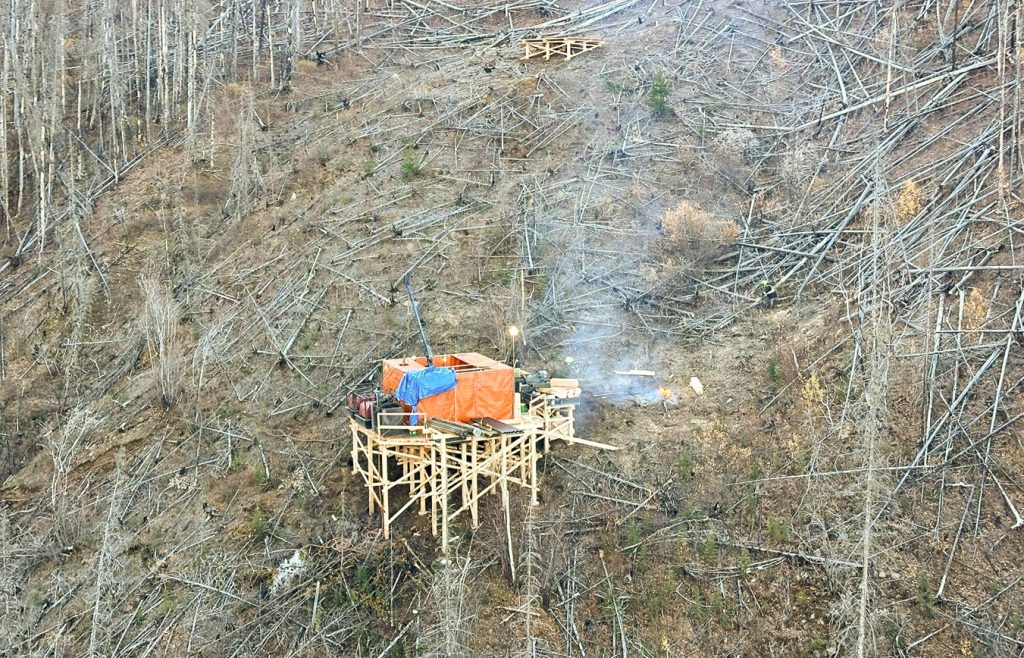
Star Copper (CSE:STCU) has finished the final hole for drilling as part of the 2025 exploration program within its Star asset. Assays remain pending and will be disclosed once received.
Star Copper notes 3D mineralisation modelling will follow-up to expand drill targets and prepare for the forthcoming year.
The company says the textures, alterations, and chalcopyrite occurrences observed in the inaugural drillhole are encouraging indicators that Star North may represent a second mineralised centre within a broader porphyry cluster framework.
The Star North target mirrors the Star Main target in its geophysical signature. Star North boasts a 500m by 1,000m soil anomaly which was used as a vectoring tool for drilling.
Australia adds to exploration
True North Copper (ASX:TNC) CEO Andrew Mooney says the company is “onto something big here” within the Mt Oxide Project in Queensland, after the Aquila discovery reached over 900m of strike length.
Multiple ‘high-grade’ shoots were delineated through the extended Mt Oxide phase two drilling program, highlighting the potential to exceed the scale and quality of the existing Vero resource. Assays have been received from four of the eight pending holes at Aquila.
Follow-up drilling is currently being planned, which is expected to include following up Aquila in Q2 2026.
Extensional induced polarisation (IP) surveys will also be conducted to the north and south of the currently defined Aquila, Apollo, and Acanthis trends, and additional IP at the Rhea target within the Mt Gordon Fault Zone, expected in Q1 or Q2 2026.
Phase two drilling also included an additional four holes into the Apollo and Acanthis trends, expected December to January, that will enable follow up drilling in 2026 from improved drill pad locations.
True North has delivered the ‘best’ intercepts to date at the Mt Oxide Project in Queensland, which Mooney says is “the kind of find an exploration geologist can spend a career looking for”.
The November results from the Aquila prospect includes one of the “strongest copper intercepts reported this year” with 7m @ 7.90% copper and 13.7 grams per tonne silver from 134m, with these two hits underscoring the potential within the target.
End to end, hole MOX255 also returned 59m @ 1.77% copper, 0.04% cobalt, 5.2g/t silver, including 33m @ 2.83% copper, 0.02% cobalt, 7.8g/t silver from 134m. Some of the other highlighted results from holes MOX256 and MOX258 include 8m @ 2.71% copper, 0.02% cobalt, 5.7g/t silver from 171m; and 26m @ 0.67% copper, 0.05% cobalt, 2.8g/t silver from 138m.
Pivotal Metals has uncovered a new copper-gold target at the Lorraine Project in Québec, Canada, after conducting a recent field program.
At the newly discovered Kelly Lake East target, field reconnaissance confirmed three distinct zones of anomalism previously identified over strike lengths of 150-200m, characterised by broad bands containing parallel mineralised shears within an eight to 25m wide corridor.
Results returned grades up to 2% copper and 1.9 grams per tonne gold.
Pivotal Metals notes in places, sulphide content reaches up to 90%, dominated by pyrite, pyrrhotite, and chalcopyrite, with mineralisation closely linked to quartz shearing, silicification, and carbonate alteration.
The company says multiple geophysical conductors and a partial coverage soil survey highlights the wide scale prospectivity of this entire 1km by 1.5km area that remains substantially unexplored.
Fairhall says confirming the presence of an expansive and prospective copper-gold target at Kelly Lake East underscores the scope of the opportunity with the Belleterre exploration program.
“The presence of wide gold-copper anomalous zones and untested versatile time-domain electromagnetic anomalies support the high prospectivity of this emerging target area,” he adds.
Meanwhile, Solis Minerals (ASX:SLM) has identified “compelling” targets, likely forming part of a deeply rooted copper-molybdenum system, via new geophysical modelling at the Cucho Project in Peru.
A drone-borne magnetic survey is scheduled for December 2025, aimed at mapping structures and magnetic features associated with the currently recognised alteration-hydrothermal system.
Solis will also conduct an expanded surface geochemistry sampling program shortly. Upon completion, a diamond drilling program will start in 2026 to test the Cucho targets.
Cucho covers a 3,600 hectare land package and alteration-mineralisation anomaly footprint of 3km by 1.8km.
Another ASX-listed junior focused on copper is Loyal Metals (ASX:LLM), which is sharpening its targeting for an upcoming drilling program in 2026 at the Highway Reward Copper-Gold Mine in Queensland, as it begins an advanced ground-base geophysics program.
The mutli-technology deployment includes ground-based 3D induced polarisation (IP), magnetotellurics (MT), and gravity surveys with drone-based light detection and ranging (LiDAR) and magnetics planned to enhance the overall survey package.
All collected data will be integrated with past geological information and analysed via VRIFY’s artificial intelligence (AI-enhanced) DORA platform to uncover new discovery targets for drilling in 2026.
The campaign will run through December, with data integration and interpretation scheduled for early 2026. This approach will deliver a detailed 3D understanding of the subsurface, enabling Loyal to uncover and prioritise targets.
Managing Director Adam Ritchie says the launch of this program is essential to unlocking the project’s untapped potential.

Meanwhile, Kincora has begun drilling at its Wongarbon Project to confirm the project’s prospectivity for hosting one of the large and untested intrusive complexes of the Macquarie Arc in New South Wales.
Drilling will also test a magnetic anomaly interpreted as a gold-copper porphyry target.
Kincora has planned a 650m deep hole at the project, expected to be complete in four weeks, which is funded by the New South Wales Government’s Critical Minerals and High-Tech Metals Exploration Program (CMEP) grant.
As reported by Mining.com.au, the company has received $143,483 from the government for this exploration program. Kincora expects drilling to cost under US$100,000 ($154,010).
Technical Committee Chairman John Holliday describes Wongarbon to sit in virgin territory as a “major opportunity with huge upside”.
“There is a good chance that the next Cadia-scale deposit in the Macquarie Arc will be found in the covered and underexplored parts of the Lachlan Fold Belt,” Holliday says.
“Regional magnetics has proven very effective in mapping the prospective Macquarie Arc belts and the major porphyry deposits have identifiable magnetic intrusive complex signatures.
“The Wongarbon project is a real stand out untested example of this signature in the right location and with the right features.”
Write to Adam Orlando at Mining.com.au
Images: Leviathan, Revolver, SPC Nickel, Star Copper, Stock & Mining.com.au