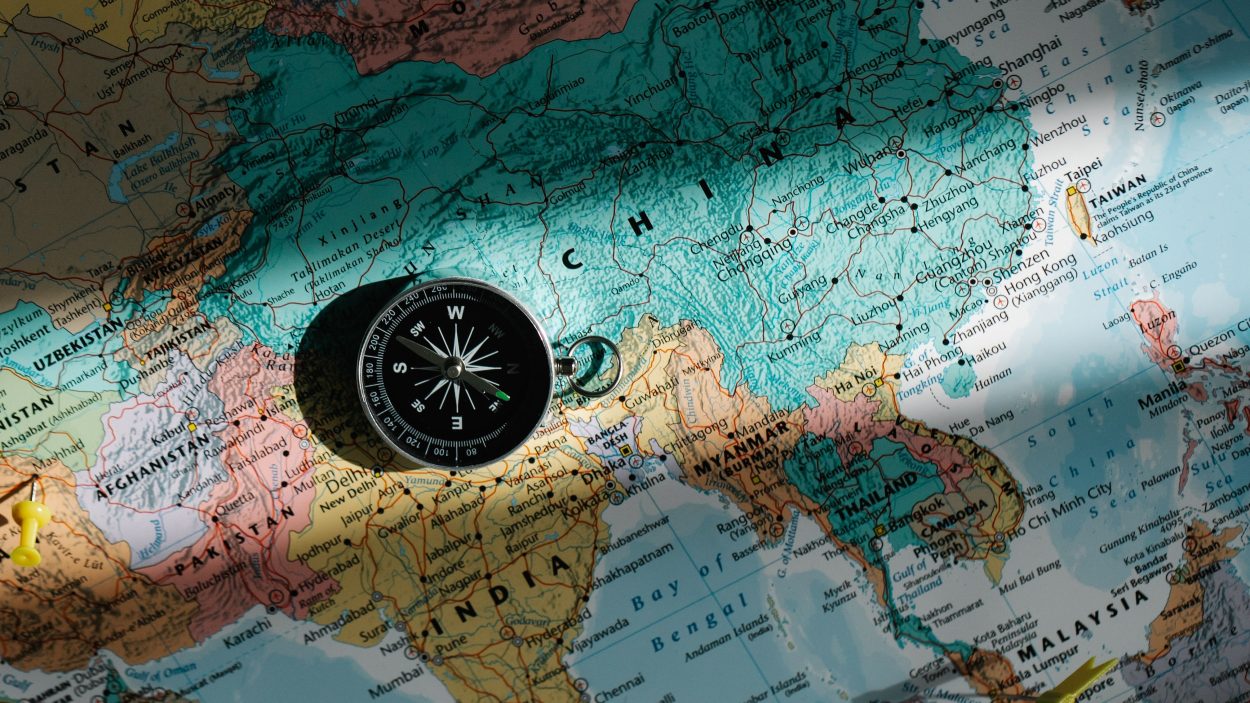
China is stepping up its acquisitions of overseas mining assets to strengthen its control over global mineral supply chains, with analysts expecting investment to accelerate in the coming years.
According to CNBC, Chinese state-owned companies have invested heavily in overseas mining over the past two decades, often targeting regions overlooked by Western miners.
That push has gained urgency as governments increasingly view critical minerals as a source of geopolitical leverage, while countries such as Saudi Arabia and India emerge as competing investors.
A report by Rhodium Group cited by CNBC estimates that Chinese overseas mineral acquisitions reached US$8.8 billion ($12.52 billion) in the first nine months of 2026 – already the highest annual total since at least 2018.
“Acquisitions have mostly been concentrated in minerals that China lacks domestically,” Armand Meyer, senior research analyst at Rhodium Group, says.
These have included lithium, nickel, and cobalt during the electric vehicle boom in the mid-2010s, followed by growing interest in gold in recent years.
Australian think tank Climate Energy Finance previously estimated that China has invested over US$120 billion in overseas mining ventures since 2023.
Beijing steps up investment strategy
Analysts at Eurasia Group expect China’s overseas mining investments to increase significantly as Beijing seeks to secure long-term access to strategic mineral reserves.
The consultancy estimates that Chinese outbound investment in upstream critical minerals could double compared with levels recorded during the 2021–2025 period.
Dan Wang, China director at Eurasia Group, says the spending forms part of a ‘state-coordinated’ global mining strategy to allow for large mining investments.
As part of that strategy, Beijing established a dedicated overseas bureau in April to oversee foreign investments by central state-owned enterprises.
It also created a mining investment vehicle in July to coordinate overseas deals and advise Chinese companies on compliance, risk management, and market conditions.
According to Wang, Beijing treats 70% import dependence as an implicit red line, placing minerals such as copper, lithium, cobalt, nickel, bauxite, and iron ore under greater pressure to secure overseas supplies.
Even for minerals where import reliance is lower, China is looking to expand its access to resources, she adds.
Gold, for example, falls within what Wang describes as a relatively safe import dependence range of 50%, but Beijing is still seeking access to more high-grade deposits.
Growing resistance to China’s dominance
However, this overseas investment spree is facing resistance from local refiners seeking to capture more value from their minerals instead of relying on Chinese processing.
For decades, resource-rich countries have shipped raw minerals such as rare earths to China for processing, partly because refining can carry significant environmental costs.
This has allowed China to build extensive processing capacity, giving it a dominant position in the global rare earth market.
According to the International Energy Agency, China accounts for approximately 92% of global refined rare earth production.
Brad Handler, director of the Energy Finance Lab at the Payne Institute, says this dominance gives Beijing the ability to influence global prices by restricting supply or increasing production.
“If a rival builds a new refinery, China can produce more, oversupply the market, and push prices below economic levels,” Handler says.
China has also tightened its control over rare earth exports, introducing licensing requirements for seven medium and heavy rare earth elements last year.
The restrictions have affected overseas buyers, including Japan, where supplies of key minerals like yttrium are running short, as Mining.com.au reported last month.
Write to Jackson Chen at Mining.com.au
Main Image: Pexels