



Conflicting decisions by the Canadian government over Chinese investments in the country’s mining industry have raised questions around the approach and potential impact on future investment.
Last week the Supreme Court of British Columbia approved the proposed C$368 million ($405 million) all-cash takeover of Vancouver-based gold explorer Osino Resources (TSX-V:OSI) by China’s Yintai Gold.
However, just a couple of months earlier the Canadian government blocked a planned C$16.9 million investment in Québec-based graphite miner SRG Mining (TSX-V:SRG) by China’s Carbon One New Energy Group (C-One).
Patrick Leblond, Associate Professor at the University of Ottawa’s Graduate School of Public and International Affairs, says that while SRG did not officially say so, the belief is that a national security review by the federal government was going to scupper the transaction.
The deal would have seen C-One acquire a 19.4% stake in SRG and its sole asset, the Lola Graphite Project in Guinea.
Graphite is one of the six key commodities on Canada’s list of critical minerals.
“One of the factors used by the government when assessing national security implications, as per the Guidelines on the National Security Review of Investments, is ‘the potential impact of the investment on critical minerals and critical mineral supply chains’,” Leblond says.
“This case raises a million-dollar question: Does the Chinese ownership of a fifth of a graphite mining operation in West Africa for the European battery market represent a threat to Canada’s national security?
The justification for including the supply of critical minerals in the factors that could affect Canada’s national security is the control that foreign governments, notably China, could exercise on the supply of such minerals.
Ultimately, the risk is that governments and companies in places such as Canada would become dependent on Chinese firms for products deemed crucial to the economy’s future, as well as to national defence.”
According to the International Energy Agency, China’s spending on and acquisition of overseas mines has grown significantly in the past 10 years, reaching record levels of US$10 billion ($15 billion) in the first half of 2023, with a key focus on battery metals such as lithium, nickel and cobalt.
As a result, governments around the world – including Canada, Europe, Japan and the United States – are implementing tougher regulations to help break China’s stranglehold over critical mineral supply chains.
Peak Asset Management Executive Director Niv Dagan tells Mining.com.au that the Canadian government recently imposed a number of tariffs and regulations on foreigners investing in property.
“More specifically, the capital gains tax has also increased, posing some investors to flee the market,” he explains.
“As part of recent immigration policies, the Canadian government has restricted some foreign investments into Canadian mining companies.”
Professor LeBlond questions whether blocking a transaction like the one between SRG and C-One is the best way to reduce critical mineral dependence on China.
“Will it ensure sending graphite to Europe or North America rather than China or China-controlled manufacturers? With just a fifth of SRG, it is hard to see how C-One could unilaterally decide to send the graphite China’s way.”
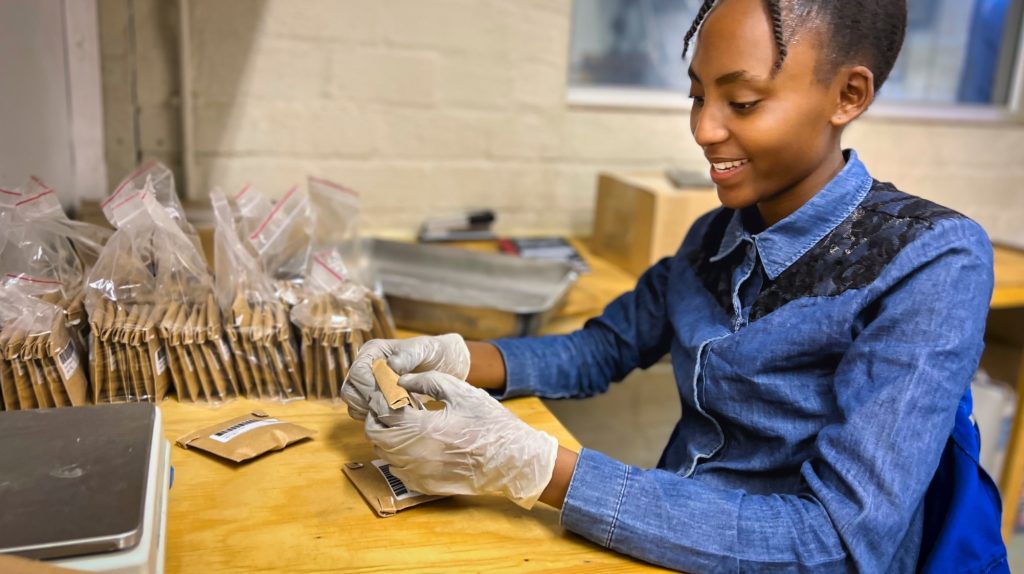
On the other side, the recent deal between Osino and Yintai is a full takeover that would give Yintai complete control of Osino’s gold portfolio in Namibia.
“What remains ambiguous is what would constitute a blocking stake relative to outright control,” Peak’s Dagan says.
“We saw this with the recent acquisition of Osino by Chinese firm Yantai gold.”
Write to Angela East at Mining.com.au
Images: Osino Resources & Unsplash


