

International supply chains are being remapped and trade routes re-written with these trends presenting compelling opportunities for Australian businesses globally and throughout Asia in particular.
Plans are underway for Singaporean financial services group DBS (SGX:D05) and the Australian Trade and Investment Commission (Austrade) to jointly organise an investor roundtable in Sydney in 3Q 2025 to engage businesses and showcase regional investment opportunities.
DBS and Austrade have signed a memorandum of understanding to create opportunities for Australian companies and investors to expand into DBS’ markets in Southeast Asia including Indonesia, Malaysia, Singapore, and Vietnam.
The MoU – the first-of-its-kind between Austrade and a Singapore-based bank – is in conjunction with the 10th anniversary of DBS’ Sydney branch. It builds on DBS’ commitment towards advancing Australia’s economic priorities onshore and abroad.
DBS set up its Australia branch in 2015 to facilitate business growth in the country, as well as to connect Australian clients with Asia and vice versa.
Under the newly inked agreement, the partners will make available a suite of essential resources including market insights and regulatory guidance, and will facilitate connections with regional partners and industry leaders to unlock commercial opportunities.
Where appropriate, DBS will leverage its capabilities to provide advisory services such as support on market entry strategies, financial planning and risk management.

Two-way trade to 2040
In line with Australia’s Southeast Asia Economic Strategy to 2040 to grow two-way trade and investment, the MoU provides a practical pathway to increase market awareness. It aims to facilitate investment between Australia and one of the world’s fastest growing regions.
DBS Chief Executive Officer Tan Su Shan says the firm established a presence in Australia 10 years ago in recognition of its strategic location and increasing economic cooperation with Asian partners.
“Looking ahead, the bank will continue to dial up support for customers in key growth sectors such as technology, renewables, energy and infrastructure. We will also continue to support the growth of financial institutions including superannuation funds,” the CEO says.
“The MoU with Austrade reaffirms our belief in the potential of Australia-Southeast Asia connectivity and enables us to deliver on our shared ambition to drive meaningful impact across the region.”
Austrade CEO Dr Paul Grimes says Australia, with its deep capital markets and well-capitalised corporate sector, is well placed to accelerate economic engagement with Southeast Asia.
“Supply chains are being remapped and trade routes re-written. These trends present compelling opportunities for Australian businesses”
The region also represents a significant economic opportunity for Australian businesses. By 2040, Southeast Asia as a bloc is projected to be the fourth largest economy in the world, with a young and dynamic working population.
“Southeast Asia’s expanding middle class, rapid urbanisation and growing demand for digital and sustainable development are reshaping the region’s economic landscape,” Grimes says.
“Supply chains are being remapped and trade routes re-written. These trends present compelling opportunities for Australian businesses. Through this collaboration, Austrade and DBS will combine expertise to provide timely, practical support to help them seize this enormous potential.”
Austrade has seven offices in Southeast Asia: two in Vietnam (HCMC and Hanoi), Indonesia, Singapore, Malaysia, Thailand, and the Philippines. The Department of Foreign Affairs and Trade (DFAT) also provides support through embassies in Cambodia and Laos.
The region is expected to continue its strong economic growth at a forecast compound average growth rate of 4% to 2040). While Australia is closely engaged in the region, including through a network of trade agreements, Austrade wants to do more to boost trade and investment.
Austrade notes that Australia’s direct investment into Southeast Asia has stagnated in recent years, while overall direct investment into the region from other countries has increased materially.
At the same time Southeast Asia’s energy demand has increased by an average of 3% a year over the past two decades. This is projected to double by 2050 from 2020 levels.
Australia is a substantial supplier of Southeast Asia’s resource needs, with more than $31 billion in exports to the region in 2022 alone.
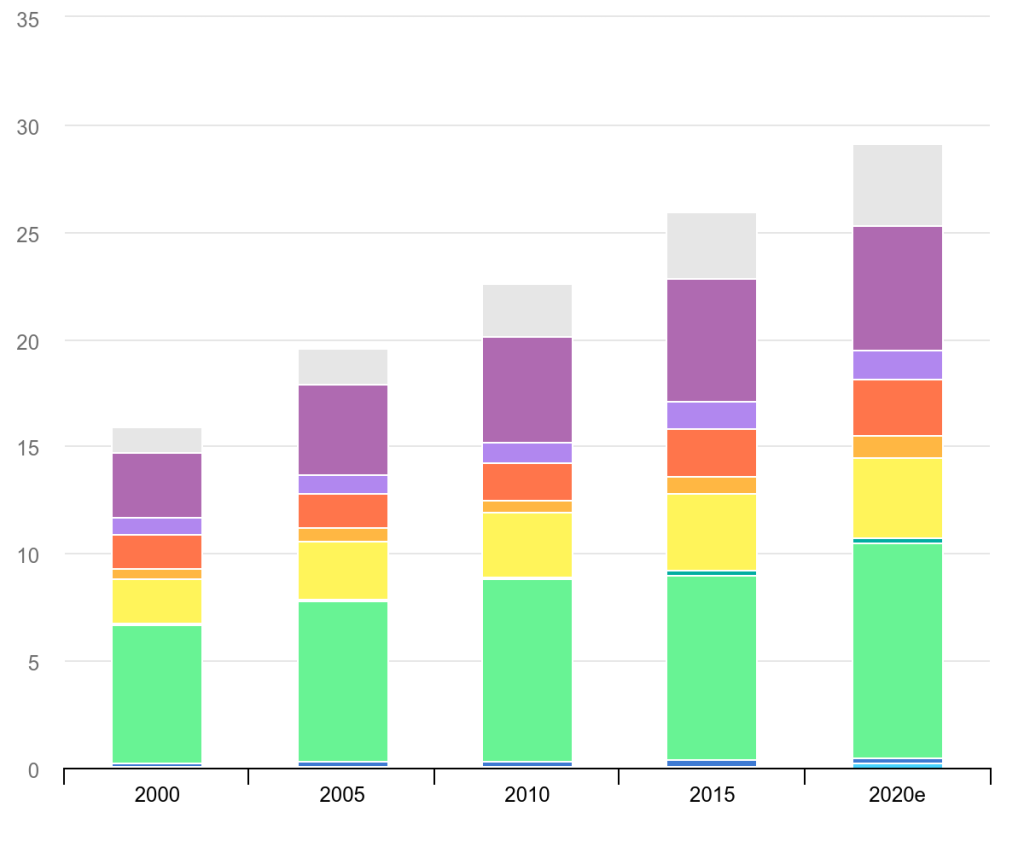

Source: IEA, Southeast Asia Energy Outlook 2022: Key findings, May 2022.
Crossborder deals, expanding footprints
Against this backdrop, the Austrade and DBS initiative sets out a comprehensive framework through which they will collaborate to help Australian companies establish and expand their footprint in Southeast Asia.
In partnership with Austrade, in May 2025 a senior-level delegation from Southeast Asia was hosted at GRX25. GRX25 is an evolution of the longstanding Austmine Conference and a collaboration between peak bodies in the resources sector, Austmine and AusIMM, as reported by Mining.com.au.
With delegates predominantly from the key mining markets of Indonesia, the Philippines, and Vietnam, this delegation features executives and management from mining and industrial companies seeking to discover the latest innovations and technologies emerging from the Australian mining equipment, technology and services (METS) sector.
Australia’s global METS exports were worth $17 billion in 2020, with 51% of total value destined for Southeast Asia. METS trade and investment opportunities for Australian companies are likely to continue to grow, especially given limited in‑market capability in mining technology and services in the region.
There has been a return to crossborder deals with Asia at the big end of town, which is spearheading the drive to expand geographical footprints. As they pursue energy security and climate goals, Australian miners are increasing their involvement in this sector and some are investing in emissions-free electricity production.
For example, Australia’s Nickel Industries (ASX:NIC) is unlocking opportunities in Indonesia, which has nearly 25% of the world’s nickel reserves and is expected to account for 50% of the global production increase in nickel between 2021 and 2025. The company has recently secured a $943 million investment from Indonesian company United Tractors to finance its operations.
In Thailand, Australian company Alpha Fine Chemicals is planning to construct and operate a nickel sulphate plant in Rayong province to produce 40,000 tonnes per annum of nickel sulphate crystals to supply the lithium-ion battery market
Fortescue (ASX:FMG), which is a large producer of iron ore, is one such mining major and in April 2024 inked a joint venture with OCP Group to create an offshore green energy hub. OCP operates throughout Asia including China, India, and Singapore, as well as operating in Africa, the Americas, Europe, and Middle East.
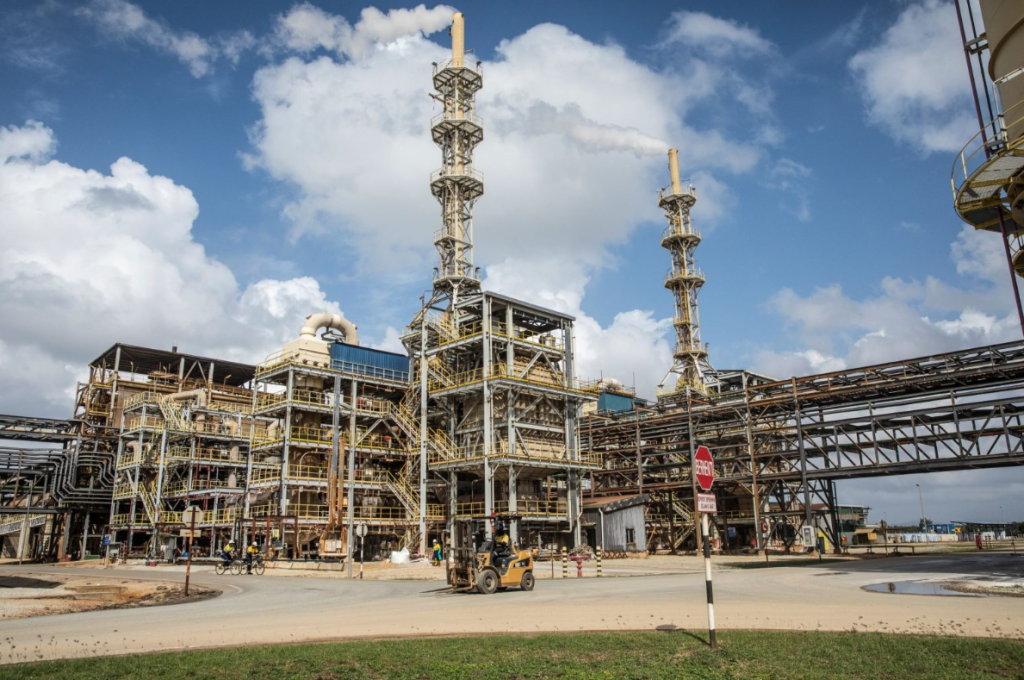
Lynas (ASX:LYC) has been operating in Malaysia since 2012 and supplies separated rare earth materials to customers in east Asia, the US, and Europe.
The Lynas Malaysia advanced materials plant (pictured above) is located on a 100-hectare site in the Gebeng Industrial Estate, a purpose built petrochemical industry zone near Kuantan, on the east coast of Malaysia.
The plant processes Mt Weld concentrate and mixed rare earth carbonate (MREC) and comprises three processing areas – cracking and leaching, solvent extraction and product finishing.
Lynas in June confirmed first production of terbium oxide at Lynas Malaysia. This is the second separated heavy rare earths oxide to be produced there following first production of dysprosium oxide in May 2025.
Australian company GroundProbe has an international service centre in Kalimantan and provides a range of technological services. GroundProbe’s trade has accelerated with the lower tariffs and improved investment rules under the Indonesia–Australia Comprehensive Economic Partnership Agreement.
Meanwhile, China’s Zijin Mining (HKG:2899), in April 2025 took a strategic interest in Strickland Metals (ASX:STK) as the explorer expands its Serbian and West Australian operations.
The Chinese mining giant, through its wholly owned Australian subsidiary, also in January 2025 entered into an agreement with an ASX-listed company to sell its Bullabulling assets.
Write to Adam Orlando at Mining.com.au
Images: Lynas, IEA & DBS Bank