



This article is a sponsored feature from Mining.com.au partner Auric Mining. It is not financial advice. Talk to a registered financial expert before making investment decisions.
Kalgoorlie has long been the beating heart of Australia’s gold industry, with Western Australia accounting for about 70% of the country’s total production. With bullion trading at historic highs, the region is once again buzzing with opportunities.
For Auric Mining (ASX:AWJ), the key to unlocking that potential lies not just in the ground, but in the infrastructure needed to process what it mines.
Auric’s acquisition of the Burbanks Gold Processing Facility, just 10km south of Coolgardie, marks a pivotal step for the company. Following several years of toll treatment through third-party mills, Auric is now positioning itself to control the full mine-to-market cycle, produce its own doré bars, and capture greater margins in a market where mill capacity is scarce.
Managing Director Mark English says the move is central to Auric’s growth story, enabling the company to leverage strong gold prices, accelerate development timelines, and cement its place as a focused Kalgoorlie gold-only producer.
English notes that Auric has been incredibly focused since its listing on the ASX in 2021, buying projects on granted mining leases so the company could get them into production as quickly as possible and start to generate cash flow.
“We listed in February of 2021, executed an agreement to start mining in May of 2022, and got that into production in May 2023,” English says.
“We’re profitable, we make money. We’re one of the rare small cap companies that makes a regular profit.”
Munda: Starter pit success and expansion
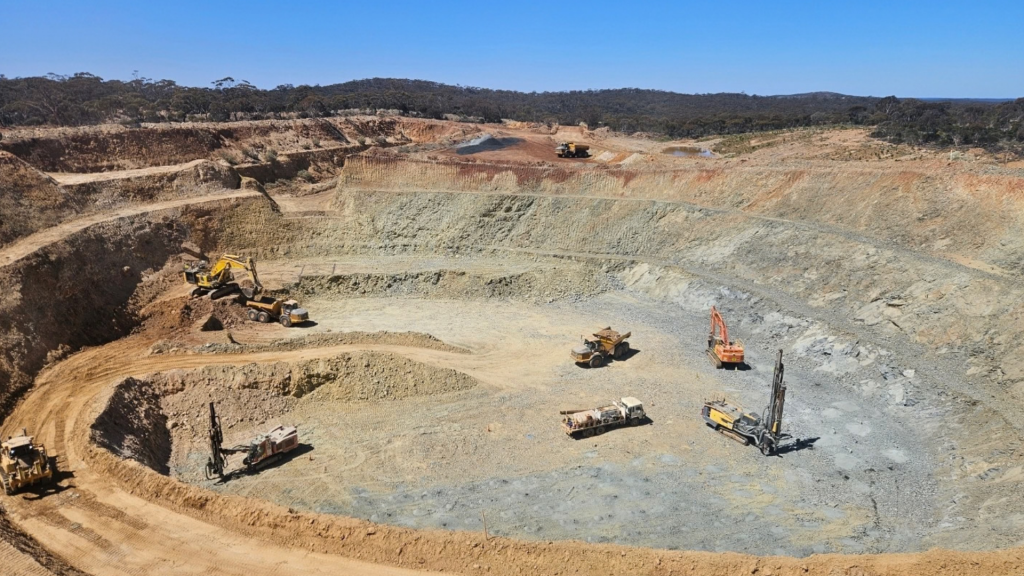
Those profits have been primarily coming from two projects, including the mining and processing from the Munda Gold Mine Starter Pit, which produced around 8,886 ounces of gold, well above the original target of 6,100 ounces.
English notes that production from Munda outperformed the team’s expectations, came in substantially under budget, and was sold at an average price of about $7,180 per ounce.
Munda is just one part of the company’s strategy to establish an integrated gold mining and processing hub in WA.
Auric completed the starter pit in early 2026 and has since increased its mineral resource to nearly 200,000 ounces.
The company has begun a major reverse circulation (RC) drilling program at Munda, focused on infill and resource expansion, with three rigs currently in operation.
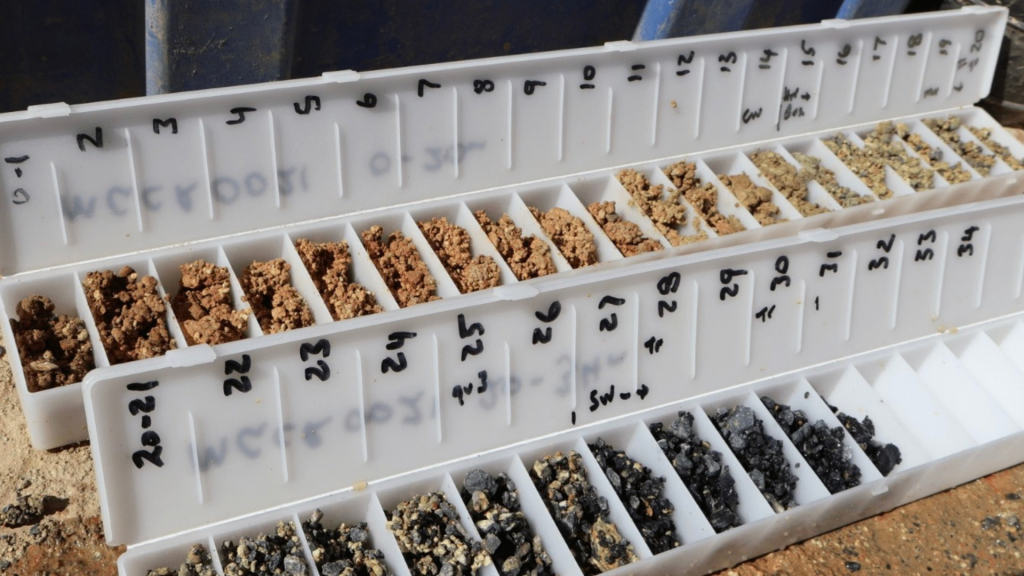
The RC program comprises 135 holes over 12,900m and is testing for gold mineralisation to a depth of 120m along strike. Geotechnical diamond drilling has focused on refining the pit design parameters. That drill will provide data for a geotechnical model to update the mine design for the next stage of mining at Munda and feed into the ore reserve estimate, which is expected in H2 2026.
English notes that, to date, all mined output has been processed through Black Cat Syndicate’s (ASX:BC8) Lakewood Mill in Kalgoorlie, a 1.2 million tonne-per-annum (Mtpa) carbon-in-leach processing plant.
Black Cat is completing a study to expand throughput at Lakewood to 1.5Mtpa. However, English notes that even with an expansion, the demand for mill space remains high in the region.
Burbanks Mill: Rebuilding Auric’s processing future
With regional mills currently in high demand, Auric’s strategic acquisition of the Burbanks Mill in September 2025 could change how the company processes its ore. English points out that controlling the milling process could substantially shorten the company’s development timelines.
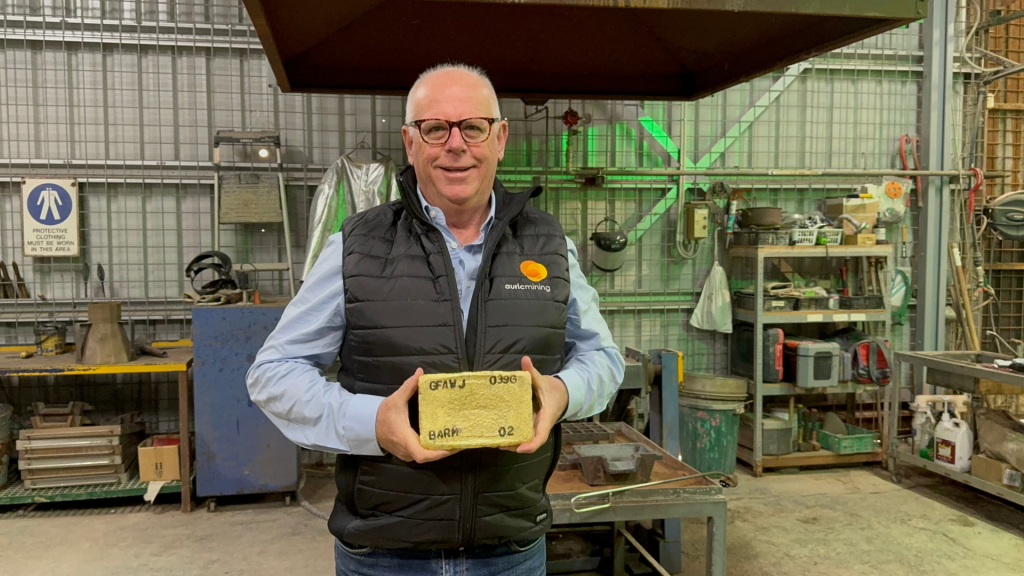
“We’re now at the stage of our evolution where we need to get that mill rebuilt so that we can then process and produce our own doré bars,” English says.
“It’s time to get rid of the middleman and own the whole mine life of our projects. He who owns the infrastructure controls the cash.”
Auric purchased the Burbanks Gold Processing Facility for $4.4 million. It’s a price that does not seem to accurately reflect the opportunities that will be delivered through the mill, as the deal was negotiated before the gold price really took off.
The site has existing permits, power, water, and tailings infrastructure.
In July 2026, Auric released a Scoping Study for Burbanks and Munda, supporting the re-establishment of the processing facility alongside the restart of mining at Munda. It set out a pathway for the company to become a standalone integrated gold producer.
Burbanks is currently permitted to process 180,000 tonnes per annum, which English says is too little.
“The OPEX cost would blow your head off,” English says.
The Scoping Study outlines a plant rebuild that would increase capacity to 600,000 tonnes per annum, fed solely from output by Munda for the first three. In that period, Auric plans to use some of its free cash flow to expand the mill from to 1.2Mtpa.
While upgrades of this kind are expensive, English does note that Burbanks operated for around 40 years and says the team expects the rebuilt mill could operate for another 40.
Auric has also announced the acquisition of a $1.2 million infrastructure package for Burbanks. It includes a complete three-stage crushing circuit, a fine ore bin and conveyors, material handling equipment and shedding, a milling structure, and associated infrastructure.
All equipment is expected to arrive on site in WA in Q1 2027.
With that in mind, English says Auric is now coming to the market for a capital raise to advance its plans and get the plant into construction in 2027.
Union Jack: Strategic acquisition adds scale
The third key part of Auric’s integrated gold strategy is its planned acquisition of the Union Jack Project. The company signed two binding agreements in early September 2026 following 10 months of due diligence work.
Union Jack comprises two mining leases and has an existing resource estimate of 3.12Mt @ 1.02 grams per tonne gold (Au) and an indicated resource of around 102,000 ounces. On completion, the acquisition would increase Auric’s overall mineral resource by 51% to 7.5Mt @ 1.25g/t Au for 301,000 ounces.
“Most importantly, it’s only 15km from there to the Burbanks Mill,” English says.
“Union Jack will most likely be our second feed for the Burbanks Mill after Munda.
“So, Munda has enough feed for around four years, and then we’ll be looking to Union Jack to dovetail into that for years five, six, and hopefully seven.”
Auric has described Union Jack as a compelling near-term, open-pit mining opportunity. The company says the acquisition could also reduce the risk in its growth strategy while supporting its aim of becoming a sustainable producer.
Building the right team
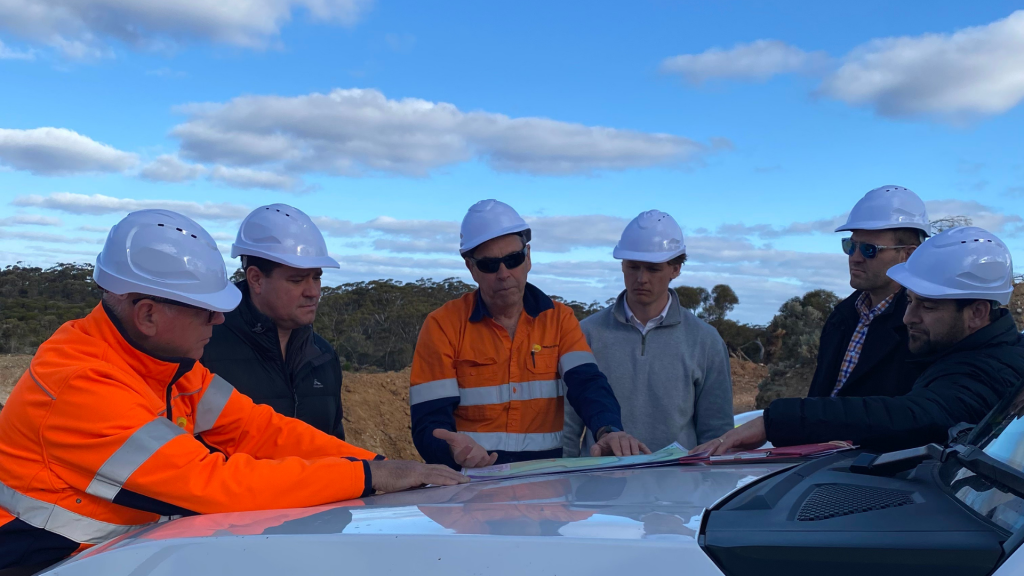
English notes that with Auric’s growth plan and outlook, especially with the acquisition of the Burbanks Mill, required the company to bring in people with the skills to get it up and running.
“We’re pretty good geologists, we’re pretty good at organising the mining, we’re pretty good with finance, and we’re pretty good with corporate strategy, but neither myself or our Technical Director John Utley, or anyone in the executive team really had any experience in building a gold mill,” English says.
With that in mind, Auric has secured two top-level appointments from Black Cat: Scott Bailey, who has joined as processing manager, and Gareth Solly, who was previously the managing director of Black Cat.
“With Solly’s experience and capacity and Bailey’s hands-on knowledge of the processing industry, we’ve now got the team that we know can build the Burbanks Mill,” English says.
English notes that Solly has joined as Auric’s CEO and executive director, with a plan for him to become managing director once English steps down.
“I’ll go back and look after the money and financing through 2027 and 2028, run the money, look after the mining, get the mill build, all those fun things, and then come May 2028, I intend to step off as a full-time executive and remain on the board as non-executive director,” English says.
Auric’s path to integrated production
Auric Mining is entering a pivotal phase as it works to move from toll treatment to ownership of its processing pathway, with several milestones ahead.
Construction of the rebuilt Burbanks Mill is scheduled to begin in Q1 2027, with mining at Munda slated to restart in late Q3. Auric is targeting first gold production from the upgraded facility in Q1 of 2028, marking Auric’s emergence as a standalone integrated producer.
Exploration and expansion drilling continues at Munda. Plans for Union Jack will commence now that the acquisition is complete. Auric has now reported initial results from Munda. At the same time, the company is pursuing further acquisitions to build its resources.
“We currently have 300,000 ounces under our control and we have another contract, a project called the Lindsay’s Gold Project, which is about 60km north of Kalgoorlie that we’ve had under contract for quite a while,” English says.
In terms of exploration work, Auric plans to move from the Munda expansion to Union Jack and then Lindsay’s, continuing to build up those resources.
English notes that, with the gold price where it is, the company needs to keep accelerating its plans.
“With the gold price at around $6,100, you’re crazy if you don’t push hard at this point in time,” English says.
Auric’s vision is to leverage its team, new executive appointments, and strong cash flow to become a preferred processing hub in Kalgoorflie, offering capacity not only for its own projects but also for smaller companies with stranded gold assets and prospectors seeking mill capacity in a crowded market.
Write to Amy Rotman at Mining.com.au
Images: Mining.com.au, Auric Mining


