


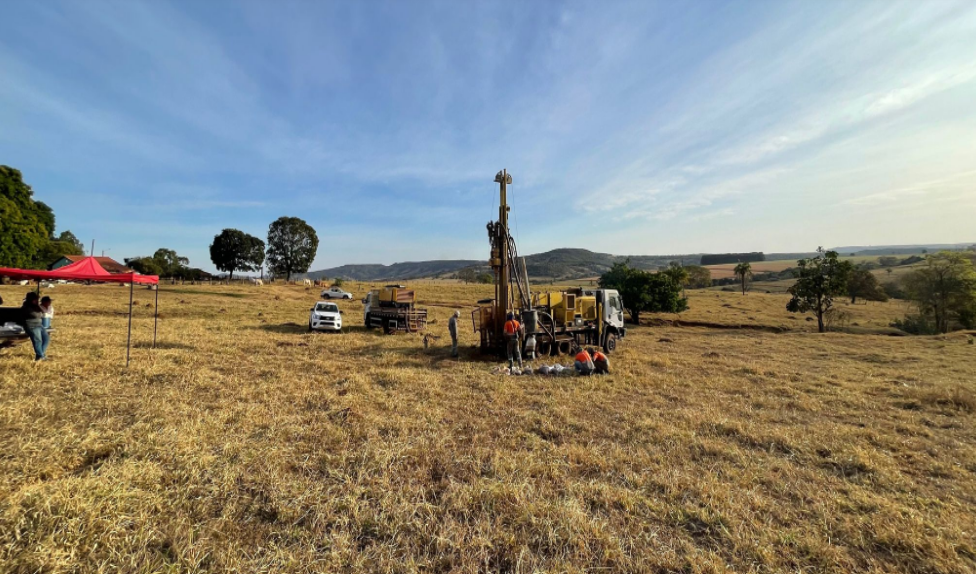
Appia Rare Earths & Uranium Corp. (CSE:API) has doubled the average depth of mineralised zones to over 13m at its PCH Ionic Clay Project, within the Tocantins Structural Province in the Brasília Fold Belt.
The Canadian publicly traded company reports the outstanding assay results from the latest 39 drillholes, which are part of a comprehensive 147-hole reverse circulation (RC) drilling program.
The total weighted average across 57 RC drillholes reported to date is 2,287 parts per million (PPM) or 0.23% Total Rare Earth Oxides (TREO).
Appia says the PCH Ionic Clay Project continues to showcase ‘impressive’ distribution, width, and grades, underscoring its significant potential.
The PCH Project is 17,551ha in size and located within the Goiás State of Brazil.
Appia President Stephen Burega says the company now has a total weighted average of 2,287ppm TREO across all reported drillholes each with significant magnet elements present.
“With this set of results, we can see that the potential of Target IV in terms of distribution, grade, and thickness of mineralization is well beyond our initial expectations.”
Results from holes like PCH-RC-063 and PC-RC-051 with very high-grade mineralisation further validate Appia’s understanding of the project’s geology, adds Carlos Bastos, Geology Manager and Appia’s Brazilian Qualified Person.
Appia will be working with SGS Geological Services to complete a comprehensive NI 43-101 technical report and Mineral Resource Estimate (MRE) on Target IV over the coming months.
The company has remaining a single diamond drillhole, 90 RC, and 106 Auger, to drill
Write to Adam Orlando at Mining.com.au
Images: Appia Rare Earths & Uranium Corp.


