


Copper has finally hit an inflection point, with 2025 marking the first year of contraction since 2019 due to a lack of emerging new discoveries and the industry’s heavy reliance on ageing mines.
“I think it’s fair to say that the mining industry is going for a year of underperformance,” Piotr Kulas, Lead Analyst – Copper Supply for Benchmark Mineral Intelligence, said ahead of the recent LME Week 2025 in London.
“The copper market is on course for its first year of mine supply contraction since 2019.
“This lack of growth in the mining space has created a very tight market that was very supportive to the price this year.”
Supply disruptions across several major mines this year have culminated in substantial impacts to production.
In early September, Freeport-McMoRan (NYSE:FCX) reported that it was temporarily suspending operations at its Grasberg Block Cave (GBC) mine in Indonesia following a landslide.
A sudden rush of about 800,000 tonnes of wet material entered the mine from the former Grasberg open pit and traveled rapidly to multiple mine levels.
The GBC ore body represents 50% of PT Freeport Indonesia’s estimated proven and probable reserves, and about 70% of the company’s previously forecast copper and gold production through 2029.
Following the incident, Freeport said it anticipated its consolidated sales for copper would be 4% lower for the third quarter of 2025.
While the company is continuing to investigate the potential impact on future production and is not yet able to provide updated production targets, it said preliminary assessments indicated the impacts were likely to result in the deferral of significant production in the fourth quarter of 2025 and into 2026.
A return to pre-incident operating rates could potentially be achieved in 2027, according to Freeport.
Kakula Mine hit by seismic setbacks
Earlier in 2025, Ivanhoe Mines (TSX:IVN) suspended underground mining activities at its Kakula Mine following repeated seismic activity that resulted in water entering the mine and the subsequent need for dewatering.
Copper-in-concentrate production from the combined Kamoa-Kakula operation fell nearly 16% in Q2 2025 and a further 36% in Q3 2025.
In early October, stage-two dewatering was around 20% complete and expected to be completed by the end of November, with stage-three pumping to follow and slated for completion in Q1 2026.
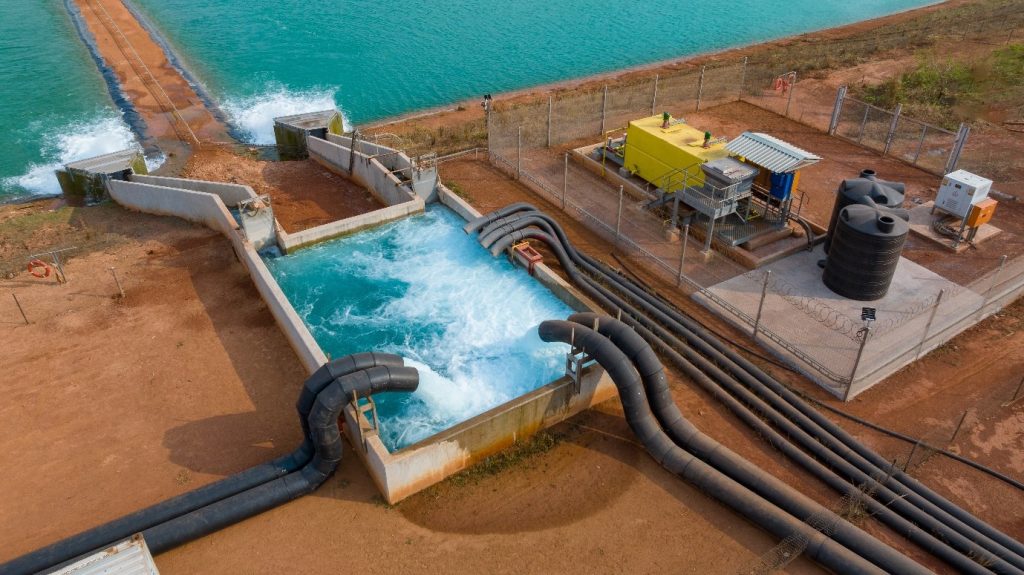
Ivanhoe said copper production guidance for 2026 and 2027 would be released once sufficient physical inspection of the newly dewatered areas of the Kakula Mine had been completed.
Kulas says Benchmark’s modelling estimates the hit to production would be in the vicinity of 295,000-300,000 tonnes over the next two years.
“Collectively, those two mines will remove around a million tonnes over a year and a half,” Kulas noted.
These unexpected disruptions are only partially to blame for the year of negative supply growth, with Kulas noting that the most striking story has been the underperformance of the large mines.
One of the world’s largest copper operations, Chile-based Collahuasi – jointly owned by Glencore (LSE:GLEN) and Anglo American (LSE:AAL), is facing multiple challenges that are impacting production.
“Take Collahuasi, the third biggest mine in the world, it’s going through a patch of lower grade. They had some issues with water availability at the start of the year and so on and so forth,” Kulas said.
“Collectively, we are seeing 11 of the 20 biggest mines in the world producing less this year than they produced last year. In April, we saw eight of those mines producing less.”
The collective weighted average age of those 20 mines, according to Kulas, is 45 years.
“The industry is collectively relying a lot on a relatively small group of mines that are quite old,” Kulas said.
Expansion focus limits long-term growth potential
There is also still a lack of greenfields exploration and a continued focus on expanding existing operations.
“By not building new capacity or building very little new capacity, the next couple of years that growth will be largely concentrated in squeezing more out of existing assets rather than adding new assets, which down the line can be a problem for the industry,” Kulas said.
This lack of supply also continues to be reflected in movements in treatment and refining charges, or TC/RCs, which are the fees paid by miners to smelters to turn their copper concentrate into refined copper.

While TC/RCs spent much of 2024 at near-record low levels, this year they moved into negative territory, which means smelter operators are willing to pay miners to provide them with copper concentrate.
Further compounding the supply tightness, is the rapidly rising demand from several sectors including electric vehicles, infrastructure and data centres.
Data centres are a particularly high growth sector for copper demand from a very small base, according to Daan de Jonge, Lead Analyst – Copper Demand and Prices for Benchmark.
“Before ChatGPT launched in 2022, the growth was very, very small and the total number was effectively less than 100,000 tonnes [of copper],” he said during a Benchmark webinar prior to last week’s LME Week.
“Since ChatGPT launched and AI has become what it is now, demand has been incredibly rapid. We estimate that from 2022 to where we are now to 2025, the compound annual growth rate of copper required in the construction of data centres was 39.5%.
“This is not total growth, this is compounded annualised growth, which is, of course, very, very significant. We don’t expect this to really go away.”
de Jonge expects demand will continue through to 2030 at a compound annual growth rate of just under 20%, which will require an additional 1 million tonnes of supply from data centre construction alone.
These trends are all having a positive impact on the LME copper price, which has rallied about 24% since April to over US$10,690 ($16,411) a tonne, and is providing tailwinds for junior explorers looking to advance the next generation of copper discoveries.
Governments extend copper lifelines to major producers
Governments are continuing to set aside funding to help miners and explorers keep existing supply viable and promote the growth of new production.
In early October, the Australian and Queensland governments agreed to provide Glencore (LSE:GLEN) with a $600 million support package to keep the company’s Mount Isa copper operations and Townsville copper refinery operating for the next three years.
True North Copper (ASX:TNC) is also active in regional Queensland and following a successful $53.4 million recapitalisation, bringing it out of its brief stint in voluntary administration, is working to grow the scale of its Cloncurry Copper Project.

The emerging producer this week named Andrew Mooney as Managing Director and CEO to lead development programs across the Queensland projects.
A recent drilling program identified a potential new copper-gold shoot extending 60m along strike of the existing Wallace North resource.
Intersections returned include 19m @ 2.18% copper and 1.76 grams per tonne gold from 106m, including 9m @ 4.33% copper and 3.64g/t gold from 108m.
True North also previously unlocked a new copper-cobalt-silver discovery at the Aquila Prospect, part of the company’s advanced Mount Oxide Project.
The most recent drilling tested the extents of the system, confirming an over 420m depth and up to 100m width, which True North says validates a large-scale copper-cobalt-silver target.
The company has since moved onto phase two drilling to test the higher-priority targets along strike from the Aquila discovery.
Revolver Resources targets 2026 first copper output
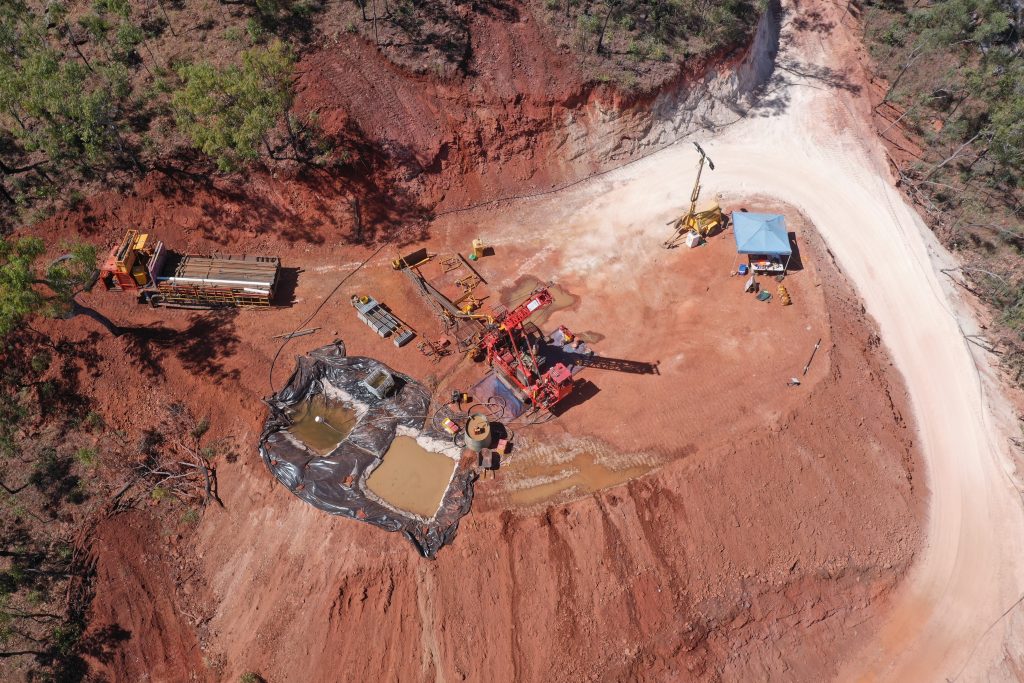
Revolver Resources (ASX:RRR) is another emerging producer in Queensland, with first copper cathode production from its Dianne project slated for Q4 2026.
The company raised an additional $1.35 million in September which provides it with the runway necessary to progress site pre-development works and all other remaining critical workstreams towards a targeted final investment decision before the end of 2025.
Executive Chairman Paul McKenna says while global markets remain in a state of flux, two trends in particular continue to be relatively stable and persistent.
“Firstly, the green energy movement continues to gain support from the international community, highlighted by increasing support for renewable energy sources and the adoption of EV automobiles across both developed and developing nations,” he says.
“Secondly, to meet these growing green energy requirements we will need a secure, sustainable and scalable supply of battery electrification metals.
“Copper operations like the one we envisage at our Dianne Copper Mine Project will be essential to this accelerating battery electrification movement.”
In late June, Revolver received a $1.3 million grant from the Queensland Critical Minerals and Battery Technology Fund to fast track the project.
Dianne is a past-producing, high-grade mine that previously delivered 63,758 tonnes of direct shipping ore grading 22.7% copper.
The deposit currently hosts a resource of 1.62 million tonnes @ 1.1% copper, with a 6.1% sulphide core, for 18,000 tonnes of contained copper.
Kincora leverages partnerships to fund exploration
Kincora Copper (ASX:KCC), meanwhile, has been active in building out its Advisory Board as it enters a period of significant expected growth in drilling in the Macquarie Arc of New South Wales.
The explorer has adopted a ‘project generator model’, which is a strategy more widely known in Canada, but is proving to work for the handful of Australian explorers heading down that path.
To date, Kincora has secured over $110 million in potential asset-level funding via six partnerships and is advancing talks for further large-scale partner agreements.
This approach provides Kincora with a continuous income stream from management fees agreed to under the partnerships, reducing the company’s need to tap investors for additional cash to explore its 100% projects.
It has also brought large, well-known North American investors such as Rick Rule and Jeff Phillips onto Kincora’s register.
In early September Kincora completed a $4 million private placement that was cornerstoned by Rule and Phillips.
The aim of the Advisory Board is to support the company’s increased presence in the North American capital markets.
Alma tests deeper potential at Briggs Project
Alma Metals (ASX:ALM) is nearing the completion of a Scoping Study for its Briggs Copper Project in Queensland and is progressing drilling to tap into what lies deep below the surface.
In April, the company received a $250,000 grant under the Queensland Government’s Collaborative Exploration Initiative to drill to a depth of 900m through the entire mineralised system.
The aim of drilling is to probe the potential for a deeper, higher-grade mineralised system beneath the existing resource, which currently contains 2 million tonnes of copper and is the subject of the Scoping Study.
The study is assessing the potential development of a large-scale, long-life open cut mine with conventional crushing, grinding and flotation processing to produce a highly marketable copper concentrate.
Over in New Brunswick in Canada, Nine Mile Metals (CSE:NINE) is exploring for copper in the Bathurst Mining Camp.
The company’s portfolio comprises four volcanogenic massive sulphide (VMS) projects – Nine Mile Brook, California Lake, Canoe Landing and The Wedge.
The Bathurst Mining Camp is one of the largest VMS camps in the world covering around 3,800km2, hosting 95 copper, lead, zinc, silver and gold occurrences and 45 deposits.
Last week, Nine Mile revealed high-grade copper results of up to 17.41% from a phase-two x-ray fluorescence sampling program at The Wedge Project.
A month earlier, the explorer announced copper samples had returned grades of up to 18.27%.
Write to Angela East at Mining.com.au
Images: Ivanhoe Mines, Unsplash